Roller Skates

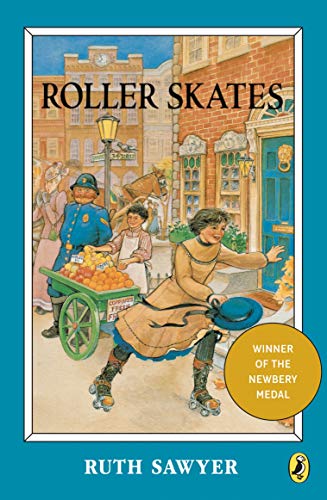
Roller Skates
List Price: $15.23$13.71DEALYou Save: $1.52 (10%)
Free shippingFree Returns – 30 daysFree Order CancellationSecure Payment2–3 Days DeliveryGet It October 25, 2026In Stock (16)No marketing spamNo account requiredFulfilment by FedEx / Amazon / UPS / ShipwirePayPal / Card Buyer Protection
Customer Reviews
Reviews sourced from verified Amazon purchasers4.2
out of 5
Based on 10 reviews
5★
70%
4★
20%
3★
10%
2★
0%
1★
0%
Lucinda is a free-spirit and fast friend in a magical New York 1800's
Sierra✓ Verified Purchase•March 16, 2017
A childhood favorite. Wonderful historical detail in a story about a free spirit whose faithful roller skates lead her to friendships all over New York City. Unlike the high status seeking aunts and cousins she visits once a week, Lucinda makes friends with ragpickers, violinists, exotic foreign ladies, fruit sellers, policemen and more. The story made me feel such joy, and sometimes sadness, as a child. I purchased this copy to replace the well-loved paperback that was falling apart. Well worth its literary awards!
A New York adventure
Chrijeff•July 4, 2015
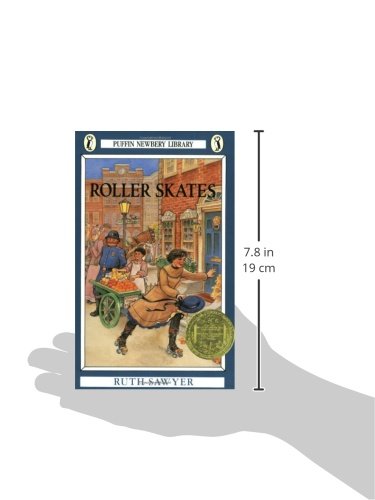
In 1890's New York City, Lucinda Wyman, age 10, is about to be an orphan (of sorts) for six months. Her father, an importer, must take her mother to Italy for the sake of her health; her brothers are much older than she"”14, 19, 22, and 28"”and off at boarding school or college, except the oldest, who has gone to Idaho to mine for gold. So Lucinda"”described by Aunt Emily, her mother's very prim-and-proper sister, as headstrong, independent, outspoken, and entirely ungraceful"”is to stay with her teacher, Miss Peters, who has taught young girls all her adult life, and Miss Peters's younger sister, Miss Nettie, a seamstress, in their rooms in the double brownstone house kept as a boarding establishment by "Miss Lucy Wimple, known to the inmates and boarders as "˜Miss Lucy, honey,' because that was what her faithful black Susan called her." Lucinda is delighted"”especially since at the very last minute it looked as if she might have to go and live with her interfering Aunt Emily and "her four docile, ladylike daughters," a fate she threatened to run away to escape.
With her toy theater, her guitar, her favorite books, her set of large-size doll dishes, and a brand-new pair of roller skates, Lucinda settles joyously into a life of more freedom than she has ever known. Like many bright children, she actually gets along better with adults than with people her own age, and soon is making grown-up friends all over"”not only Miss Lucy and Susan, but Hugh Marshall (alias "Mr. Night Owl"), a newspaper reporter who works nights and boards at the house; Mr. Gilligan, a cabdriver from County Wicklow, and Mrs. Gilligan, who hails from County Kerry, at whose home she often has tea and currant bread; Patrolman M'Gonegal, whose beat is Bryant Park; Old Rags-an'-Bottles, the junkman; Mr. Serge Browdowksi, a poor violinist whose genius hasn't yet been discovered, along with his wife Caroline and their four-year-old daughter Trinket, to whom Lucinda becomes a sort of honorary big sister; Lady Ross, who tells wonderful stories of the mythology of Ireland; Louis Sherry, the famous caterer; the "simply elegant" Asiatic lady, Mrs. Isaac Grose, whom Lucinda prefers to call the Princess Zayda; and Patrolman Jerry Hanlon, who proves very helpful indeed when Lucinda meets young Tony Coppino, the son of a fruit-stand owner who's being tormented by an organized band of boy bullies. She also discovers hidden depths in Aunt Emily's husband, Uncle Earle, who admires her spirit and introduces her to the plays of Shakespeare"”and to real theatrical performances. She even receives invitations to Thanksgiving dinner from seven different households (counting Aunt Emily's). She engineers a toy-theater performance of "The Tempest" for Twelfth Night, tries to help Mr. Browdowski gain the recognition he deserves, and discovers a murder. This classic Newbery Award book has only one drawback: it ends too abruptly"”we never get to find out whether Lucinda will be able to keep any of the joys of her "orphanage year" when she's reunited with her parents. Young readers who enjoyed meeting the Melendys, the Penderwicks, Calpurnia Tate or Maggie Pickett should find Lucinda an equally engaging and sympathetic character.
With her toy theater, her guitar, her favorite books, her set of large-size doll dishes, and a brand-new pair of roller skates, Lucinda settles joyously into a life of more freedom than she has ever known. Like many bright children, she actually gets along better with adults than with people her own age, and soon is making grown-up friends all over"”not only Miss Lucy and Susan, but Hugh Marshall (alias "Mr. Night Owl"), a newspaper reporter who works nights and boards at the house; Mr. Gilligan, a cabdriver from County Wicklow, and Mrs. Gilligan, who hails from County Kerry, at whose home she often has tea and currant bread; Patrolman M'Gonegal, whose beat is Bryant Park; Old Rags-an'-Bottles, the junkman; Mr. Serge Browdowksi, a poor violinist whose genius hasn't yet been discovered, along with his wife Caroline and their four-year-old daughter Trinket, to whom Lucinda becomes a sort of honorary big sister; Lady Ross, who tells wonderful stories of the mythology of Ireland; Louis Sherry, the famous caterer; the "simply elegant" Asiatic lady, Mrs. Isaac Grose, whom Lucinda prefers to call the Princess Zayda; and Patrolman Jerry Hanlon, who proves very helpful indeed when Lucinda meets young Tony Coppino, the son of a fruit-stand owner who's being tormented by an organized band of boy bullies. She also discovers hidden depths in Aunt Emily's husband, Uncle Earle, who admires her spirit and introduces her to the plays of Shakespeare"”and to real theatrical performances. She even receives invitations to Thanksgiving dinner from seven different households (counting Aunt Emily's). She engineers a toy-theater performance of "The Tempest" for Twelfth Night, tries to help Mr. Browdowski gain the recognition he deserves, and discovers a murder. This classic Newbery Award book has only one drawback: it ends too abruptly"”we never get to find out whether Lucinda will be able to keep any of the joys of her "orphanage year" when she's reunited with her parents. Young readers who enjoyed meeting the Melendys, the Penderwicks, Calpurnia Tate or Maggie Pickett should find Lucinda an equally engaging and sympathetic character.
Nostalgic Choice
Anne Nicolson✓ Verified Purchase•January 8, 2015
I received this book from a beloved aunt for my birthday 60 years ago. I loved the story then, and I have enjoyed sharing it with young women since then. They all tell me the love the book, but perhaps they are being polite. I hope they are being sincere and that the story really does have the timeless charm that I remember.
"An Unhampered, Lucky Orphanage"
Plume45•February 19, 2014
Set in 189X New York City this (mostly) lighthearted novel relates a busy year of delicious "orphanage" as the title protagonist puts it. The parents of ten-year-old Lucinda are traveling to Europe to spend an entire year, there so they plan to place their difficult youngest, a daughter ("homely as two toads") with her stiff, strict Aunt Emily. Contemplating outright mutiny rather than suffocate with her disapproving aunt and the four gazelles (her docile cousins) Lucinda receives a last minute reprieve by being sent by hansom cab to the relaxed home of the Misses Peters, who never had any children of their own. Suddenly she is the star and welcomed with gentle arms.
With her prized possessions, her roller skates, slung over her shoulder, Lucinda plans to live it up during her year of Freedom. Her skates are a passport to adventure--an escape from the dreary prospect of behaving like a Lady. They offer a faster means of locomotion and the sense of being at one with the air and light. Her critical family has no idea how their daughter, whom they deem rebellious, stiff, and unaffectionate, will bloom during the period when she is freed from much Victorian restriction; that she will prove warm, compassionate and clever to the benefit of the many new friends (of various ethnicities) she easily makes. Both children and adults blossom under her outgoing charm"”which no one had hitherto suspected.
During that year of the most wonderful Christmas she grows in several ways. Of course she experiences all kinds of juvenile scrapes but fortunately she can rely on two steadfast adults for advice and emergency help: her beloved Uncle Earle and the kind family doctor. There are two very serious incidents which are unusual to find in a child's book"”events which launch her headlong into the realities of adult life. As her parents' return looms large she wishes she could cling to being ten for ever; she foresees no joy in being restored to an unappreciative household. But Lucinda will always cherish the memory of little Trinket"”especially when she observes a lone seagull, soaring skyward with joy. Childhood in a bygone era"”quaintly charming.
(February 21, 2014)
With her prized possessions, her roller skates, slung over her shoulder, Lucinda plans to live it up during her year of Freedom. Her skates are a passport to adventure--an escape from the dreary prospect of behaving like a Lady. They offer a faster means of locomotion and the sense of being at one with the air and light. Her critical family has no idea how their daughter, whom they deem rebellious, stiff, and unaffectionate, will bloom during the period when she is freed from much Victorian restriction; that she will prove warm, compassionate and clever to the benefit of the many new friends (of various ethnicities) she easily makes. Both children and adults blossom under her outgoing charm"”which no one had hitherto suspected.
During that year of the most wonderful Christmas she grows in several ways. Of course she experiences all kinds of juvenile scrapes but fortunately she can rely on two steadfast adults for advice and emergency help: her beloved Uncle Earle and the kind family doctor. There are two very serious incidents which are unusual to find in a child's book"”events which launch her headlong into the realities of adult life. As her parents' return looms large she wishes she could cling to being ten for ever; she foresees no joy in being restored to an unappreciative household. But Lucinda will always cherish the memory of little Trinket"”especially when she observes a lone seagull, soaring skyward with joy. Childhood in a bygone era"”quaintly charming.
(February 21, 2014)
Deceptively compelling
Sandra L. Etemad•October 13, 2013
This was tough -- four stars or five?
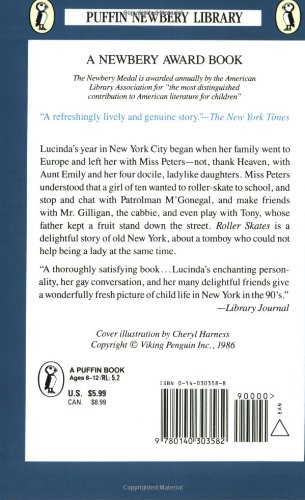
At first, I thought it was a syrupy sweet little story about a sweet little scamp, "a tomboy who could not help being a lady at the same time" (from the back of my edition, Puffin Newbery Library). And while she never did quite come down to earth, yet the book became weighty, in a way that younger readers probably wouldn't even catch. There were actually lots of words I didn't know (sometimes referring to garb of that era, such as guimp, but also howdah, tan-bark, portieres), and I was surprised that this little diddy got through the editors in 1936: "The master, the swabber, the boatswain, and I, / The gunner and his mate, / Love Moll, Meg, and Marian, and Margery, / But none of us cared for Kate; / For she had a tongue with a tang, / Would cry to a sailor, Go hang! / She loved not the savour of tar nor of pitch; / Yet a tailor might scratch her where're she did itch. / Then to sea, boys, and let her go hang!")
A very compelling story line involves Lucinda's puppet theater production of "The Tempest"; her uncle had read her the play and she was captivated by it. This book seems determined to get kids reading more! I counted mention of 42 books, plays or poems (mostly books), and of course I'm determined to re-read "The Tempest" very soon!*
I highly recommend this book, probably for slightly older readers or adults, like me, who love reading the Newbery winners and other children's and young adult literature.
A favorite quote: "Lucinda shouted [at a very excited moment], 'I rejoice, thou rejoiceth, he, she, and it rejoices! We rejoice, you rejoice, they rejoice! Uncle Earle, I am about to split with rejoicing." (114)
*The books mentioned are: Tanglewood Tales, Water Babies, The King of the Golden River, Plutarch's Lives, Hans Anderson's stories, Alice in Wonderland, The Peterkin Papers, Uncle Remus, Hans Brinker, Jan of the Windmill, Robin Hood, Swiss Family Robinson, The Princess & Curdie, Our Boys in India, At the Back of the North Wind, Irish Fairy Tales (Oisin & Fionn MacCumal), The Tempest, The Mikado (play), Little Lord Fauntleroy (play), Howard Pyle's Robin Hood, "Froggy Would a Wooing Go" (song), Elsie Dinsmore, Pilgrim's Progress, The Bible, The Merry Monarch (play), The English Rose (play), Tolstoy's "Pilgrim Song" (poem), Hamlet, Romeo & Juliet, Washington Irving's Legends of the Alhambra, Scheherezade & The One Thousand and One Nights, A Midsummer Night's Dream, Clement Moore's "Visit from Saint Nicholas" (poem), Saint Nicholas Song Book, Palmer Cox's Brownie books, As You Like It, Arabian Nights, the myth of Pegasus, San Famille, and Just So Stories.
At first, I thought it was a syrupy sweet little story about a sweet little scamp, "a tomboy who could not help being a lady at the same time" (from the back of my edition, Puffin Newbery Library). And while she never did quite come down to earth, yet the book became weighty, in a way that younger readers probably wouldn't even catch. There were actually lots of words I didn't know (sometimes referring to garb of that era, such as guimp, but also howdah, tan-bark, portieres), and I was surprised that this little diddy got through the editors in 1936: "The master, the swabber, the boatswain, and I, / The gunner and his mate, / Love Moll, Meg, and Marian, and Margery, / But none of us cared for Kate; / For she had a tongue with a tang, / Would cry to a sailor, Go hang! / She loved not the savour of tar nor of pitch; / Yet a tailor might scratch her where're she did itch. / Then to sea, boys, and let her go hang!")
A very compelling story line involves Lucinda's puppet theater production of "The Tempest"; her uncle had read her the play and she was captivated by it. This book seems determined to get kids reading more! I counted mention of 42 books, plays or poems (mostly books), and of course I'm determined to re-read "The Tempest" very soon!*
I highly recommend this book, probably for slightly older readers or adults, like me, who love reading the Newbery winners and other children's and young adult literature.
A favorite quote: "Lucinda shouted [at a very excited moment], 'I rejoice, thou rejoiceth, he, she, and it rejoices! We rejoice, you rejoice, they rejoice! Uncle Earle, I am about to split with rejoicing." (114)
*The books mentioned are: Tanglewood Tales, Water Babies, The King of the Golden River, Plutarch's Lives, Hans Anderson's stories, Alice in Wonderland, The Peterkin Papers, Uncle Remus, Hans Brinker, Jan of the Windmill, Robin Hood, Swiss Family Robinson, The Princess & Curdie, Our Boys in India, At the Back of the North Wind, Irish Fairy Tales (Oisin & Fionn MacCumal), The Tempest, The Mikado (play), Little Lord Fauntleroy (play), Howard Pyle's Robin Hood, "Froggy Would a Wooing Go" (song), Elsie Dinsmore, Pilgrim's Progress, The Bible, The Merry Monarch (play), The English Rose (play), Tolstoy's "Pilgrim Song" (poem), Hamlet, Romeo & Juliet, Washington Irving's Legends of the Alhambra, Scheherezade & The One Thousand and One Nights, A Midsummer Night's Dream, Clement Moore's "Visit from Saint Nicholas" (poem), Saint Nicholas Song Book, Palmer Cox's Brownie books, As You Like It, Arabian Nights, the myth of Pegasus, San Famille, and Just So Stories.
Page 1 of 2