Literary Wonderlands: A Journey Through the Greatest Fictional Worlds Ever Created (Literary Worlds Series)


Key features
- •B
- •l
- •a
- •c
- •k
CategoryClassics
Literary Wonderlands: A Journey Through the Greatest Fictional Worlds Ever Created (Literary Worlds Series)
List Price: $68.96$62.06DEALYou Save: $6.90 (10%)
Free shippingFree Returns – 30 daysFree Order CancellationSecure Payment2–3 Days DeliveryGet It October 26, 2026In Stock (10)No marketing spamNo account requiredFulfilment by FedEx / Amazon / UPS / ShipwirePayPal / Card Buyer Protection
Customer Reviews
Reviews sourced from verified Amazon purchasers4.4
out of 5
Based on 10 reviews
5★
50%
4★
30%
3★
10%
2★
10%
1★
0%
Don’t buy the Kindle version.
Chad Hall✓ Verified Purchase•July 21, 2017
Was really enjoying this kindle version of book until I saw the hardback version in a store. It is full of big, beautiful illustrations and maps. The kindle version of this book has ZERO illustrations. What a cheap and lazy production. I got this on sale and I'm still severely disappointed. Do not spend $16 on the kindle version. Spend five bucks more and get the hardback.
You would think a book like this would actually take you on a tour of ...
Leisel✓ Verified Purchase•July 7, 2017
You would think a book like this would actually take you on a tour of literary wonderlands, it did not. Very disappointed:(
Five Stars
LibraryRose✓ Verified Purchase•June 9, 2017
Got this for my son, who loves it.
Fascinating Insights on Fantasy
Ellene✓ Verified Purchase•February 24, 2017
A wonderful retrospective on fantasy lands and myths spanning 2,000 years. It revisits worlds familiar and new from classics to contemporary. A must read.
Thoughtfully Designed, Generously Illustrated Journey Through 98 Literary Fantasylands.
mirasreviews✓ Verified Purchase•January 20, 2017
"Literary Wonderlands" is a generously illustrated reference work of "lands that exist only in the imagination" and the works of literature that have transported many readers to those places, edited by Laura Miller, co-founder of Salon and currently a books and culture columnist at Slate. The featured literature spans nearly four thousand years, specifically from circa 1750 BC to 2015. Most of the works are novels, but some are epic poems. One opera and one graphic novel are included. Ninety-eight works are represented and organized chronologically into 5 parts: Ancient Myth and Legend Up to 1700, Science and Romanticism 1701-1900, Golden Age of Fantasy 1901-1945, New World Order 1946-1980, and The Computer Age 1981-Present.
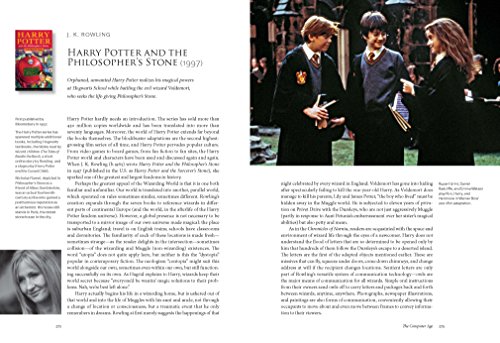
For each work, one of forty-one contributors has written a two to four-page summary of what the work is about and some commentary placing it in its historical and literary context, noting its influence and unique features. These are accompanied by a picture of the author and of the book's original cover where available and by photos or illustrations associated with the work. Everything is full color, with some artwork spanning two pages. The organization by era helps the reader see the rise and fall of literary trends such as epic adventures and utopian and dystopian novels. Popular and well-known titles are always included, from Homer's "Odyssey" (c. 725-675 BC) to "Alice's Adventures in Wonderland" (1865), "The Lord of the Rings" (1954), and "The Discworld Series" (1983-2015).
While readers expect to see popular favorites, most people will be looking for gems they may have missed in this collection of literary fantasy worlds. There are plenty of old and influential works that the reader probably won't have heard of, mostly because they are particular to a culture not his own. This brings me to a couple of observations: The works represented are overwhelmingly Western. Incredibly, I found only six exceptions. Granted, the contributors are writing about what is familiar to them; that is literature of Eastern and Western Europe and the Americas. Once we get to the twentieth century, a few works seem to have been chosen for their politics rather than their (lack of) popularity, influence, or stylistic merit.
The final section covering "The Computer Age" showcases the works of many popular authors: Terry Pratchett, Steven King, Neil Gaiman, William Gibson, Neal Stephenson, Philip Pullman, George R.R. Martin, J.K. Rowling, Michael Chabon. Suzanne Collins' "The Hunger Games" is in there, where I think "Battle Royale" (1999) by Koushun Takami would have been a more original, interesting entry "“as well as non-Western. When surveying fantasylands, children's literature, fantasy, and science fiction are heavily represented. But "Literary Wonderlands" uses a broad definition of imaginary lands, so the selections aren't confined to those genres. The book is thoughtfully designed, and the questionable picks are relatively few. I think fans of speculative fiction will enjoy it.
For each work, one of forty-one contributors has written a two to four-page summary of what the work is about and some commentary placing it in its historical and literary context, noting its influence and unique features. These are accompanied by a picture of the author and of the book's original cover where available and by photos or illustrations associated with the work. Everything is full color, with some artwork spanning two pages. The organization by era helps the reader see the rise and fall of literary trends such as epic adventures and utopian and dystopian novels. Popular and well-known titles are always included, from Homer's "Odyssey" (c. 725-675 BC) to "Alice's Adventures in Wonderland" (1865), "The Lord of the Rings" (1954), and "The Discworld Series" (1983-2015).
While readers expect to see popular favorites, most people will be looking for gems they may have missed in this collection of literary fantasy worlds. There are plenty of old and influential works that the reader probably won't have heard of, mostly because they are particular to a culture not his own. This brings me to a couple of observations: The works represented are overwhelmingly Western. Incredibly, I found only six exceptions. Granted, the contributors are writing about what is familiar to them; that is literature of Eastern and Western Europe and the Americas. Once we get to the twentieth century, a few works seem to have been chosen for their politics rather than their (lack of) popularity, influence, or stylistic merit.
The final section covering "The Computer Age" showcases the works of many popular authors: Terry Pratchett, Steven King, Neil Gaiman, William Gibson, Neal Stephenson, Philip Pullman, George R.R. Martin, J.K. Rowling, Michael Chabon. Suzanne Collins' "The Hunger Games" is in there, where I think "Battle Royale" (1999) by Koushun Takami would have been a more original, interesting entry "“as well as non-Western. When surveying fantasylands, children's literature, fantasy, and science fiction are heavily represented. But "Literary Wonderlands" uses a broad definition of imaginary lands, so the selections aren't confined to those genres. The book is thoughtfully designed, and the questionable picks are relatively few. I think fans of speculative fiction will enjoy it.
Page 1 of 2