Celestron 93722 Sky Maps Star Charts & Planisphere, Northern Hemisphere




Key features
- •Ideal teaching tool for learning the night's sky
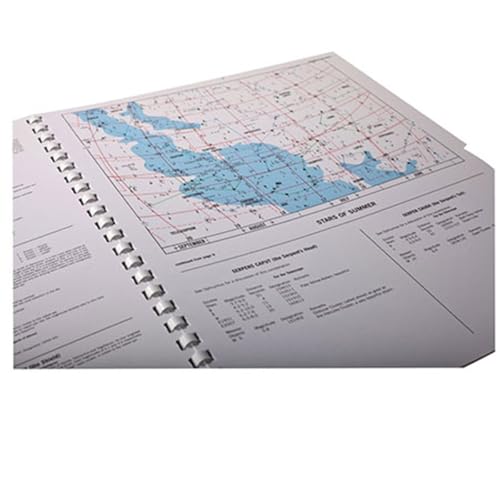
- •Specially designed cover rotates to simulate the seasonal progression of celestial objects
- •Illustrated reference section provides basic information and the visual characteristics of various types of stars, nebulae and galaxies
BrandCelestron
CategoryTravel Maps
Size13.75 inches x 11.5 inches x 1.5 inches
Warranty1 Year Parts and Labor
Celestron 93722 Sky Maps Star Charts & Planisphere, Northern Hemisphere
List Price: $64.76$58.28DEALYou Save: $6.48 (10%)
Free shippingFree Returns – 30 daysFree Order CancellationSecure Payment2–3 Days DeliveryGet It October 25, 2026In Stock (1)No marketing spamNo account requiredFulfilment by FedEx / Amazon / UPS / ShipwirePayPal / Card Buyer Protection
Customer Reviews
Reviews sourced from verified Amazon purchasers4.5
out of 5
Based on 10 reviews
5★
50%
4★
50%
3★
0%
2★
0%
1★
0%
Good resource
Ryan S.✓ Verified Purchase•September 1, 2023
Dislike: seller provided one without bracket on simple star map
Teacher of the stars.
R. Anthony✓ Verified Purchase•August 18, 2023
Best star gazer resource for young and old. The wheel turns to match the month, day, and hour. Take the book outside -after exposing the front wheel to light- and the heavens come into full identification. I bought this sky map about 20 years ago. I finally found it again last year and sent a copy to my grandson for Christmas. It is easy to use...remember every hour, every day, every month the same place in the sky is different. Here is the roadmap.
Still A Good Low-Tech Bang For The Buck!
RayB✓ Verified Purchase•August 15, 2023
09/02/2019 Update: It's here already! My seasonal star charts arrived well packed and in pristine condition! Yes, they still contain the bugaboos listed below... But these were PRINTED IN THE USA! And they're still a good value!
09/01/2019 Update: I'm about to order another of these star maps as a gift! She'll love it!
As others have posted, my copy of these seasonal star charts (purchased as a gift in 2014) contains typos, errors and omissions. My original copy (purchased in 1988) was not reprinted in China and contained no such oversights omissions or errors.
For reasons unknown to me, the Chinese steadfastly refuse to hire erudite copywriters for which English is their primary language. I decided long ago that by and large, the failure to supply products with lucidly written and relevantly illustrated instructions, will cost that product a full star in my reviews; In particular, I'm done giving foreign OEM's a pass on this. There's just no excuse for it.
That said, these seasonal star charts are still a cost-effective, low-tech aid to the budding astronomer. Each seasonal page contains a treasure trove of binocular and telescopic deep-space objects for the novice to discover.
Every map page displays the months of the year and the Right Ascension/Declination Lines for that region of the sky. The RA/DC coordinates for specific celestial objects are given in the text of each page under "Designation". But right away there's a problem with that, as Page 3 of the charts says that celestial objects with a - Declination (located below the celestial equator) will display the last two numbers in BOLD FACE; but when you get to the actual object pages, no BOLD FACE is used; instead, a "-" designation indicates a southern declination. Sloppy work, guys! Still, this stuff will only matter to telescope operators using manual setting circles. And most of those operators will spot the error and adjust for it. The charts themselves are still perfectly serviceable--especially for naked eye and binocular astronomy.
The glow-in-the-dark star wheel is neat, and requires a white flashlight to charge the glow stuff. This will all but ruin your night vision, as you should be using a red flashlight to view the pages while observing. Still, turn that wheel with reference to the Months and Times on the front cover, and you will get an accurate portrait of the night sky for your location and time in the Northern Hemisphere.
Note: The center of the Star Wheel is ostensibly the star, Polaris, which marks the Earth's Celestial North Pole. All of the circumpolar stars and constellations and their asterisms do in fact appear to revolve around Polaris. Polaris is the last star in the tail of the Little Dipper (an asterism in Ursa Minor). Most users will find Polaris but never actually see the Little Dipper, but that's not all that important. The Big Dipper is in fact an asterism in the constellation of Ursa Major, The Great Bear.
To use the Star Wheel, dial in your Date and Time. Then hold the chart over your head while facing South. The East Horizon will be to your left. The West Horizon to your right. The Southern Horizon at your front. And the Northern Horizon to your back. The constellations and their asterisms, the stars, etc., will all be pretty much where the Star Wheel shows them to be. Just keep in mind that the scale of the constellations and their asterisms in the actual night sky, is a lot bigger than they're depicted on your Star Wheel--things look a bit different in the actual sky!
Also keep in mind that you'd need to be out on a large body of water or on a large, flat plain to see right down to the horizon as shown on the front cover. Most of us don't enjoy a horizon that low. A man's fist held at arm's length = about ten degrees of sky, and for many of us, our horizons will begin at least 10 degrees higher than the Star Wheel shows. Just be patient, the stars will climb higher, and a bit earlier every day. The sky appears to drift to the West at about 15 degrees per hour. It's interesting to note that 15 degrees X 24 hours = 360 degrees (a complete circle). More proof the Earth is round!
The orientation of constellations and asterisms can change quite a bit as they rise, transit the sky, and set in the west. Take Orion, for instance. He rises on his back, transits the sky mostly upright, then sets in the west face-down from my POV in Southern Wisconsin. The Red Supergiant Star, Betelgeuse, is the first harbinger of Orion rising in the east; then I watch for his three belt-stars to clear the horizon. Brilliant blue-white Rigel blazes as Orion's right foot. Then the brightest star in the sky, Sirius, follows Orion over the horizon. Also called the "Dog Star", Sirius keeps company with the "The Hunter" as he transits the sky. M42, "The Orion Nebula" is an easy target for binoculars; just scan down the sword-stars hanging from Orion's belt.
The Star Map Pages work more directly. You actually face in the direction of the horizon represented on the map pages. These pages give amplified information on the stars and deep space objects, such as galaxies and nebulae.
Most users will ignore the RA/DC coordinates and just navigate by dead reckoning or by star hopping to the desired location. In time, you'll get so you can go right to many of your favorite target objects. As with many things, you'll learn by doing.
It's best to let your eyes dark-adapt--say at least ten minutes. Avoid looking into street or auto headlights. A red tinted flashlight will affect your night vision the least.
Want to see the Stars Of Winter without the winter temperatures? You can start now! Orion, which will be a constellation for Winter Nights, is up before the dawn now, climbing high in the east in balmy 60 degree temperatures--much better than -15 below zero in January! The Pleiades, a gorgeous open star cluster (and the inspiration for the emblem on your Subaru vehicle) are right overhead, and stunning in wide-angle binoculars!
I viewed both the Orion Nebula and the Pleiades just 3-1/2 hours ago, looking right through Milwaukee's light polluted skies with no problem. Beautiful sights!
So, yes, while seasoned and accomplished astronomers can find fault with these charts, they are still perfectly serviceable for the casual astronomer using binoculars, a simple telescope, or just eyeballs to explore the night sky.
Note: To keep the binding together, use at least three automotive cable ties (zip strips) along the spiral binding to hold the charts together; this will stand up to field use. The pages are coated to resist dew, but these charts are not meant to withstand saturation with water.
You also may want to plan and list your target objects for a given night before you even step outside. The pages are coated so that you can mark them with crayon, and later wipe the crayon off with a tissue paper.
It's also fun to do an internet search of target objects to see what you're looking at! For example, the aforementioned star Betelgeuse, is so enormous, that if you put it where our own sun is now, we'd be INSIDE the star! In fact, Betelgeuse would encompass Mars as well, and probably the main asteroid belt too! This is a serious star!
As to updating these charts, the Earth's precession and the proper motion of other stars and celestial objects doesn't amount to enough to be worth the effort for most users. Advanced astronomers with expensive equipment will likely be using an updated computerized database anyway. For eyeball astronomy, binocular astronomy and simple telescope astronomy, one set of these charts could serve an individual for a lifetime.
In all, I give these seasonal star charts a Four Stars, and recommend them for the casual but serious astronomer. They still represent a good value. If they'd fix the arguably unimportant bugaboos, I'd give them a full five stars at this price.
--RayB
09/01/2019 Update: I'm about to order another of these star maps as a gift! She'll love it!
As others have posted, my copy of these seasonal star charts (purchased as a gift in 2014) contains typos, errors and omissions. My original copy (purchased in 1988) was not reprinted in China and contained no such oversights omissions or errors.
For reasons unknown to me, the Chinese steadfastly refuse to hire erudite copywriters for which English is their primary language. I decided long ago that by and large, the failure to supply products with lucidly written and relevantly illustrated instructions, will cost that product a full star in my reviews; In particular, I'm done giving foreign OEM's a pass on this. There's just no excuse for it.
That said, these seasonal star charts are still a cost-effective, low-tech aid to the budding astronomer. Each seasonal page contains a treasure trove of binocular and telescopic deep-space objects for the novice to discover.
Every map page displays the months of the year and the Right Ascension/Declination Lines for that region of the sky. The RA/DC coordinates for specific celestial objects are given in the text of each page under "Designation". But right away there's a problem with that, as Page 3 of the charts says that celestial objects with a - Declination (located below the celestial equator) will display the last two numbers in BOLD FACE; but when you get to the actual object pages, no BOLD FACE is used; instead, a "-" designation indicates a southern declination. Sloppy work, guys! Still, this stuff will only matter to telescope operators using manual setting circles. And most of those operators will spot the error and adjust for it. The charts themselves are still perfectly serviceable--especially for naked eye and binocular astronomy.
The glow-in-the-dark star wheel is neat, and requires a white flashlight to charge the glow stuff. This will all but ruin your night vision, as you should be using a red flashlight to view the pages while observing. Still, turn that wheel with reference to the Months and Times on the front cover, and you will get an accurate portrait of the night sky for your location and time in the Northern Hemisphere.
Note: The center of the Star Wheel is ostensibly the star, Polaris, which marks the Earth's Celestial North Pole. All of the circumpolar stars and constellations and their asterisms do in fact appear to revolve around Polaris. Polaris is the last star in the tail of the Little Dipper (an asterism in Ursa Minor). Most users will find Polaris but never actually see the Little Dipper, but that's not all that important. The Big Dipper is in fact an asterism in the constellation of Ursa Major, The Great Bear.
To use the Star Wheel, dial in your Date and Time. Then hold the chart over your head while facing South. The East Horizon will be to your left. The West Horizon to your right. The Southern Horizon at your front. And the Northern Horizon to your back. The constellations and their asterisms, the stars, etc., will all be pretty much where the Star Wheel shows them to be. Just keep in mind that the scale of the constellations and their asterisms in the actual night sky, is a lot bigger than they're depicted on your Star Wheel--things look a bit different in the actual sky!
Also keep in mind that you'd need to be out on a large body of water or on a large, flat plain to see right down to the horizon as shown on the front cover. Most of us don't enjoy a horizon that low. A man's fist held at arm's length = about ten degrees of sky, and for many of us, our horizons will begin at least 10 degrees higher than the Star Wheel shows. Just be patient, the stars will climb higher, and a bit earlier every day. The sky appears to drift to the West at about 15 degrees per hour. It's interesting to note that 15 degrees X 24 hours = 360 degrees (a complete circle). More proof the Earth is round!
The orientation of constellations and asterisms can change quite a bit as they rise, transit the sky, and set in the west. Take Orion, for instance. He rises on his back, transits the sky mostly upright, then sets in the west face-down from my POV in Southern Wisconsin. The Red Supergiant Star, Betelgeuse, is the first harbinger of Orion rising in the east; then I watch for his three belt-stars to clear the horizon. Brilliant blue-white Rigel blazes as Orion's right foot. Then the brightest star in the sky, Sirius, follows Orion over the horizon. Also called the "Dog Star", Sirius keeps company with the "The Hunter" as he transits the sky. M42, "The Orion Nebula" is an easy target for binoculars; just scan down the sword-stars hanging from Orion's belt.
The Star Map Pages work more directly. You actually face in the direction of the horizon represented on the map pages. These pages give amplified information on the stars and deep space objects, such as galaxies and nebulae.
Most users will ignore the RA/DC coordinates and just navigate by dead reckoning or by star hopping to the desired location. In time, you'll get so you can go right to many of your favorite target objects. As with many things, you'll learn by doing.
It's best to let your eyes dark-adapt--say at least ten minutes. Avoid looking into street or auto headlights. A red tinted flashlight will affect your night vision the least.
Want to see the Stars Of Winter without the winter temperatures? You can start now! Orion, which will be a constellation for Winter Nights, is up before the dawn now, climbing high in the east in balmy 60 degree temperatures--much better than -15 below zero in January! The Pleiades, a gorgeous open star cluster (and the inspiration for the emblem on your Subaru vehicle) are right overhead, and stunning in wide-angle binoculars!
I viewed both the Orion Nebula and the Pleiades just 3-1/2 hours ago, looking right through Milwaukee's light polluted skies with no problem. Beautiful sights!
So, yes, while seasoned and accomplished astronomers can find fault with these charts, they are still perfectly serviceable for the casual astronomer using binoculars, a simple telescope, or just eyeballs to explore the night sky.
Note: To keep the binding together, use at least three automotive cable ties (zip strips) along the spiral binding to hold the charts together; this will stand up to field use. The pages are coated to resist dew, but these charts are not meant to withstand saturation with water.
You also may want to plan and list your target objects for a given night before you even step outside. The pages are coated so that you can mark them with crayon, and later wipe the crayon off with a tissue paper.
It's also fun to do an internet search of target objects to see what you're looking at! For example, the aforementioned star Betelgeuse, is so enormous, that if you put it where our own sun is now, we'd be INSIDE the star! In fact, Betelgeuse would encompass Mars as well, and probably the main asteroid belt too! This is a serious star!
As to updating these charts, the Earth's precession and the proper motion of other stars and celestial objects doesn't amount to enough to be worth the effort for most users. Advanced astronomers with expensive equipment will likely be using an updated computerized database anyway. For eyeball astronomy, binocular astronomy and simple telescope astronomy, one set of these charts could serve an individual for a lifetime.
In all, I give these seasonal star charts a Four Stars, and recommend them for the casual but serious astronomer. They still represent a good value. If they'd fix the arguably unimportant bugaboos, I'd give them a full five stars at this price.
--RayB
Old School guide to the stars.
1stHand✓ Verified Purchase•August 4, 2023
This is a great example of effective low tech. I just wanted something to serve as an introduction to the constellations in the night sky, and this is a clever design that serves that purpose well. It also includes quite a bit of exact data on specific star locations, if one wanted to get into that level of detail. I did not. One even gets a bit of arm exercise from holding the page over one's head, if one goes that far. It's actually quite usable for the purpose intended if held in the normal reading position. I'm happy with the purchase. Now if it will quit raining...
Useful for Star Explorers
David✓ Verified Purchase•August 1, 2023
Very Large book with with plastic laminated pages and flexible comb spine... The Planisphere in the cover is accurate and easy to read.
The type inside the book is small but readable. Lots of information on each constellation. Stars have magnitude information. plus there is a 2 star maps for every season. Planet location for 2023-24.
This is an asset for any sky explorer
The type inside the book is small but readable. Lots of information on each constellation. Stars have magnitude information. plus there is a 2 star maps for every season. Planet location for 2023-24.
This is an asset for any sky explorer
Page 1 of 2


![Voyageurs National Park and Paddle Routes [Map Pack Bundle] (National Geographic Trails Illustrated Map)](https://m.media-amazon.com/images/I/41Wfeg7z7YL._SL500_.jpg)