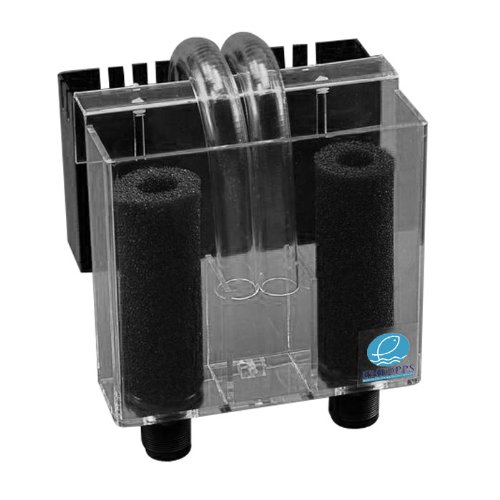
Aquarium Filter Hydro-Sponge IV by Lustar, for Aquariums up to 80 Gallons


Key features
- •Easy to clean, just rinse and squeeze in used aquarium water. Never use tap water
- •One inch diameter lift tube allows for high volume water flow and allows use of power head without adapters
- •Made from Proprietary Patented Sponge Foam for the highest mechanical debris capacity and bio capacity
- •The Hydro-Sponge traps waste particles, mechanically cleaning the water without trapping baby fish
- •Can be used in the vertical or horizontal position. Heavier base with a raised bottom
Aquarium Filter Hydro-Sponge IV by Lustar, for Aquariums up to 80 Gallons
List Price: $32.50$29.25DEALYou Save: $3.25 (10%)
Free shippingFree Returns – 30 daysFree Order CancellationSecure Payment2–3 Days DeliveryGet It October 24, 2026In Stock (3)No marketing spamNo account requiredFulfilment by FedEx / Amazon / UPS / ShipwirePayPal / Card Buyer Protection
Customer Reviews
Reviews sourced from verified Amazon purchasers4.5
out of 5
Based on 10 reviews
5★
80%
4★
20%
3★
0%
2★
0%
1★
0%
Pristine Water for Cheap!
Steffanie✓ Verified Purchase•November 10, 2023
I recently reviewed another smaller sponge filter here. Sponge filters are AMAZING for your tank. The only cons I can find are they are not pretty and they can't really suck up a lot of the bigger stuff. To fix that, you can always hide it behind plants and decorations and you can always run it with your power filter for even more cleaning power.
These things are a godsend for any tank. I recommend getting 2 for each tank. That way, if you ever need to quarantine a fish, you have another filter already set up with beneficial bacteria rather than throwing in a new one. This filter keeps my 20 gallon tank's water pristine. It gets rid of mopani wood tannin quickly so I do not have to soak it for 2 months. They are incredibly easy to clean. Just tank a big bowl of your used tank water and rinse and squeeze a few times into that. Never run or clean under tap water or you will get rid of all of that good bacteria you've been trying to establish.
These are very well priced. There are more expensive brands, but these worked just as great. The sponges can last for years. You can buy extra sponges but I don't think you will need them for a LONG time. These are also really good if you are breeding fish or feed your fish live food. Fry, brine shrimp or other little invertebrates won't get sucked into it! It is very quiet and adds oxygen to your tank.
The set up is really easy. There are tons of Youtube videos that show you how to do it, although this one came with directions that were easy to follow. The only things you need are a small air pump, air stone, and air tubing, but just about every fish hobbyist has those items on hand anyway. If you don't have them, you can get everything for under 20 bucks on here.
These filters are too awesome not to have in your tank. I recommend picking up a couple for each tank ASAP! You won't regret it, I promise!
These things are a godsend for any tank. I recommend getting 2 for each tank. That way, if you ever need to quarantine a fish, you have another filter already set up with beneficial bacteria rather than throwing in a new one. This filter keeps my 20 gallon tank's water pristine. It gets rid of mopani wood tannin quickly so I do not have to soak it for 2 months. They are incredibly easy to clean. Just tank a big bowl of your used tank water and rinse and squeeze a few times into that. Never run or clean under tap water or you will get rid of all of that good bacteria you've been trying to establish.
These are very well priced. There are more expensive brands, but these worked just as great. The sponges can last for years. You can buy extra sponges but I don't think you will need them for a LONG time. These are also really good if you are breeding fish or feed your fish live food. Fry, brine shrimp or other little invertebrates won't get sucked into it! It is very quiet and adds oxygen to your tank.
The set up is really easy. There are tons of Youtube videos that show you how to do it, although this one came with directions that were easy to follow. The only things you need are a small air pump, air stone, and air tubing, but just about every fish hobbyist has those items on hand anyway. If you don't have them, you can get everything for under 20 bucks on here.
These filters are too awesome not to have in your tank. I recommend picking up a couple for each tank ASAP! You won't regret it, I promise!
Excellent Filter
Lex Archer✓ Verified Purchase•November 7, 2023
Best filter for my phone 10 gallon aquarium of one beta, and about 10 Corey cats, breeding like crazy
Works well
Amazon Customer✓ Verified Purchase•October 27, 2023
Well built. Stays submerged. Easy to clean
A cheap and effective addition to any filtration system
gtippitt✓ Verified Purchase•September 30, 2023
These filter are super to use over the intake to aquarium pumps and other filters. Besides adding additional area for biological filtration, they provide a super mechanical pre-filter to prevent algae and debris from clogging the bio media in sump and canister filters. They also make sure than smaller fish are not injured and killed by the intake from strong pumps. They will greatly extend the life of the impellers on "hang-on-the-back" power filters, by preventing debris from getting sucked in and damaging the impellers.
I use the large 125 gallon version for my 55 gallon freshwater tank. Even though it might seem large and ugly, against the black background of my tank, it is barely noticeable. Like many people, I tend towards overstocking my tank, so it adds some additional bio-filter capacity to the canister filters that I have under the tank, as well as the primary purpose I got it which was protecting small fry from the pump's intake and preventing algae and debris from clogging the canisters' bio media.
It disperses the power of the intake so well, that between feedings, even my smallest tetras and barbs are able to swim around it in searching for any missed flakes of food that have been filtered from the water.
For a beginner looking for cheap and easy filtration, I think one of these with a strong power head is better than most other filter solutions. It is far easier and better than an under gravel filter system. No filtration system could be easier to install or maintain for a beginner or someone with a limited budget. When I do my weekly water change, I simply turn off my pump, remove this filter from the intake, and rinse it well in the bucket of water I siphon off. Then I simply replace the foam filter, fill up the tank with water, and turn the pump back on.
Even with my setup with 2 canister filters under the tank, my weekly maintenance remains this simple. The Hydro-Sponge filters out everything so well that I don't have to worry about cleaning the bio media in the canisters. Before I got the Hydro-Sponge filter, I was using a AquaClear Quick Filter Powerhead Attachment with its replaceable media, which served the same function. The AquaClear Quick Filter did not do nearly as good a job filtering out extremely small particles. My tank's water always had a slight green cast from the small algae particles suspended in the water. Since changing to the Hydro-Sponge, the water in the tank stays as crystal clear an fresh tap water.
I use the large 125 gallon version for my 55 gallon freshwater tank. Even though it might seem large and ugly, against the black background of my tank, it is barely noticeable. Like many people, I tend towards overstocking my tank, so it adds some additional bio-filter capacity to the canister filters that I have under the tank, as well as the primary purpose I got it which was protecting small fry from the pump's intake and preventing algae and debris from clogging the canisters' bio media.
It disperses the power of the intake so well, that between feedings, even my smallest tetras and barbs are able to swim around it in searching for any missed flakes of food that have been filtered from the water.
For a beginner looking for cheap and easy filtration, I think one of these with a strong power head is better than most other filter solutions. It is far easier and better than an under gravel filter system. No filtration system could be easier to install or maintain for a beginner or someone with a limited budget. When I do my weekly water change, I simply turn off my pump, remove this filter from the intake, and rinse it well in the bucket of water I siphon off. Then I simply replace the foam filter, fill up the tank with water, and turn the pump back on.
Even with my setup with 2 canister filters under the tank, my weekly maintenance remains this simple. The Hydro-Sponge filters out everything so well that I don't have to worry about cleaning the bio media in the canisters. Before I got the Hydro-Sponge filter, I was using a AquaClear Quick Filter Powerhead Attachment with its replaceable media, which served the same function. The AquaClear Quick Filter did not do nearly as good a job filtering out extremely small particles. My tank's water always had a slight green cast from the small algae particles suspended in the water. Since changing to the Hydro-Sponge, the water in the tank stays as crystal clear an fresh tap water.
Great multi purpose filter with some major long term usage failings
Lamprophile✓ Verified Purchase•September 28, 2023
This filter was first produced and marketed by Lustar Plastics. At the time, it was far and away the best sponge filter available; it was far more efficient than Tetra's Billi and Brillant filters (the "cheap double column filters" mentioned by another reviewer), and infinitely better than the Dirt Magnet filters (arguably the most poorly designed and ineffective aquarium filters ever produced) from now defunct Jungle Labs. When Lustar Plastics was folding up, Aquarium Technology purchased and improved this product line.
I've used Hydro Sponge filters in most of my tanks for over a decade (I started using them in baby fish tanks in 1997), and despite their effectiveness when properly maintained, they have failings that won't be evident until you've used them for a few years or longer. Most of the reviews here are from new/recent users, and their comments reflect this.
The original Lustar Hydro Sponge filter used a light beige colored conventional aquarium safe sponge as the filter media, and if you buy or receive the "original" or "non pro" version from Aquarium Technology, this is what you'll receive. Aquarium Technology improved on this with their Pro series (identified by 2 yellow stickers on 2 sides of the box), which uses a black, looser filter material with much greater surface area per strand. This allows for much faster flow through the media (not very different for an air driven filter, but significantly better when used with a powerhead). The much greater surface area for biofilm colonization more than compensates for the looser material, and the looser material reduces the rate at which the sponge clogs with debris and fish droppings. Also, the black material encourages the growth of light inhibited bacteria and other biofilm organisms. On the minus side, the coarser material allows a higher percentage of small particles to pass through the media and back into the aquarium, thus the Pro series is slightly less efficient at mechanical filtration then its' predecessor. The Pro filter material is also very abrasive (almost like a scrubbing pad!); this isn't a problem for coral reef fishes and inverts, but could injure freshwater fishes if they dash against it or repeatedly pick at it. Because of the relatively large spaces within the Pro sponge, it is NOT recommended for use with very small egglayer fry (popular egg scatterers such as small tetras, most marine fish fry, baby bumblebee gobies and dwarf gouramies, etc.), as there is a risk of entrapment by the sponge. I'd recommend the Hikari Bacto Surge filters (lots of extra surface area in a much denser, smaller spaced sponge) for very tiny fry. The Pro sponges are fine with livebearer fry, all but the smallest species of baby cichlids, etc.
The two biggest problems I've had with the Hydro Sponge filters won't be evident to new users/purchasers. The plastic frame is flimsy, and becomes very brittle after about 10 to 13 months of use, so that separating the frame parts to replace the airstone (if you are using one) or to remove the sponge media for thorough cleaning or replacement results in breakage of the frame. You can generally continue to use the filter for a time even if this happens. I now use airstones with these NOT in accordance with the package instructions (which are illustrated on this website by another reviewer's photos), but by running the airline through the lift tube, then through the upper frame cap (this is the "bullseye" in the package instruction illustration; I do not attach the airline to the nipple at the top of the bullseye), before attaching the airstone directly to the airline. I then submerge and repeatedly squeeze the sponge to force out trapped air, assemble the filter underwater, position it, and after plugging in the air pump, push the airline further down into the filter until I feel the airstone slip past the tubular frame joint and contact the interior of the base. This will make it much easier to remove and replace airstones without breaking the frame, and to insure that the airstone is positioned for maximum efficiency.
After 12 to 18 months of use the frame will become so brittle that even cleaning the sponge will break it. The old sponges would become so badly clogged by this time, even with regular cleaning, that they would collapse and further impede water flow. Although some dealers sold replacement sponges, I always found that the frame was unusable by the time the sponge collapsed. The new Pro sponges last much better, and don't clog as quickly under a given set of conditions, but it isn't much of an improvement when a sponge outlasts the frame.
These filters are most efficient at both mechanical and biological filtration if you use the largest size filter that will fit into your tank(s) and run it with a powerhead. (A powerhead is not recommended for the non Pro version as the sponge will clog too quickly.) One or two large, powerhead driven Hydro Sponge filters, cleaned regularly, will actually work very well as the only filter system in most setups housing small to medium sized fishes.
If you run these with an airstone, you will get better aeration (a powerhead with a venturi is still much less efficient at aeration than an airstone) and less turbulence, at the expense of flow rates. In these filters, airstones require frequent replacement (every 2 to 5 weeks for me). This is because the biofilm that colonizes the sponge will also colonize and clog up the pores of the airstone; it is nourished by the constant flow of nutrient and oxygen rich water around the airstone. This is why the lift tube of this filter quickly develops a internal biofilm layer. Contrary to popular belief, airborne particulates generally play a minor role in clogging airstones. (Try running a new airstone in a jar or glass of distilled water; in the absence of nutrients for biofilm growth, it will usually run without clogging for months.) The reviewers who recommended these filters because they are made in the USA should note that within a year or two of airstone driven usage, they will have spent considerably more then the price differential of the filters to equip this US made filter with Chinese made airstones! By comparison, Hikari's Bacto Surge filters (made in China for a Japanese multinational company with outstanding quality control, and a US affiliate), never need airstones (they have a built in air diffusion grate that won't clog). The Hikari filters have rather different strengths and weaknesses from their Hydro Sponge competitors, and I'll post a review of them within the next few weeks.
Sponge filters are much more "environmentally friendly" then other types of multi purpose aquarium filters (except the much more troublesome to maintain and potentially more toxin buildup prone undergravel filters). Their use doesn't require regular replacement of cartridges, polyester filter fiber, carbon, zeolite, etc. Additionally, the air pumps that power them use relatively little electricity, particularly in comparison to canister and large hang on filter motors. They are easily and quickly cleaned in the water you will be discarding when you make routine water changes. If you have a check valve on your airline, or raise your air pump well above your tank(s), they won't drain tank water onto your floor during power or pump failures, or as a leaking canister or other external filter would. However, they most definitely WON'T "last forever", despite what one rather overenthusiastic reviewer has claimed!
One final and very important point; with these and any other sponge filter, if anything causes their water flow to stop (power failure, pump failure, etc.) for more than an half hour to an hour, the developing anoxic conditions within the sponge will gradually kill the beneficial bacteria and other beneficial microorganisms. Harmful, and in some species, toxin generating bacteria (which are usually kept under control by competing beneficial sponge and biofilm organisms) will then quickly proliferate and build up large populations in the sponge. To prevent this situation, squeeze out as much water from the sponge as possible so that it is only slightly moist, then place the sponge inside a zipper seal bag, closed jar, etc. so it doesn't dry out completely (there is much more oxygen in the air than in heavily aerated water, so the bacteria you are trying to save won't suffocate). If the air temperature is consistently in the upper 70s or above, just place the enclosed sponge in a dark spot, otherwise, place the container in the tank to keep it warm. The wipe outs caused by toxins generated by harmful bacterial 'blooms' that result from failure to protect sponges during power failures usually occur 3 to 7 days after power is restored; I've seen aquarium stores and pet shops lose all of the fishes in tanks equipped with sponge filters within a week after power was restored.
I've used Hydro Sponge filters in most of my tanks for over a decade (I started using them in baby fish tanks in 1997), and despite their effectiveness when properly maintained, they have failings that won't be evident until you've used them for a few years or longer. Most of the reviews here are from new/recent users, and their comments reflect this.
The original Lustar Hydro Sponge filter used a light beige colored conventional aquarium safe sponge as the filter media, and if you buy or receive the "original" or "non pro" version from Aquarium Technology, this is what you'll receive. Aquarium Technology improved on this with their Pro series (identified by 2 yellow stickers on 2 sides of the box), which uses a black, looser filter material with much greater surface area per strand. This allows for much faster flow through the media (not very different for an air driven filter, but significantly better when used with a powerhead). The much greater surface area for biofilm colonization more than compensates for the looser material, and the looser material reduces the rate at which the sponge clogs with debris and fish droppings. Also, the black material encourages the growth of light inhibited bacteria and other biofilm organisms. On the minus side, the coarser material allows a higher percentage of small particles to pass through the media and back into the aquarium, thus the Pro series is slightly less efficient at mechanical filtration then its' predecessor. The Pro filter material is also very abrasive (almost like a scrubbing pad!); this isn't a problem for coral reef fishes and inverts, but could injure freshwater fishes if they dash against it or repeatedly pick at it. Because of the relatively large spaces within the Pro sponge, it is NOT recommended for use with very small egglayer fry (popular egg scatterers such as small tetras, most marine fish fry, baby bumblebee gobies and dwarf gouramies, etc.), as there is a risk of entrapment by the sponge. I'd recommend the Hikari Bacto Surge filters (lots of extra surface area in a much denser, smaller spaced sponge) for very tiny fry. The Pro sponges are fine with livebearer fry, all but the smallest species of baby cichlids, etc.
The two biggest problems I've had with the Hydro Sponge filters won't be evident to new users/purchasers. The plastic frame is flimsy, and becomes very brittle after about 10 to 13 months of use, so that separating the frame parts to replace the airstone (if you are using one) or to remove the sponge media for thorough cleaning or replacement results in breakage of the frame. You can generally continue to use the filter for a time even if this happens. I now use airstones with these NOT in accordance with the package instructions (which are illustrated on this website by another reviewer's photos), but by running the airline through the lift tube, then through the upper frame cap (this is the "bullseye" in the package instruction illustration; I do not attach the airline to the nipple at the top of the bullseye), before attaching the airstone directly to the airline. I then submerge and repeatedly squeeze the sponge to force out trapped air, assemble the filter underwater, position it, and after plugging in the air pump, push the airline further down into the filter until I feel the airstone slip past the tubular frame joint and contact the interior of the base. This will make it much easier to remove and replace airstones without breaking the frame, and to insure that the airstone is positioned for maximum efficiency.
After 12 to 18 months of use the frame will become so brittle that even cleaning the sponge will break it. The old sponges would become so badly clogged by this time, even with regular cleaning, that they would collapse and further impede water flow. Although some dealers sold replacement sponges, I always found that the frame was unusable by the time the sponge collapsed. The new Pro sponges last much better, and don't clog as quickly under a given set of conditions, but it isn't much of an improvement when a sponge outlasts the frame.
These filters are most efficient at both mechanical and biological filtration if you use the largest size filter that will fit into your tank(s) and run it with a powerhead. (A powerhead is not recommended for the non Pro version as the sponge will clog too quickly.) One or two large, powerhead driven Hydro Sponge filters, cleaned regularly, will actually work very well as the only filter system in most setups housing small to medium sized fishes.
If you run these with an airstone, you will get better aeration (a powerhead with a venturi is still much less efficient at aeration than an airstone) and less turbulence, at the expense of flow rates. In these filters, airstones require frequent replacement (every 2 to 5 weeks for me). This is because the biofilm that colonizes the sponge will also colonize and clog up the pores of the airstone; it is nourished by the constant flow of nutrient and oxygen rich water around the airstone. This is why the lift tube of this filter quickly develops a internal biofilm layer. Contrary to popular belief, airborne particulates generally play a minor role in clogging airstones. (Try running a new airstone in a jar or glass of distilled water; in the absence of nutrients for biofilm growth, it will usually run without clogging for months.) The reviewers who recommended these filters because they are made in the USA should note that within a year or two of airstone driven usage, they will have spent considerably more then the price differential of the filters to equip this US made filter with Chinese made airstones! By comparison, Hikari's Bacto Surge filters (made in China for a Japanese multinational company with outstanding quality control, and a US affiliate), never need airstones (they have a built in air diffusion grate that won't clog). The Hikari filters have rather different strengths and weaknesses from their Hydro Sponge competitors, and I'll post a review of them within the next few weeks.
Sponge filters are much more "environmentally friendly" then other types of multi purpose aquarium filters (except the much more troublesome to maintain and potentially more toxin buildup prone undergravel filters). Their use doesn't require regular replacement of cartridges, polyester filter fiber, carbon, zeolite, etc. Additionally, the air pumps that power them use relatively little electricity, particularly in comparison to canister and large hang on filter motors. They are easily and quickly cleaned in the water you will be discarding when you make routine water changes. If you have a check valve on your airline, or raise your air pump well above your tank(s), they won't drain tank water onto your floor during power or pump failures, or as a leaking canister or other external filter would. However, they most definitely WON'T "last forever", despite what one rather overenthusiastic reviewer has claimed!
One final and very important point; with these and any other sponge filter, if anything causes their water flow to stop (power failure, pump failure, etc.) for more than an half hour to an hour, the developing anoxic conditions within the sponge will gradually kill the beneficial bacteria and other beneficial microorganisms. Harmful, and in some species, toxin generating bacteria (which are usually kept under control by competing beneficial sponge and biofilm organisms) will then quickly proliferate and build up large populations in the sponge. To prevent this situation, squeeze out as much water from the sponge as possible so that it is only slightly moist, then place the sponge inside a zipper seal bag, closed jar, etc. so it doesn't dry out completely (there is much more oxygen in the air than in heavily aerated water, so the bacteria you are trying to save won't suffocate). If the air temperature is consistently in the upper 70s or above, just place the enclosed sponge in a dark spot, otherwise, place the container in the tank to keep it warm. The wipe outs caused by toxins generated by harmful bacterial 'blooms' that result from failure to protect sponges during power failures usually occur 3 to 7 days after power is restored; I've seen aquarium stores and pet shops lose all of the fishes in tanks equipped with sponge filters within a week after power was restored.
Page 1 of 2
Related products

API BIO-CHEM ZORB SIZE 6 Aquarium Canister Filter Filtration Pouch 1-Count Bag
List: $27.53$24.78DEAL