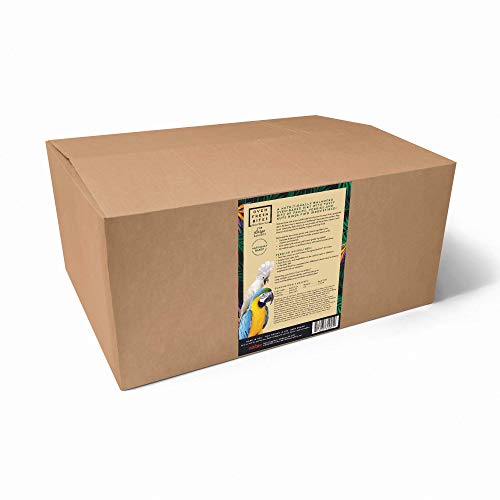
Harrisons High Potency Fine 5lb ...

Key features
- •Maximum Nutritional Formula for Small to Medium Birds
- •Year-round formula for conures, lories, quakers, cockatiels, lovebirds, doves and other small to medium parrots.
- •Premium, whole, certified organic, formulated diet for pet birds
- •No preservatives, artificial colors, sweeteners for flavors
- •USDA NOP Organic Seal ensures the highest quality, chemical-free products for your bird
Harrisons High Potency Fine 5lb ...
List Price: $82.12$73.91DEALYou Save: $8.21 (10%)
Free shippingFree Returns – 30 daysFree Order CancellationSecure Payment2–3 Days DeliveryGet It June 25, 2026In Stock (7)No marketing spamNo account requiredFulfilment by FedEx / Amazon / UPS / ShipwirePayPal / Card Buyer Protection
Customer Reviews
Reviews sourced from verified Amazon purchasers4.6
out of 5
Based on 10 reviews
5★
90%
4★
0%
3★
10%
2★
0%
1★
0%
Changed a Seed Addict
Drevik•September 5, 2018
I have been trying to get my blue crown conure off of seeds for a while. Even nutriberries, she would pull off the white seeds and throw the rest out. I bought this. She would not even try it. So one day, I mixed come Grapenuts cereal, which she loves into the Harrison Food, hoping that she would eat some by mistake. It worked! Not only did it work, but she began seeking the Harrison Food over the Grapenuts. I could pour her a bowl and she chose to eat it even over her white safflower seeds. I did not think that anything would be preferred to those! The ones that I bought are small enough for a cockatiel to eat but my blue crown conure now loves this food. Her bird vet is much pleased.
Great for picky birds!
Jenna Mock•August 15, 2017
My cockatiel would only eat seeds for the longest time. We found him outside in the middle of winter and no one stepped up to claim him, so we kept him. We offered him fresh fruits, veggies, all sorts of pellets, etc. but he refused them all. He only seemed to want seeds. We tried many methods of getting him on pellets but none worked. He recently became ill, blood work showing low calcium and some liver/kidney issues, so the vet recommended this food for us. Not only does he LOVE it, he is getting healthier with each passing day. Thank you!
THE best pellet I've ever fed my bird(s). CRUCIAL for good health!
Denise Larnder•March 20, 2017
Harrison's organic pellets (whether High Potency or Adult Lifetime) are probably THE healthiest and overall best possible main food source for captive parrots/birds. No need to worry about the eventual effects of dyes, pesticides or other nasty chemicals that can harm your bird.
Let me just say though... if you have a parrot who has been living off an all-seed / seed mix diet, he or she will in all likelihood NOT like this food right away. The number one most likely reason: SUGAR. Sugar is proven to be, at least in humans, a MOOD-ALTERING SUBSTANCE, like white flour and caffeine. I say, why would it be much different for parrots? My theory is that parrots can be addicted and develop a tolerance for sugar just like we humans can. Thankfully, Harrison's organic pellets, unlike MANY other 'healthy' pellet brands, have NO added sugar.
So, like I said, let's say you own a parrot who has been living off a high-fat, high-sugar diet. The best method of diet conversion, in my humble opinion, is GRADUAL. If you just replace the seed mix or whatever crap your poor bird has been eating with something as healthy and wholesome as Harrison's, he or she is just going to turn up his or her nose because he or she WILL NOT PERCEIVE THE PELLETS AS FOOD. Some birds will actually be AFRAID of that weird new stuff you put in his or her food bowl. So, how can you change your parrot's perception in order for him or her to see Harrison's, or any pellet for that matter, as food?
Well, put simply, you can't. BUT... there are some sneaky, creative ways to get your parrot to try pellets. There are a few different ways you can do this. Whichever method you choose, it will require a great deal of PATIENCE, so keep that in mind.
***Step 1***
Figure out, as accurately as you can, exactly how much food your bird goes through in one day, if you haven't done so already. You need to know the amount so you can control the proportions of seeds to pellets (more on that momentarily). Notice I said 'how much food your bird GOES THROUGH' rather than 'how much your bird eats'. I say that because we need to also include how much food the bird wastes, say, by dropping pieces of food that fall through the bars at the bottom of the cage. And if you know anything about birds, you are well aware that there is always a LOT of waste. :)
(Note: In order to get an accurate measurement, it's best to have TWO separate cages for your bird: one for daytime, and one for nighttime (sleep cage). And don't put any food in the nighttime cage. That way, your bird won't be consuming food you don't know about during the night, in the early morning while you're still sleeping, etc. Also note: this is NOT cruel in any way. In the wild, parrots do not eat during their sleeping hours. From my own personal research, I have found it's best to mimic natural conditions as accurately as possible in order to ensure the best possible health for your bird.)
You can find this number by first measuring how much you approximately put in the food dish daily. At this point, I'm assuming that there is plenty of food left over in the dish at the end of the day. Depending on the size of your bird, gradually decrease the (measured) amount, day by day, or week by week if necessary, until you come to an amount that leaves the dish pretty much empty at the end of the day, or at the very least, empty with the exception of the pieces of the 'seed mix' that your parrot doesn't eat. If you own a small bird, such as a budgie (parakeet) or a cockatiel, you might want to decrease the daily amount in increments of 1 or 1/2 tsp at a time.
***Step 2***
Selecting a pellet size appropriate for your bird's size and your bird's personal preferences ("Fine" is appropriate for cockatiels and other birds similar in size... though some budgies might prefer the slightly smaller "super fine"). As this brand recommends, start off with the High Potency type; major diet changes are generally stressful for birds, and therefore they need higher amounts of nutrients during these times, also during molting, etc. (Once your bird is 'converted' to Harrison's High Potency, it should be quite easy to convert to Adult Lifetime since the ingredients are so similar; there shouldn't be much if any difference in taste or texture.)
Okay, now that that's out of the way... THE METHODS. In each of these examples, I'm going to use my rescued cockatiel Louie for examples.
***Method #1: Gradual Proportion Changes***
Let's say that I just rescued Louie from his abusive 'home' back in 2011, and he goes through about 8 tsp. of 'seed mix' per day, including the pieces he doesn't touch. For the first week, I will replace 1 tsp. of the seed mix with Harrison's High Potency Fine pellets, and mix it all up. For week 2, I will replace another 1 tsp. of the seed mix with the pellets, totaling 2 tsp. of pellets and 6 tsp. of seed mix. By this time, Louie has likely tried the pellet by accident, and finds the taste to be rather bland, so he doesn't eat them; he prefers his high-fat seeds and high-sugar brightly colored fun-shaped 'pellets' (you know which pieces I'm talking about; my guess is they're made from wheat, corn, and high fructose corn syrup). But as week 3 starts to go by, with 3 tsp. of pellets and 5 tsp. of seed mix, Louie is starting to get hungrier and hungrier after all his favorite pieces of the seed mix are gone, so at the end of the day, he eats a few pellets here and there, even if they are bland, just to satisfy his hunger. Obviously, I continue like this until there is only 1 tsp of seed mix left on week 7, and finally, just pellets at the beginning of week 8 and afterward.
But let's say Louie was even pickier and refused to try the pellets, even when there was only, say, 5 tsp. of seed mix left, and he was quite hungry. Here's where we need to get a bit more creative.
***Method #2: Gradual Proportion Changes: CRUSHED***
For this method, if Louie's 'seed mix' has those sugary colorful fun-shaped 'pellets' I talked about, then we're going to take the tedious time to separate these from the rest of the mix. I crush up the Harrison's pellets and the sugary 'pellets' TOGETHER, in a small food processor/blender or what have you, in a proportion of, say, 3/4 sugar pellets and 1/4 Harrison's. Then, I mix the crushed pellets with the seeds, putting the proper measurement in Louie's food bowl. Do this for a week. If Louie likes the sugary pellets, then he will likely not notice much difference in the taste of them crushed up. And he WILL taste them, likely while searching for millet at the bottom of the bowl. The following week, I increase the proportion of the crushed pellets to the seeds, so that there are more pellets this time. I do this for a week. The following week, I change the proportion of the sugary 'pellets' to Harrison's again, this time making it half and half. It's obvious by now where I'm going with this. Keep reducing the seed, increasing the pellets, and increasing the proportion of Harrison's to gradually reduce the amount of sugar until there is no added sugar at all, and he is eating only crushed Harrison's. After that, you can start introducing a small proportion of the Harrison's pellet in its whole form. It's likely that Louie will appreciate the opportunity to crush the pellet in his beak rather than picking and picking bit by bit for tiny crumbs.
Uh-oh, but what if even THAT doesn't work? What if Louie's seed mix has none of those sugary 'pellets' with which to do this method?
***Method #3: Pellet Bundles***
This method involves captive foraging. If you're already doing this for your bird, wonderful. But most people unfortunately do not, to the detriment of their bird's health and behavior. For the first week, instead of just pouring the correctly measured amount of seed mix in Louie's food dish, this is what I do: I grab some coffee filters and some scissors, cut the filters up into pieces (4 or 6 pieces depending on the size of the filter), and measure out about 1/2 tsp. of seed mix, placing it on the piece of coffee filter. Then, I carefully (so it doesn't rip) wrap up the food within the filter, gently twisting the ends together. What I have now is a seed/food bundle. I make maybe 2-4 of them and put the rest of the food as I normally do in the bowl. Then I poke a few holes in the food bundles so that Louie will be able to see that there's food inside, and then put the food bundles in to the dish for the day. I do this for about a week or until Louie is accustomed to seeing the food bundles. Gradually work up to all of the food being in food bundles. If Louie eats about 8 tsp. of seed mix per day, then I will need about 16 half-teaspoon food bundles. Eventually, I stop poking holes in the food bundles, that way Louie has to bite into them himself to get to his food.
Finally, once he's used to foraging like that, I essentially begin with Method #1: gradually changing the proportions of seeds to pellets. The pellets can be whole, or ground up if you feel the need to be even sneakier about it. This method, in my humble opinion, is the most effective because when he bites into the food bundle, HE CAN'T SEE THE FOOD. So he's going to be accidentally tasting the pellets more and more. And of course, eventually the food/seed bundles will be PELLET BUNDLES.
CONCLUSION: Diet conversion is hard, but it can be done with patience and the right approach. All that aside, once your parrot/bird is on Harrison's organic pellets as his or her main food source for good, especially after changing from a seed mix diet, you should notice substantially good changes in his or her behavior, but most importantly, his/her HEALTH! I can say with great confidence that my cockatiel Louie will be with me for many years to come, all because he is on the proper diet! (A cockatiel that eats a healthy, wholesome diet his/her whole life and is cared for properly can live to be in his/her late 20s! But sadly, most parrots are fed seeds their whole lives, and as a result will only live out a tiny fraction of their proper lifespans.)
I HIGHLY recommend Harrison's organic pellets to anyone who wants to improve their bird's quality of life. A proper diet is CRUCIAL to the well-being of any bird! (Note: As healthy and great as this pellet brand is, though, you should still supplement with veggies and fruits!)
Enjoy your fids, bird-lovers! :)
("fids" = feathered kids)
Let me just say though... if you have a parrot who has been living off an all-seed / seed mix diet, he or she will in all likelihood NOT like this food right away. The number one most likely reason: SUGAR. Sugar is proven to be, at least in humans, a MOOD-ALTERING SUBSTANCE, like white flour and caffeine. I say, why would it be much different for parrots? My theory is that parrots can be addicted and develop a tolerance for sugar just like we humans can. Thankfully, Harrison's organic pellets, unlike MANY other 'healthy' pellet brands, have NO added sugar.
So, like I said, let's say you own a parrot who has been living off a high-fat, high-sugar diet. The best method of diet conversion, in my humble opinion, is GRADUAL. If you just replace the seed mix or whatever crap your poor bird has been eating with something as healthy and wholesome as Harrison's, he or she is just going to turn up his or her nose because he or she WILL NOT PERCEIVE THE PELLETS AS FOOD. Some birds will actually be AFRAID of that weird new stuff you put in his or her food bowl. So, how can you change your parrot's perception in order for him or her to see Harrison's, or any pellet for that matter, as food?
Well, put simply, you can't. BUT... there are some sneaky, creative ways to get your parrot to try pellets. There are a few different ways you can do this. Whichever method you choose, it will require a great deal of PATIENCE, so keep that in mind.
***Step 1***
Figure out, as accurately as you can, exactly how much food your bird goes through in one day, if you haven't done so already. You need to know the amount so you can control the proportions of seeds to pellets (more on that momentarily). Notice I said 'how much food your bird GOES THROUGH' rather than 'how much your bird eats'. I say that because we need to also include how much food the bird wastes, say, by dropping pieces of food that fall through the bars at the bottom of the cage. And if you know anything about birds, you are well aware that there is always a LOT of waste. :)
(Note: In order to get an accurate measurement, it's best to have TWO separate cages for your bird: one for daytime, and one for nighttime (sleep cage). And don't put any food in the nighttime cage. That way, your bird won't be consuming food you don't know about during the night, in the early morning while you're still sleeping, etc. Also note: this is NOT cruel in any way. In the wild, parrots do not eat during their sleeping hours. From my own personal research, I have found it's best to mimic natural conditions as accurately as possible in order to ensure the best possible health for your bird.)
You can find this number by first measuring how much you approximately put in the food dish daily. At this point, I'm assuming that there is plenty of food left over in the dish at the end of the day. Depending on the size of your bird, gradually decrease the (measured) amount, day by day, or week by week if necessary, until you come to an amount that leaves the dish pretty much empty at the end of the day, or at the very least, empty with the exception of the pieces of the 'seed mix' that your parrot doesn't eat. If you own a small bird, such as a budgie (parakeet) or a cockatiel, you might want to decrease the daily amount in increments of 1 or 1/2 tsp at a time.
***Step 2***
Selecting a pellet size appropriate for your bird's size and your bird's personal preferences ("Fine" is appropriate for cockatiels and other birds similar in size... though some budgies might prefer the slightly smaller "super fine"). As this brand recommends, start off with the High Potency type; major diet changes are generally stressful for birds, and therefore they need higher amounts of nutrients during these times, also during molting, etc. (Once your bird is 'converted' to Harrison's High Potency, it should be quite easy to convert to Adult Lifetime since the ingredients are so similar; there shouldn't be much if any difference in taste or texture.)
Okay, now that that's out of the way... THE METHODS. In each of these examples, I'm going to use my rescued cockatiel Louie for examples.
***Method #1: Gradual Proportion Changes***
Let's say that I just rescued Louie from his abusive 'home' back in 2011, and he goes through about 8 tsp. of 'seed mix' per day, including the pieces he doesn't touch. For the first week, I will replace 1 tsp. of the seed mix with Harrison's High Potency Fine pellets, and mix it all up. For week 2, I will replace another 1 tsp. of the seed mix with the pellets, totaling 2 tsp. of pellets and 6 tsp. of seed mix. By this time, Louie has likely tried the pellet by accident, and finds the taste to be rather bland, so he doesn't eat them; he prefers his high-fat seeds and high-sugar brightly colored fun-shaped 'pellets' (you know which pieces I'm talking about; my guess is they're made from wheat, corn, and high fructose corn syrup). But as week 3 starts to go by, with 3 tsp. of pellets and 5 tsp. of seed mix, Louie is starting to get hungrier and hungrier after all his favorite pieces of the seed mix are gone, so at the end of the day, he eats a few pellets here and there, even if they are bland, just to satisfy his hunger. Obviously, I continue like this until there is only 1 tsp of seed mix left on week 7, and finally, just pellets at the beginning of week 8 and afterward.
But let's say Louie was even pickier and refused to try the pellets, even when there was only, say, 5 tsp. of seed mix left, and he was quite hungry. Here's where we need to get a bit more creative.
***Method #2: Gradual Proportion Changes: CRUSHED***
For this method, if Louie's 'seed mix' has those sugary colorful fun-shaped 'pellets' I talked about, then we're going to take the tedious time to separate these from the rest of the mix. I crush up the Harrison's pellets and the sugary 'pellets' TOGETHER, in a small food processor/blender or what have you, in a proportion of, say, 3/4 sugar pellets and 1/4 Harrison's. Then, I mix the crushed pellets with the seeds, putting the proper measurement in Louie's food bowl. Do this for a week. If Louie likes the sugary pellets, then he will likely not notice much difference in the taste of them crushed up. And he WILL taste them, likely while searching for millet at the bottom of the bowl. The following week, I increase the proportion of the crushed pellets to the seeds, so that there are more pellets this time. I do this for a week. The following week, I change the proportion of the sugary 'pellets' to Harrison's again, this time making it half and half. It's obvious by now where I'm going with this. Keep reducing the seed, increasing the pellets, and increasing the proportion of Harrison's to gradually reduce the amount of sugar until there is no added sugar at all, and he is eating only crushed Harrison's. After that, you can start introducing a small proportion of the Harrison's pellet in its whole form. It's likely that Louie will appreciate the opportunity to crush the pellet in his beak rather than picking and picking bit by bit for tiny crumbs.
Uh-oh, but what if even THAT doesn't work? What if Louie's seed mix has none of those sugary 'pellets' with which to do this method?
***Method #3: Pellet Bundles***
This method involves captive foraging. If you're already doing this for your bird, wonderful. But most people unfortunately do not, to the detriment of their bird's health and behavior. For the first week, instead of just pouring the correctly measured amount of seed mix in Louie's food dish, this is what I do: I grab some coffee filters and some scissors, cut the filters up into pieces (4 or 6 pieces depending on the size of the filter), and measure out about 1/2 tsp. of seed mix, placing it on the piece of coffee filter. Then, I carefully (so it doesn't rip) wrap up the food within the filter, gently twisting the ends together. What I have now is a seed/food bundle. I make maybe 2-4 of them and put the rest of the food as I normally do in the bowl. Then I poke a few holes in the food bundles so that Louie will be able to see that there's food inside, and then put the food bundles in to the dish for the day. I do this for about a week or until Louie is accustomed to seeing the food bundles. Gradually work up to all of the food being in food bundles. If Louie eats about 8 tsp. of seed mix per day, then I will need about 16 half-teaspoon food bundles. Eventually, I stop poking holes in the food bundles, that way Louie has to bite into them himself to get to his food.
Finally, once he's used to foraging like that, I essentially begin with Method #1: gradually changing the proportions of seeds to pellets. The pellets can be whole, or ground up if you feel the need to be even sneakier about it. This method, in my humble opinion, is the most effective because when he bites into the food bundle, HE CAN'T SEE THE FOOD. So he's going to be accidentally tasting the pellets more and more. And of course, eventually the food/seed bundles will be PELLET BUNDLES.
CONCLUSION: Diet conversion is hard, but it can be done with patience and the right approach. All that aside, once your parrot/bird is on Harrison's organic pellets as his or her main food source for good, especially after changing from a seed mix diet, you should notice substantially good changes in his or her behavior, but most importantly, his/her HEALTH! I can say with great confidence that my cockatiel Louie will be with me for many years to come, all because he is on the proper diet! (A cockatiel that eats a healthy, wholesome diet his/her whole life and is cared for properly can live to be in his/her late 20s! But sadly, most parrots are fed seeds their whole lives, and as a result will only live out a tiny fraction of their proper lifespans.)
I HIGHLY recommend Harrison's organic pellets to anyone who wants to improve their bird's quality of life. A proper diet is CRUCIAL to the well-being of any bird! (Note: As healthy and great as this pellet brand is, though, you should still supplement with veggies and fruits!)
Enjoy your fids, bird-lovers! :)
("fids" = feathered kids)
PHENOMENAL PRODUCT!
Lawn Care Nut 2•November 8, 2016
I have a quaker parrot that has never been on a pellet diet (ever) as a matter of fact she was a little snooty when it came to fruits and vegetables. I mostly bought Walmart seeds her favorite was the sunflower seeds in the product 99 (not a good diet). I have had her for 5 years. I really thought I was going to have to ween her on Harrison's due to the fact she had never eaten pellets so I mixed the seeds and the pellets. I was shocked when she ate all the pellets and left the seeds (who knew). This is good stuff (nutritionaly sound). Your bird will love you for it. I had to give this product 5 stars because my bird loves it and that's what really matters. The only down side is it is quite expensive but you get what you pay for.
There is no one bird food that will cover all your birds needs, but this comes close.
J. Best•July 25, 2016
Like most of the reviews here say, this is one of the best bird foods you can buy. Actually, its not even a matter of this being slightly better than other foods, since its one of the only bird foods you can buy that actually provides the correct nutrition for your bird. A lot of people buy those mixed blends of seeds and other foods for their bird thinking that its a variety and its healthy for them, when in reality the bird is only going to eat the one or two things it likes in the mix. This causes dull feathers, lack of energy, crankiness, and if left unchecked will eventually kill your bird.
Harrisons is balanced enough that it can serve as a main food source. You should still be providing fresh fruits and veggies however. If you have trouble getting your bird switched over to this, buy a couple packs of Harrisons bird bread. Make the bread, and stuff in some of the food your bird likes. Eventually they will be eating the bread too. Then start stuffing the bread with pellets, and eventually they will be eating the pellets too. This process is how we got a rescue cockatiel to eat food other than millet.
Harrisons is balanced enough that it can serve as a main food source. You should still be providing fresh fruits and veggies however. If you have trouble getting your bird switched over to this, buy a couple packs of Harrisons bird bread. Make the bread, and stuff in some of the food your bird likes. Eventually they will be eating the bread too. Then start stuffing the bread with pellets, and eventually they will be eating the pellets too. This process is how we got a rescue cockatiel to eat food other than millet.
Page 1 of 2
Related products


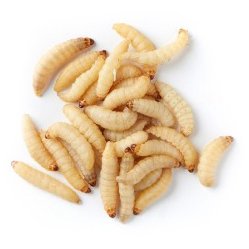
DBDPet Live Waxworms for Feeding Reptiles, Fishing, Birds, and Chickens (1000)
List: $63.71$57.34DEAL