MARCATO Made in Italy Atlas 150 Classic Manual Pasta Maker Machine, Chrome Steel with Black Hand Crank. Makes Lasagna, Fettuccine & Tagliolini.


Key features
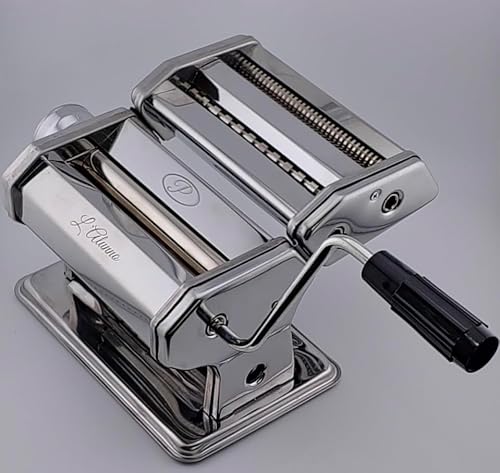
- •Marcato's Original World-Famous Atlas 150 pasta machine rolls and cuts pasta dough for traditional lasagna, fettuccine, and tag at home
- •Made in Italy from chrome-plated steel; Includes pasta machine, pasta cutter, hand crank, clamp, Instructions; 10-year warranty
- •Rolls sheets of dough to 150-millimeters wide at 10 thicknesses (0.6 to 4.8-Millimeter) for consistent texture, cook time, and taste
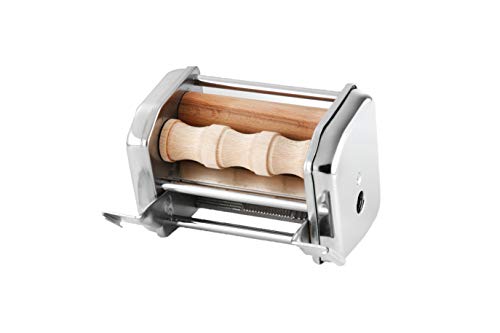
- •Easily attach the pasta drive motor and any of the 12 pasta cutting accessories (sold separately)
- •Called the Ferrari of the pasta machine world by Cook's illustrated; wipe with a Dry brush or cloth; Available exclusively from HIC Harold Import Co
MARCATO Made in Italy Atlas 150 Classic Manual Pasta Maker Machine, Chrome Steel with Black Hand Crank. Makes Lasagna, Fettuccine & Tagliolini.
List Price: $218.18$196.36DEALYou Save: $21.82 (10%)
Free shippingFree Returns – 30 daysFree Order CancellationSecure Payment2–3 Days DeliveryGet It October 27, 2026In Stock (3)No marketing spamNo account requiredFulfilment by FedEx / Amazon / UPS / ShipwirePayPal / Card Buyer Protection
Customer Reviews
Reviews sourced from verified Amazon purchasers4.6
out of 5
Based on 10 reviews
5★
60%
4★
40%
3★
0%
2★
0%
1★
0%
Easily takes the effort out of rolling dough. well made.
E. Derzawiec✓ Verified Purchase•October 15, 2023
I am getting old and find it more difficult to roll out dough by hand. It is easy to get good fresh Italian pasta where I live, so the primary reason I purchased this was to make Polish pierogi...
Traditional pierogy is made using a thin, firm dough that takes a lot of effort to roll out. One half pound of dough making 18 pierogi would take me 15 minutes and a lot of effort with a rolling pin. But with this machine, there is almost no effort and I can do the same work in 5 minutes.
I found that the consistency and thinness of the dough results in NO exploding pierogi when boiling. I highly recommend it. I should have bought one 40 years ago.
I have also used for semolina based doughs for lasagna. Again a lot of work is no more.
Traditional pierogy is made using a thin, firm dough that takes a lot of effort to roll out. One half pound of dough making 18 pierogi would take me 15 minutes and a lot of effort with a rolling pin. But with this machine, there is almost no effort and I can do the same work in 5 minutes.
I found that the consistency and thinness of the dough results in NO exploding pierogi when boiling. I highly recommend it. I should have bought one 40 years ago.
I have also used for semolina based doughs for lasagna. Again a lot of work is no more.
Package arrived wet in a dry outer box - but the maker works great!
Amazon Customer✓ Verified Purchase•September 24, 2023
Sep 16, 2023 - update
We've used the maker once and it worked very well. Any issues we had were skill related not the device. This is only the second time making pasta (first was in a class) so we are new to it. We made a bunch of noodles and they turned out well. We look forward to making more. I'm changing the review to 4 stars. If not for the wet box issue in first review, I'd make it 5 stars.
Sep 7, 2023
The box must have been wet at the warehouse when placed in the box to ship. Nothing else that came with the package or the outer box itself was wet. The pasta maker itself seems undamaged. It was just odd that its box came wet. We will try out the maker and be able to review it vs its shipping.
We've used the maker once and it worked very well. Any issues we had were skill related not the device. This is only the second time making pasta (first was in a class) so we are new to it. We made a bunch of noodles and they turned out well. We look forward to making more. I'm changing the review to 4 stars. If not for the wet box issue in first review, I'd make it 5 stars.
Sep 7, 2023
The box must have been wet at the warehouse when placed in the box to ship. Nothing else that came with the package or the outer box itself was wet. The pasta maker itself seems undamaged. It was just odd that its box came wet. We will try out the maker and be able to review it vs its shipping.
The ONLY non electric version to buy!
L Parr✓ Verified Purchase•September 16, 2023
I first learned how to make pasta decades ago by the amazing Marcella Hazan who answered a question from a student who wanted to know the difference between this machine and an extruder for making spagetti. Her answer still makes me chuckle and I tell the story often. This was her answer: "You live on the third floor of an apartment building and you need to get down to the street, you can walk down the stairs or you can jump out the window...both get you to the street but in different states...the extruder is jumping out the window, this machine is walking down the stairs".
There is no better way to make pasta than with this machine, known by all the best chefs...I've never known one to break. Now in full disclosure I have been using my KitchenAid pasta attachment for years as I like having both hands free, but miss the simplicity of the non electric option and my atlas remains with my previous employer...I like knowing if the lights go out I can still make pasta. Although the 180 model is wider, I find all my ravioli molds, like the norpro are the perfect width for this machine. It would be useful for those that use the ravioli rolling pin, as they are about 18 inches wide, but for most people the 150 model is just perfect.
As most other reviewers will tell you, making the perfect pasta does not mean mastering this machine...it's really very easy to use...it's mastering the perfect pasta dough. If your dough is the perfect consistency it will go through the machine effortlessly. Although there is a learning curve involved...your not breaking the genetic code here...you just need trial and error and some patience. Youtube videos are great but nothing but trial and error will teach you the "feel" of perfect pasta dough. The best advice I can give you is to tell you the dough is a lot dryer than you would think...in the bowl it's granular the size of peas or smaller but if you take a handful and squeeze a fistful it will hold together. I will also tell you that even with my KitchenAid with the 475 watt motor, the dough hook will strain when kneading and I do most of my kneading by passing it through the number one setting multiple times (10-12). The first few times you pass it through you will think you are a failure...it will not come out in one piece but in various jagged pieces and look like a mess...that's okay, the gluten has not fully formed yet even if you DID knead it and let is rest 30 minutes. Just do your best to put the pieces together and keep passing it through...after many passes...maybe a dozen more or less you will see the dough change as the gluten develops. A slight sheen to the dough and more uniform and pliable. Once you can form one piece of this dough through the number one setting, you can go on to number two...some people go through number two twice...sometimes I do, sometime I don't and I have no reason as to why...just my mood of the minute. After that go through each setting only once. I strongly suggest looking at some youtube videos to give you more confidence before trying. The following are just some various tips:
I don't use the automatic ravioli machines from any makers because the pasta must be thick enough not to tear apart (usually setting 3) and I find that too thick for good ravioli (I usually use 4). The Ravioli makers with a press like the norpro are easy to use and make a better ravioli.
I make big batches of dough at one time and freeze my fresh ravioli or pasta...if you do this you will need to work with small balls of dough...if they are too big your sheets will be too long to handle. Make sure to keep the other pasta dough from drying by covering with a damp paper towel and check frequently because it will dry quickly...I usually redampen the towel after each sheet. For a sheet of ravioli that will give me a top and a bottom for my mold I use a piece of dough about the size of a tangerine. Three cups of semolina flour with three eggs ect...give me four balls of dough and I gather the scraps from each tray and it gives me enough for another full tray when I'm done.
Check your roller each time before adding the dough to it...even the smallest crumb of dough left behind will cause your dough to rip.
If you don't have a pasta drying rack but you have a dishtowel rack, the kind with three long bars you attach to the wall to hang multiple dishtowels to, it works better than most racks because your pasta can be really long.
Add ins to your pasta are great but many will cause tears at thinner levels, especially fresh cracked pepper. Even if you buy chopped spinach, put it through your food processor in small batches for best results.
When you get the confidence to try ravioli, ignore all the OCD comments about making sure all the air is out of the "pillow", I read where once reviewer actually used a toothpick to get out air bubbles. I gently press the top layer of dough over the filling once in the tray, but I have never gotten anal about it and never had a ravioli burst on me. Also when cooking use a gentle boil not a rolling boil for ravioli, this will also prevent bursting. I have used water to seal my edges before going over with a rolling pin and I have used nothing...I found no difference. When using a mold like the norpro, put in more filling than you would think...once you press down it will fill in the voids and give you a nice filled "pillow".
Please learn this lost art and teach it to your children and grandchildren...it is a wonderful way to spend a weekend day and you can make tons to freeze in serving portions for later use (freeze first on cookie sheet than transfer to plastic bag or foodsaver). Nothing you can buy is as good as you can make for a fraction of the price.
There is no better way to make pasta than with this machine, known by all the best chefs...I've never known one to break. Now in full disclosure I have been using my KitchenAid pasta attachment for years as I like having both hands free, but miss the simplicity of the non electric option and my atlas remains with my previous employer...I like knowing if the lights go out I can still make pasta. Although the 180 model is wider, I find all my ravioli molds, like the norpro are the perfect width for this machine. It would be useful for those that use the ravioli rolling pin, as they are about 18 inches wide, but for most people the 150 model is just perfect.
As most other reviewers will tell you, making the perfect pasta does not mean mastering this machine...it's really very easy to use...it's mastering the perfect pasta dough. If your dough is the perfect consistency it will go through the machine effortlessly. Although there is a learning curve involved...your not breaking the genetic code here...you just need trial and error and some patience. Youtube videos are great but nothing but trial and error will teach you the "feel" of perfect pasta dough. The best advice I can give you is to tell you the dough is a lot dryer than you would think...in the bowl it's granular the size of peas or smaller but if you take a handful and squeeze a fistful it will hold together. I will also tell you that even with my KitchenAid with the 475 watt motor, the dough hook will strain when kneading and I do most of my kneading by passing it through the number one setting multiple times (10-12). The first few times you pass it through you will think you are a failure...it will not come out in one piece but in various jagged pieces and look like a mess...that's okay, the gluten has not fully formed yet even if you DID knead it and let is rest 30 minutes. Just do your best to put the pieces together and keep passing it through...after many passes...maybe a dozen more or less you will see the dough change as the gluten develops. A slight sheen to the dough and more uniform and pliable. Once you can form one piece of this dough through the number one setting, you can go on to number two...some people go through number two twice...sometimes I do, sometime I don't and I have no reason as to why...just my mood of the minute. After that go through each setting only once. I strongly suggest looking at some youtube videos to give you more confidence before trying. The following are just some various tips:
I don't use the automatic ravioli machines from any makers because the pasta must be thick enough not to tear apart (usually setting 3) and I find that too thick for good ravioli (I usually use 4). The Ravioli makers with a press like the norpro are easy to use and make a better ravioli.
I make big batches of dough at one time and freeze my fresh ravioli or pasta...if you do this you will need to work with small balls of dough...if they are too big your sheets will be too long to handle. Make sure to keep the other pasta dough from drying by covering with a damp paper towel and check frequently because it will dry quickly...I usually redampen the towel after each sheet. For a sheet of ravioli that will give me a top and a bottom for my mold I use a piece of dough about the size of a tangerine. Three cups of semolina flour with three eggs ect...give me four balls of dough and I gather the scraps from each tray and it gives me enough for another full tray when I'm done.
Check your roller each time before adding the dough to it...even the smallest crumb of dough left behind will cause your dough to rip.
If you don't have a pasta drying rack but you have a dishtowel rack, the kind with three long bars you attach to the wall to hang multiple dishtowels to, it works better than most racks because your pasta can be really long.
Add ins to your pasta are great but many will cause tears at thinner levels, especially fresh cracked pepper. Even if you buy chopped spinach, put it through your food processor in small batches for best results.
When you get the confidence to try ravioli, ignore all the OCD comments about making sure all the air is out of the "pillow", I read where once reviewer actually used a toothpick to get out air bubbles. I gently press the top layer of dough over the filling once in the tray, but I have never gotten anal about it and never had a ravioli burst on me. Also when cooking use a gentle boil not a rolling boil for ravioli, this will also prevent bursting. I have used water to seal my edges before going over with a rolling pin and I have used nothing...I found no difference. When using a mold like the norpro, put in more filling than you would think...once you press down it will fill in the voids and give you a nice filled "pillow".
Please learn this lost art and teach it to your children and grandchildren...it is a wonderful way to spend a weekend day and you can make tons to freeze in serving portions for later use (freeze first on cookie sheet than transfer to plastic bag or foodsaver). Nothing you can buy is as good as you can make for a fraction of the price.
The best pasta roller I have owned
Roberta✓ Verified Purchase•August 5, 2023
This is a quality made machine that works so smoothly it was a pleasure to make ravoli with this machine. It is well made and the dough flows through with ease. You get what you pay for and this is worth the money! I am off on a pasta journey now cause this machine makes it so easy.
Love it!
Mtd✓ Verified Purchase•August 3, 2023
I'm very pleased with my new pasta machine! I use it for polymer clay. So easy to use! Works like a dream!
Page 1 of 2