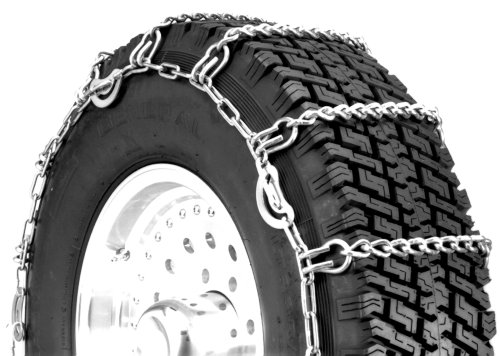
SCC Z-571 Z-Chain Extreme Performance Cable Tire Traction Chain - Set of 2
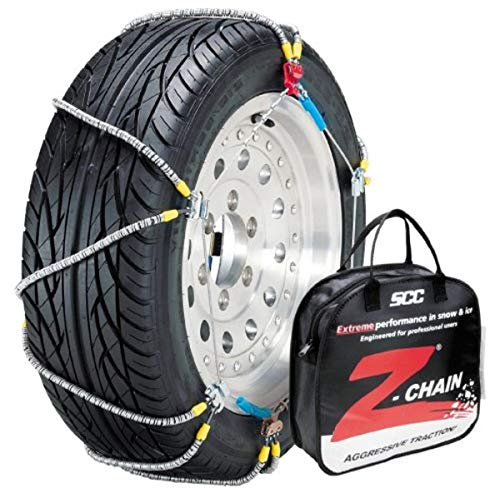


Key features
- •Z-Chain's manganese alloy cross members provide superior, all-around traction performance and greater durability compared to conventional traction products of any kind
- •Z-Chain has greater compatibility with anti-lock brakes, traction control, all-wheel drive and other electronically monitored and controlled systems, due to its unique cross member pattern
- •Fast, secure installation and removal, with no need to move the vehicle
- •Low potential for damage to vehicle body and mechanical components, even when abused
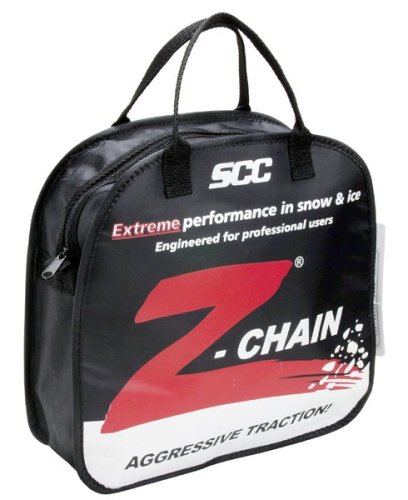
- •Z-Chain's package includes clear, step-by-step installation and removal instruction, as well as waterproof gloves. Replacement cross members are available through some retailers
BrandSCC
CategoryCar
SizeZ-571
ColorSilver
WarrantyTraction product warranty: All SCC winter traction products are warranted free from defect in workmanship and material for one year from the date of delivery to user. Defective product may be returned to the manufacture, freight prepaid, within 10 days of
SCC Z-571 Z-Chain Extreme Performance Cable Tire Traction Chain - Set of 2
List Price: $226.19$203.57DEALYou Save: $22.62 (10%)
Free shippingFree Returns – 30 daysFree Order CancellationSecure Payment2–3 Days DeliveryGet It October 25, 2026In Stock (2)No marketing spamNo account requiredFulfilment by FedEx / Amazon / UPS / ShipwirePayPal / Card Buyer Protection
Customer Reviews
Reviews sourced from verified Amazon purchasers4.4
out of 5
Based on 10 reviews
5★
50%
4★
50%
3★
0%
2★
0%
1★
0%
Bailed me out, comes with gloves and instructions
Travis M✓ Verified Purchase•September 26, 2023
Was hoping not to need them but ended up driving up a very icy road in 2WD SUV and was starting to slide around and hold up traffic behind me. These took a little reading to get situated and were loud and hard on the suspension but they made a huge difference in traction. Was happy they came with instructions and long gloves which were a nice touch. Not sure how many uses you'll get out of them but perfect to stash in the car for short term emergency use in snowy/ice conditions.
Easy on, easy off, huge safety improvement
J Vasile✓ Verified Purchase•September 3, 2023
Summary: used it twice, won't hit the mountains in the winter without them. Pretty sure I'd have crashed without them.
I live in a city and figured that if it snowed I would just avoid driving. So I bought a Mazda 5 minivan with terrible snow traction. Then my family fell in love with snowboard and ski vacations. Suddenly about 40% of my miles are in the mountains during winter. I needed more traction.
First: snow tires. They're on the shopping list but I haven't done it yet. I should.
Second: tire chains. But my tiny minivan has no clearance in the wheel well for chains. So I picked these up. They saved me. Twice. I put them on after the van just flat out refused to climb a steep snowy hill. And again after we slid around the road a bit while driving. In each case, that limited our speed to 30 mph, which was a pain but much preferable to ending up in a ditch.
With a pair of these on the drive wheels, I have significantly improved traction. I can safely drive around Vermont. There are still hills I struggle to climb, but I can usually get there if I carry some speed to the hill. Most importantly, I'm no longer at risk for sliding into a ditch. One note is that the device gives better traction when conditions are bad, but seems to provide *worse* traction on merely wet pavement. It's important to know when *not* to use it.
I highly recommend practicing installation before you need them. The first time I did it, I was freezing, stressed, and it was dark. It took a loooong time and I had to stop 8 times to readjust things. It was a pain, but still I got my family home safely. The second time I needed these, it took fifteen minutes. I stopped three times to readjust. And I learned a few things that will help next time, when I'm sure it will go faster and require fewer stops.
The big problem with this kit is that when you pull the cable ends through the locking mechanism, you end up with long tails. These tails thwack your car as the tire spins. To prevent this, the device comes with a green plastic spiral that is supposed to contain those ends and hold them close to the other cables. It doesn't work that well. That's why I kept having to stop. I had to readjust and try to keep it from damaging my car. I finally tied stuff down with some cord and elastic hair ties I stole from my kids. Removing those additional ties was a pain (they were frozen) but it was better than damaging the wheel well of the car.
These cables are easy to remove. Again, repetition makes it faster. It's two cable locks and a hook. Not difficult at all.
The kit includes a pair of gloves with long gauntlets. It's a nice touch because it reduces the amount of crud you get on you when you're working on the tire. Let's be honest, though, you're going to get dirty. It's not just your sleeves that are going to get in the muck. The other complaint I have is that the gloves quickly get soaked. If you're putting the cables on your car in snow or freezing rain, you're going to quickly discover that wet, frozen gloves aren't much better than naked hands. I had to take a break and hold my hands in front of the car's heater.
One final tip: make copies or take pictures of the instructions. You really want to make sure you have access to them quickly in a stressful moment when you might not have cell service. The instructions are clear and easy-to-follow, and you don't want to do it from memory.
Finally, the whole thing started to rust after first use. I'm not sure how to assess wear and decide to replace the set. I'm ok with this device being a consumable part-- you can't expect it to last forever. I just don't want to be driving on it past the point where it is safe. I now clean and inspect after use, but I'm not sure what to look for.
I live in a city and figured that if it snowed I would just avoid driving. So I bought a Mazda 5 minivan with terrible snow traction. Then my family fell in love with snowboard and ski vacations. Suddenly about 40% of my miles are in the mountains during winter. I needed more traction.
First: snow tires. They're on the shopping list but I haven't done it yet. I should.
Second: tire chains. But my tiny minivan has no clearance in the wheel well for chains. So I picked these up. They saved me. Twice. I put them on after the van just flat out refused to climb a steep snowy hill. And again after we slid around the road a bit while driving. In each case, that limited our speed to 30 mph, which was a pain but much preferable to ending up in a ditch.
With a pair of these on the drive wheels, I have significantly improved traction. I can safely drive around Vermont. There are still hills I struggle to climb, but I can usually get there if I carry some speed to the hill. Most importantly, I'm no longer at risk for sliding into a ditch. One note is that the device gives better traction when conditions are bad, but seems to provide *worse* traction on merely wet pavement. It's important to know when *not* to use it.
I highly recommend practicing installation before you need them. The first time I did it, I was freezing, stressed, and it was dark. It took a loooong time and I had to stop 8 times to readjust things. It was a pain, but still I got my family home safely. The second time I needed these, it took fifteen minutes. I stopped three times to readjust. And I learned a few things that will help next time, when I'm sure it will go faster and require fewer stops.
The big problem with this kit is that when you pull the cable ends through the locking mechanism, you end up with long tails. These tails thwack your car as the tire spins. To prevent this, the device comes with a green plastic spiral that is supposed to contain those ends and hold them close to the other cables. It doesn't work that well. That's why I kept having to stop. I had to readjust and try to keep it from damaging my car. I finally tied stuff down with some cord and elastic hair ties I stole from my kids. Removing those additional ties was a pain (they were frozen) but it was better than damaging the wheel well of the car.
These cables are easy to remove. Again, repetition makes it faster. It's two cable locks and a hook. Not difficult at all.
The kit includes a pair of gloves with long gauntlets. It's a nice touch because it reduces the amount of crud you get on you when you're working on the tire. Let's be honest, though, you're going to get dirty. It's not just your sleeves that are going to get in the muck. The other complaint I have is that the gloves quickly get soaked. If you're putting the cables on your car in snow or freezing rain, you're going to quickly discover that wet, frozen gloves aren't much better than naked hands. I had to take a break and hold my hands in front of the car's heater.
One final tip: make copies or take pictures of the instructions. You really want to make sure you have access to them quickly in a stressful moment when you might not have cell service. The instructions are clear and easy-to-follow, and you don't want to do it from memory.
Finally, the whole thing started to rust after first use. I'm not sure how to assess wear and decide to replace the set. I'm ok with this device being a consumable part-- you can't expect it to last forever. I just don't want to be driving on it past the point where it is safe. I now clean and inspect after use, but I'm not sure what to look for.
don’t fear the chains !
Dirk Cobra✓ Verified Purchase•August 27, 2023
I tried them on the day before we left for a warm up. These come with gloves so don't buy extra like I did. Bring a waterproof matte to kneel on. On the way up the mountain the next day, just as we pulled over and installed these chains in the snowy turnout up the hill to Big Bear, a worker came by and flipped the sign around to "no chains". Well this would be a blessing in disguise giving me real world practice. On the departure day, we were snowed in and doors were frozen shut.
Step 1: lay the chains on the driveway in front of your tires (front wheels of front wheel drive, back of rear wheel drive) with tire Side stamp facing up. The red cable should face inside.
Step 2: drive onto the middle of the chains
Step 3: hook up the red cable hook on the inside top of the tire
Step 4: hook up each tensioner with the same number of stoppers and then slide green plastic protecter over the end
Step 5: pull forward a few yards then retighten the tensioners a bit so they are equal
Step 6: clinch your sphincter as your prepare to embark on a snowy drive with your family
Step 1: lay the chains on the driveway in front of your tires (front wheels of front wheel drive, back of rear wheel drive) with tire Side stamp facing up. The red cable should face inside.
Step 2: drive onto the middle of the chains
Step 3: hook up the red cable hook on the inside top of the tire
Step 4: hook up each tensioner with the same number of stoppers and then slide green plastic protecter over the end
Step 5: pull forward a few yards then retighten the tensioners a bit so they are equal
Step 6: clinch your sphincter as your prepare to embark on a snowy drive with your family
Loud and bumpy ride at times, but they get the job done
Alex✓ Verified Purchase•August 11, 2023
Installed on my FWD 2017 Hyundai Sonata Hybrid for a 60 mile descent out of the Lake Tahoe area during a snow storm. They definitely caused some concerning vibrations at times, but I think that's just the price of admission with chains. I would not have made it home that night without these chains. They absolutely got the job done and stayed attached securely. After rinsing them off and spraying with WD-40 (a must), they looked to be in good shape and didn't rust (again, use WD-40). I've used them only once, so I can't comment on durability but they seem to be holding up fine.
Everything you need to know about traction cables...
M. Anderson✓ Verified Purchase•July 13, 2023
There are a confusing array of tire chains/traction control devices on the market, and even this particular company makes so many different models that it's hard to tell which ones are the best. Here's what you need to know about chains and traction control devices, and why I like the ones made by SCC. I also include some installation hints at the bottom of this review.
There are two broad types of traction control devices: Tire chains and traction control cables. Tire chains are actual chain links. Traction control cables are long pieces of metal cables, covered in a plastic coating, and designed to form a Z-pattern over your tires. The plastic coating is then surrounded by hundreds of tiny, round, metal springs. Cables are generally regarded as better because they are easier to install, last longer, are less damaging to roads, and work better with vehicles equipped with ABS. Also, according to SCC, you can safely drive with cable devices up to 30 mph, even on roads with no snow, without damaging them.
You should normally install traction control cables on your drive wheels, i.e. the wheels that actually push or pull your car forward. If the snow is really bad, though, you may have to install cables on all four wheels. Read your vehicle's owner's manual for more details on where to install your cables.
In any case, it's a really, really good idea to have TWO sets of cables in your car at all times. That way, if something breaks (murphy's law), you won't be stuck.
Within the traction control cable category, there are two general types of cables: Self-tensioning cables tighten themselves using a tensioner (which looks, feels, and operates like a rubber band) that you install when you put the cables on. Manual tensioning cables are tightened by you, and have to be re-tightened after you drive for a couple hundred feet or so. I've heard that emergency vehicles tend to use the manually adjustable models because they are allegedly safer at speeds above 30 MPH, but driving above 30 MPH for any non-emergency personnel is illegal with any kind of traction control device.
There are several advantages to the manually adjustable models. They tend to have more slack, which can make installation easier. Also, the tensioners (i.e. rubber bands) on self-adjusting cables can and do break (it happened to me today) and if they break, you can't use the cables. So, if you get a cable that has a tensioner, get extra tensioners, or better yet, an extra set of cables, just in case.
Here's a breakdown of SCC's cable products:
Z-Chain- Manually adjustable Traction Control Cable. Easy to install, but must be retightened shortly after you start driving. Very easy to install because they come with lots of slack. Often used by police and fire personnel.
Shur Grip Z/Super Z LT- Self adjusting cable. Tensioners can break so buy extras. Less slack, so can be harder to put on the car, but generally easier than Z-chains because you don't have to manually tighten and re-tighten them.
Super Z6/Z8- Newest Self adjusting cable, designed for vehicles with very little sidewall clearance. They have all the advantages and disadvantages of the Shur Grip Z. In addition, however, the connectors are a little harder to work with on this model because of their low profile.
On all of these models, the metal rings are made of a spring-like material, SCC says that you don't have to remove the chains as soon as you reach a paved road. Rather, as long as you drive under 30 MPH, SCC says that you can drive with the traction control cables on your car, even as you switch between plowed and non-plowed roads. Because each of the hundreds of little springs are separate pieces, even when one breaks, it just falls off, and the others work to fill-in the void.
Installing the cables is relatively easy, and I'm definitely not a hands-on kind of guy. It took me about 15 minutes the very first time, and now that I've done it several times, I can get it done in under a minute per wheel. You should always do a test-installation of cables before you need them to make sure that you purchased the correct size and know how to install it. It's also very useful to have some waterproof gloves handy and a towel with you, as it is often wet and cold when you need to install chains. A good choice for gloves are the long wristed rubber gloves that you can buy at the grocery store for washing dishes, or some disposal latex gloves. After you use the cables for the first time, fold each cable separately and then use a trash bag tie to keep each one together. Otherwise, the next time you need them, they'll all be tangled together.
Here are some hints on how to install these chains.
1. Read the instructions from the manufacturer and pay close attention to the safety instructions. The basics of the instructions are (1) stay safe, (2) position the cables correctly, (3) connect the upper rear connector, (4) connect the upper front connector and tighten it, (5) connect the lower front connector and tighten it, (6) drive for a bit, (7) retighten the front upper and lower connectors.
The instructions are quite good, but they leave out a few helpful hints, which I will now share with you.
2. Put on some rubber dishwashing gloves and lay a towel down wherever you're going to work, or you will get very, very dirty.
BEFORE YOU START, MAKE SURE YOU HAVE THE CORRECT SIDE UP! There are markings all over the cables which indicate the correct orientation. Look for them!
3. When you slide the cables under your tires, start from a point between your front and rear tires. Slide half of the chain under your car, and then reach around from the other side of the tire to pull the cable around. Although the instructions describe a swinging slide motion, I've never seen anyone who could do that without twisting the cables up. Just pull them and things will be much easier.
4. Once the cables are around the tire, DO NOT pull the bottom connectors that hold the cables together at the bottom of the tire towards one another. Keep them as far apart as possible. If you pull them in tight, you won't be able to pull the chain high enough in the back to connect the rear upper connector, which is what you are supposed to do first.
5. When you are connecting the rear upper connector, if you can't get the rear upper connectors up above the tire so that you can see them, push the part of the cables that surround the bottom of your tire backwards and under your car a few inches. This will create slack behind the cables and allow you to pull the cables up in the back.
6. Once you have the rear upper connector connected, hooking up the front upper connector may be difficult. Try pushing the rear upper connector back so that it is laying against the inside sidewall of your tire and then pull the front upper connectors towards you as hard as you can. Don't try to pull them towards each other. While sitting, just pull them straight out, towards you, and the rest of the chains should fall into place. Then they should be easy to connect. With this chain, there are multiple connector notches. Get the chain connected to whichever notch is easiest, and you can pull them tighter later.
7. Gently pull the parts of the chain that criss-cross your tires down towards the ground so that they aren't all bunched up at the top. Look at the chain and make sure that the parts you can see, and especially the blue cable, is evenly distributed around the tire.
8. Then pull the bottom front connectors towards you (out, but not up or down) to create slack. Then connect them. Again, don't try to pull them towards one another as that makes it almost impossible to create slack. With this chain, there are multiple connector notches. Get the chain connected to whichever notch is easiest, and you can pull them tighter later.
9. Now, pull the top connector, which you attached in step 6, towards you firmly to remove the slack and tighten the connector. Repeat with the bottom connector. The top and bottom connectors should be within 1 notch of each other.
10. Drive your car a few feet and repeat step 9, above.
There are two broad types of traction control devices: Tire chains and traction control cables. Tire chains are actual chain links. Traction control cables are long pieces of metal cables, covered in a plastic coating, and designed to form a Z-pattern over your tires. The plastic coating is then surrounded by hundreds of tiny, round, metal springs. Cables are generally regarded as better because they are easier to install, last longer, are less damaging to roads, and work better with vehicles equipped with ABS. Also, according to SCC, you can safely drive with cable devices up to 30 mph, even on roads with no snow, without damaging them.
You should normally install traction control cables on your drive wheels, i.e. the wheels that actually push or pull your car forward. If the snow is really bad, though, you may have to install cables on all four wheels. Read your vehicle's owner's manual for more details on where to install your cables.
In any case, it's a really, really good idea to have TWO sets of cables in your car at all times. That way, if something breaks (murphy's law), you won't be stuck.
Within the traction control cable category, there are two general types of cables: Self-tensioning cables tighten themselves using a tensioner (which looks, feels, and operates like a rubber band) that you install when you put the cables on. Manual tensioning cables are tightened by you, and have to be re-tightened after you drive for a couple hundred feet or so. I've heard that emergency vehicles tend to use the manually adjustable models because they are allegedly safer at speeds above 30 MPH, but driving above 30 MPH for any non-emergency personnel is illegal with any kind of traction control device.
There are several advantages to the manually adjustable models. They tend to have more slack, which can make installation easier. Also, the tensioners (i.e. rubber bands) on self-adjusting cables can and do break (it happened to me today) and if they break, you can't use the cables. So, if you get a cable that has a tensioner, get extra tensioners, or better yet, an extra set of cables, just in case.
Here's a breakdown of SCC's cable products:
Z-Chain- Manually adjustable Traction Control Cable. Easy to install, but must be retightened shortly after you start driving. Very easy to install because they come with lots of slack. Often used by police and fire personnel.
Shur Grip Z/Super Z LT- Self adjusting cable. Tensioners can break so buy extras. Less slack, so can be harder to put on the car, but generally easier than Z-chains because you don't have to manually tighten and re-tighten them.
Super Z6/Z8- Newest Self adjusting cable, designed for vehicles with very little sidewall clearance. They have all the advantages and disadvantages of the Shur Grip Z. In addition, however, the connectors are a little harder to work with on this model because of their low profile.
On all of these models, the metal rings are made of a spring-like material, SCC says that you don't have to remove the chains as soon as you reach a paved road. Rather, as long as you drive under 30 MPH, SCC says that you can drive with the traction control cables on your car, even as you switch between plowed and non-plowed roads. Because each of the hundreds of little springs are separate pieces, even when one breaks, it just falls off, and the others work to fill-in the void.
Installing the cables is relatively easy, and I'm definitely not a hands-on kind of guy. It took me about 15 minutes the very first time, and now that I've done it several times, I can get it done in under a minute per wheel. You should always do a test-installation of cables before you need them to make sure that you purchased the correct size and know how to install it. It's also very useful to have some waterproof gloves handy and a towel with you, as it is often wet and cold when you need to install chains. A good choice for gloves are the long wristed rubber gloves that you can buy at the grocery store for washing dishes, or some disposal latex gloves. After you use the cables for the first time, fold each cable separately and then use a trash bag tie to keep each one together. Otherwise, the next time you need them, they'll all be tangled together.
Here are some hints on how to install these chains.
1. Read the instructions from the manufacturer and pay close attention to the safety instructions. The basics of the instructions are (1) stay safe, (2) position the cables correctly, (3) connect the upper rear connector, (4) connect the upper front connector and tighten it, (5) connect the lower front connector and tighten it, (6) drive for a bit, (7) retighten the front upper and lower connectors.
The instructions are quite good, but they leave out a few helpful hints, which I will now share with you.
2. Put on some rubber dishwashing gloves and lay a towel down wherever you're going to work, or you will get very, very dirty.
BEFORE YOU START, MAKE SURE YOU HAVE THE CORRECT SIDE UP! There are markings all over the cables which indicate the correct orientation. Look for them!
3. When you slide the cables under your tires, start from a point between your front and rear tires. Slide half of the chain under your car, and then reach around from the other side of the tire to pull the cable around. Although the instructions describe a swinging slide motion, I've never seen anyone who could do that without twisting the cables up. Just pull them and things will be much easier.
4. Once the cables are around the tire, DO NOT pull the bottom connectors that hold the cables together at the bottom of the tire towards one another. Keep them as far apart as possible. If you pull them in tight, you won't be able to pull the chain high enough in the back to connect the rear upper connector, which is what you are supposed to do first.
5. When you are connecting the rear upper connector, if you can't get the rear upper connectors up above the tire so that you can see them, push the part of the cables that surround the bottom of your tire backwards and under your car a few inches. This will create slack behind the cables and allow you to pull the cables up in the back.
6. Once you have the rear upper connector connected, hooking up the front upper connector may be difficult. Try pushing the rear upper connector back so that it is laying against the inside sidewall of your tire and then pull the front upper connectors towards you as hard as you can. Don't try to pull them towards each other. While sitting, just pull them straight out, towards you, and the rest of the chains should fall into place. Then they should be easy to connect. With this chain, there are multiple connector notches. Get the chain connected to whichever notch is easiest, and you can pull them tighter later.
7. Gently pull the parts of the chain that criss-cross your tires down towards the ground so that they aren't all bunched up at the top. Look at the chain and make sure that the parts you can see, and especially the blue cable, is evenly distributed around the tire.
8. Then pull the bottom front connectors towards you (out, but not up or down) to create slack. Then connect them. Again, don't try to pull them towards one another as that makes it almost impossible to create slack. With this chain, there are multiple connector notches. Get the chain connected to whichever notch is easiest, and you can pull them tighter later.
9. Now, pull the top connector, which you attached in step 6, towards you firmly to remove the slack and tighten the connector. Repeat with the bottom connector. The top and bottom connectors should be within 1 notch of each other.
10. Drive your car a few feet and repeat step 9, above.
Page 1 of 2
Related products
![ITP Hurricane Matte Black ATV Wheel Front/Rear 17x7 4/110 - (5+2) [17RB110]](https://m.media-amazon.com/images/I/51uXAZq9Y0L._SL500_.jpg)


(4) Lawn Trac Front/Rear Wheel Assemblies Fits Kubota BX2350D, BX24D, BX25
List: $1163.99$1047.59DEAL