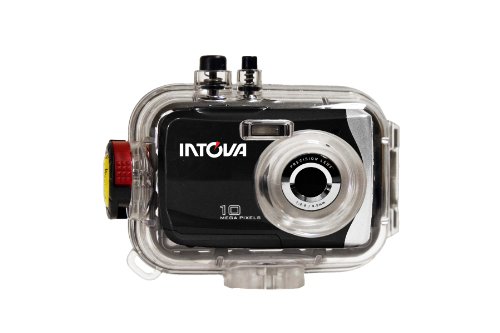
Intova CP9 Compact Waterproof Digital Camera (OLD MODEL)
Key features
- •Pocket-sized removable inner camera
- •9.0 mega-pixel sensor
- •Video mode
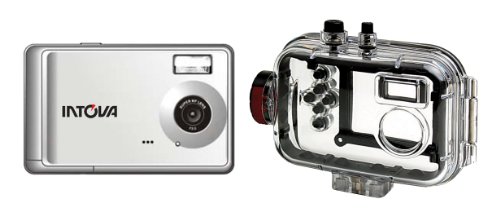
- •9-megapixel digital camera can be used on its own or with included waterproof housing for snorking, swimming, and more
- •Waterproof to 130 feet (39 meters); 32 MB internal memory; expansion via SD/SDHC cards up to 8 GB
- •Captures videos up to VGA resolution (640 x 480) at 20 frames per second
Intova CP9 Compact Waterproof Digital Camera (OLD MODEL)
List Price: $145.49$130.94DEALYou Save: $14.55 (10%)
Free shippingFree Returns – 30 daysFree Order CancellationSecure Payment2–3 Days DeliveryGet It October 25, 2026In Stock (1)No marketing spamNo account requiredFulfilment by FedEx / Amazon / UPS / ShipwirePayPal / Card Buyer Protection
Customer Reviews
Reviews sourced from verified Amazon purchasers3.1
out of 5
Based on 10 reviews
5★
30%
4★
40%
3★
10%
2★
10%
1★
10%
Not worth the money. Seriously, save up and buy a better camera with features you can use and photos you want to keep
Naalipalo•March 19, 2016
I purchased this camera a long time ago and am just now reviewing it which is kind of different. Most people give reviews right away. Ive had this camera for 4 years now and the best thing about it is the case. The camera is total waste of money. When I use it to snorkle, you can't focus on anything, the lighting is always completely off, the controls are so simple that there really are no options. Its very difficult to change settings while under water. I have nearly completely given up on taking photos and only take video. It drains through batteries like no other. Yes, I know videos take up juice, but you for sure canNOT get 2 complete dives out of 1 set of batteries videos or not. Save the $50 and get yourself a camera that you might actually like the photos from. The entire point is to have good memories and about all you'll get from this is mediocre fuzzy memories. Its does NOT work well even outside of the casing. If I had a little kid friend, I might give this to them as it could be their first underwater camera...just don't ever expect good photos or video even on dry land.
Its just so disappointing to get out of a dive and finally see the photos and realizing just how awful the camera is (excluding operator skills - doesn't matter who you are, it just takes bad photos).
I give it 2 stars only because it has lasted so long. I have taken it to many different places and I am pretty hard on my equipment, but it has held up amazingly and I give all of that to the case. That case has not leaked once and is quite durable. It really is a good case. The scratches on the lenses part is disappointing and I know contributes to the decline in pleasing pictures, but that is something to be aware of too. Over the years this casing isn't as smooth and as clear colored which taints the photographs.
I got this when I was a student and pinching pennies but knew that this cost as much as 4 disposable underwater cameras which I would easily go through in 1 diving trip - so I thought Id be saving money. Which I did for a while, but ultimately 90% of the photos I get from this are just so bad they aren't even worth the digital memory.
Its just so disappointing to get out of a dive and finally see the photos and realizing just how awful the camera is (excluding operator skills - doesn't matter who you are, it just takes bad photos).
I give it 2 stars only because it has lasted so long. I have taken it to many different places and I am pretty hard on my equipment, but it has held up amazingly and I give all of that to the case. That case has not leaked once and is quite durable. It really is a good case. The scratches on the lenses part is disappointing and I know contributes to the decline in pleasing pictures, but that is something to be aware of too. Over the years this casing isn't as smooth and as clear colored which taints the photographs.
I got this when I was a student and pinching pennies but knew that this cost as much as 4 disposable underwater cameras which I would easily go through in 1 diving trip - so I thought Id be saving money. Which I did for a while, but ultimately 90% of the photos I get from this are just so bad they aren't even worth the digital memory.
Great little camera at the price.
Kindle Customer•January 7, 2014
I purchased this camera for what I thought was a very low price on Amazon.
I took this camera with me both snorkling and diving (to 24 meters) and found that it worked very nicely in both still and movie mode. The only problem was me ... I needed to spend much more time with the camera to know all the functions by heart.
The nice thing about this camera and housing is that you can use the camera outside the housing as a thing, reasonably compact digital camera out of the water. The housing worked well without any water infiltration.
Considering the current price of under $50.00 you could go much more wrong. Since it used regular batteries there was no problem having replacements in my dive bag and never lost power on a dive.
I took this camera with me both snorkling and diving (to 24 meters) and found that it worked very nicely in both still and movie mode. The only problem was me ... I needed to spend much more time with the camera to know all the functions by heart.
The nice thing about this camera and housing is that you can use the camera outside the housing as a thing, reasonably compact digital camera out of the water. The housing worked well without any water infiltration.
Considering the current price of under $50.00 you could go much more wrong. Since it used regular batteries there was no problem having replacements in my dive bag and never lost power on a dive.
Fantastic value for recreational diver
Tina•August 13, 2012
I am really happy with this camera. I bought it for our trip to Hawaii, where I planned to take pictures on dives and snorkel outings. I read reviews from people who experienced leakage, but I figured for less than $100, I would take the risk. I am happy to say that after 5 dives (to 60 feet) and 2-3 snorkel trips, the camera housing never leaked. I will say that I bought the Intova camera kit as well, which came with silicon grease, and I applied that to the O-rings before every day of diving. I also rinsed the outside of the housing (while closed and locked) with fresh water after every dive and let everything air dry at the end of the day -- leaving the housing open so as not to let the O-rings deform. These are all things that are recommended for optimal performance. I also bought lithium batteries, which kept the camera going through our whole trip.
The camera itself is pretty barebones, which is a blessing when you're underwater and you don't want to play with lots of options. The video function is actually quite good, and I wish I'd activated it during our close encounter with a manta ray. I did get a nice video of a sea turtle, though. Take the time to learn the functions before you dive so you're not fumbling with the buttons underwater (as I did). As someone else noted below, picture quality is best when you have a subject that is not moving (or at least isn't moving fast) and you have decent lighting. My pictures in a cave did not turn out well because I did not have supplemental lighting and the subjects were in motion. But I did get good photos of coral, fish, and other divers. If I were to do more advanced dives (deeper than 60 feet), I would consider buying a supplemental flash, or at least bringing an LED to counteract the loss of color as you go deeper, but for most casual divers, this camera does just fine.
If you want something that will give you professional-looking photos, this is not your camera, but then you need to be prepared to shell out many times what this camera costs. I think this is absolutely the best option at this price point. Even for snorkeling or pool photos, this camera is more cost-effective than disposable waterproof cameras, which will only take 27 shots at most, and will require standard film processing fees...I took hundreds of digital photos that I was able to enjoy and share at the end of each day.
One more thing -- the camera itself is very lightweight and the housing makes the whole package pretty buoyant. So you will not need to buy an extra camera float (I did, and it just created a tangle hazard). I attached the camera strap to a carabiner on my BCD, and tucked it under my arm on entry (or had someone on the boat hand it to me). Even if I let it loose, it would slowly float up, so no real risk of loss.
The camera itself is pretty barebones, which is a blessing when you're underwater and you don't want to play with lots of options. The video function is actually quite good, and I wish I'd activated it during our close encounter with a manta ray. I did get a nice video of a sea turtle, though. Take the time to learn the functions before you dive so you're not fumbling with the buttons underwater (as I did). As someone else noted below, picture quality is best when you have a subject that is not moving (or at least isn't moving fast) and you have decent lighting. My pictures in a cave did not turn out well because I did not have supplemental lighting and the subjects were in motion. But I did get good photos of coral, fish, and other divers. If I were to do more advanced dives (deeper than 60 feet), I would consider buying a supplemental flash, or at least bringing an LED to counteract the loss of color as you go deeper, but for most casual divers, this camera does just fine.
If you want something that will give you professional-looking photos, this is not your camera, but then you need to be prepared to shell out many times what this camera costs. I think this is absolutely the best option at this price point. Even for snorkeling or pool photos, this camera is more cost-effective than disposable waterproof cameras, which will only take 27 shots at most, and will require standard film processing fees...I took hundreds of digital photos that I was able to enjoy and share at the end of each day.
One more thing -- the camera itself is very lightweight and the housing makes the whole package pretty buoyant. So you will not need to buy an extra camera float (I did, and it just created a tangle hazard). I attached the camera strap to a carabiner on my BCD, and tucked it under my arm on entry (or had someone on the boat hand it to me). Even if I let it loose, it would slowly float up, so no real risk of loss.
A Champ
Nemo•June 6, 2012
It's 12:30 AM of the last day of the dream vacation that my wife and I have taken to the Big Island of Hawaii, and I'm writing this just to express how well this camera worked for me.
When I selected this camera, I had the following criteria in mind: The camera had to be light and easily ported. It had to be simple to operate, since I am by no means a photography maven. It had to work both underwater and on land. And price was definitely an object.
I had thought at first of getting some disposable underwater cameras. But the cost of the CP-9 was about the same as that of the disposables (when you add in the cost of processing), and you're getting a *lot* more camera for your dollar.
At first, I hesitated, given the number of negative reviews; but then I figured that at the price, it was worth a try. And I'm very glad I did!
During our two weeks on the Big Island, I shot photos many photos. The biggest highlights were photographing the Keck Observatory atop Mauna Kea, and videoing manta rays feeding off the Kona coast. In every case, the camera captured nice images. (I've been trying to upload them to this site, but the B&B's internet connection is a little too slow to allow it.)
I should note that I did take the time to familiarize myself with the camera and its operation before we left for Hawaii - I even tried out the underwater case in my bathtub at home, just to make sure I was using it correctly. (A friend taught me a trick: moisten the rubber gasket around the edge of the case before clamping it shut. That helps to ensure a watertight seal.) During testing, I did find a few idiosyncrasies. For example, if I didn't hold down the shutter long enough, the camera would shut off instead of capturing a picture; and with rechargeable batteries, the battery-life indicator was unreliable. Neither flaw was a show-stopper.
I found that the CP-9 took reasonably good photos and videos both on land and under water. It was very simple to operate: basically, point and click. It was small enough to be carried comfortably in my pants pocket. Battery consumption was reasonably good, as long as I remembered to shut the camera off when I wasn't lining up a shot; the camera booted quickly enough that if I saw something exciting, I could turn it on and still catch the shot. The waterproof case worked well, at least down to 80 feet, which is the deepest I took it. Also, in salt water, the camera in its waterproof case floats, so I didn't need to buy a supplemental flotation device. Uploading images to my Linux notebook computer was a snap: just plug it into a USB port, and turn it on. The camera mounts automatically; then use the normal file-copying commands to copy images onto the notebook, and rename them.
Reviewers either love or hate this camera. I am most emphatically in the "love" category.
When I selected this camera, I had the following criteria in mind: The camera had to be light and easily ported. It had to be simple to operate, since I am by no means a photography maven. It had to work both underwater and on land. And price was definitely an object.
I had thought at first of getting some disposable underwater cameras. But the cost of the CP-9 was about the same as that of the disposables (when you add in the cost of processing), and you're getting a *lot* more camera for your dollar.
At first, I hesitated, given the number of negative reviews; but then I figured that at the price, it was worth a try. And I'm very glad I did!
During our two weeks on the Big Island, I shot photos many photos. The biggest highlights were photographing the Keck Observatory atop Mauna Kea, and videoing manta rays feeding off the Kona coast. In every case, the camera captured nice images. (I've been trying to upload them to this site, but the B&B's internet connection is a little too slow to allow it.)
I should note that I did take the time to familiarize myself with the camera and its operation before we left for Hawaii - I even tried out the underwater case in my bathtub at home, just to make sure I was using it correctly. (A friend taught me a trick: moisten the rubber gasket around the edge of the case before clamping it shut. That helps to ensure a watertight seal.) During testing, I did find a few idiosyncrasies. For example, if I didn't hold down the shutter long enough, the camera would shut off instead of capturing a picture; and with rechargeable batteries, the battery-life indicator was unreliable. Neither flaw was a show-stopper.
I found that the CP-9 took reasonably good photos and videos both on land and under water. It was very simple to operate: basically, point and click. It was small enough to be carried comfortably in my pants pocket. Battery consumption was reasonably good, as long as I remembered to shut the camera off when I wasn't lining up a shot; the camera booted quickly enough that if I saw something exciting, I could turn it on and still catch the shot. The waterproof case worked well, at least down to 80 feet, which is the deepest I took it. Also, in salt water, the camera in its waterproof case floats, so I didn't need to buy a supplemental flotation device. Uploading images to my Linux notebook computer was a snap: just plug it into a USB port, and turn it on. The camera mounts automatically; then use the normal file-copying commands to copy images onto the notebook, and rename them.
Reviewers either love or hate this camera. I am most emphatically in the "love" category.
Not bad for the price
NC Amazonian•November 20, 2011
This camera was purchased for a trip to the Keys. The camera itself is 9.0 megapixel, and quality is average. You are mainly getting a average camera that you can take underwater. The underwater images were OK, but not great. The housing is good and easy to use. We also used a Kodak easyshare 12.1 MP for snorkeling which took much better pictures and was easier to use. Limit of Kodak camera is 10 ft. A big gripe of this(Intova) camera is no time/date setting. When you import into iPhoto, it saw the pictures as January 1, 2009, and I had to manually change them. We used this to 25 ft. Battery life was not a problem, took 30 + videos and several hundred pictures.
Pros : Price, you can take it underwater, deep, for less than $75.
Cons : Fair image quality, time/date stamp issue annoying.
Overall I would probably not buy this again. I would but a higher quality camera with a seperate underwater housing for scuba diving. A better option for snorkeling for the cost is the Kodak Easyshare.
Pros : Price, you can take it underwater, deep, for less than $75.
Cons : Fair image quality, time/date stamp issue annoying.
Overall I would probably not buy this again. I would but a higher quality camera with a seperate underwater housing for scuba diving. A better option for snorkeling for the cost is the Kodak Easyshare.
Page 1 of 2