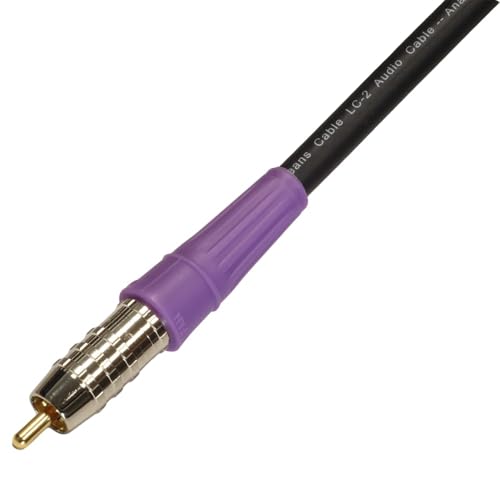
Mediabridge ULTRA Series Subwoofer Cable (15 Feet) - Dual Shielded with Gold Plated RCA to RCA Connectors - Black


Key features
- •Ideal for connecting subwoofer speakers to audio components, such as stereo receivers or sound systems, while offering excellent bass response and flexibility.
- •Low-loss, wide spectrum coaxial cable great for the low-frequency signals produced by subwoofers, allowing for deep and precise audio quality.
- •A split-tip center pin ensures high contact pressure and signal strength, while unique gripped molding and corrosion-resistant gold-plated RCA connectors provide a consistently tighter fit than commonly rolled cables with wider tolerances.
- •A copper clad center conductor, dielectric insulation, aluminum braiding and 2 layers of foil shielding, for maximum protection against the hum/static encountered when multiple devices are in close proximity of each other. The cable is finished in tough, yet pliable PVC jacket with color coding, for easy routing and quick installation.
- •This cable is backed by Mediabridge's Limited 1 Year Warranty. Includes adjustable & reusable Velcro cable strap for easy organization & storage.
Mediabridge ULTRA Series Subwoofer Cable (15 Feet) - Dual Shielded with Gold Plated RCA to RCA Connectors - Black
List Price: $26.85$24.17DEALYou Save: $2.68 (10%)
Free shippingFree Returns – 30 daysFree Order CancellationSecure Payment2–3 Days DeliveryGet It October 28, 2026In Stock (1)No marketing spamNo account requiredFulfilment by FedEx / Amazon / UPS / ShipwirePayPal / Card Buyer Protection
Customer Reviews
Reviews sourced from verified Amazon purchasers4.8
out of 5
Based on 10 reviews
5★
100%
4★
0%
3★
0%
2★
0%
1★
0%
Awesome
Raul Cortez✓ Verified Purchase•November 5, 2023
The quality is great, extremely happy with performance
Subwoofer buzz cured
akamenth✓ Verified Purchase•October 2, 2023
Keeping it simple. Of house built with a creative electrician leaves me struggling with noise in high end audio equipment. A subwoofer install caused both sub and speakers to buzz.
Subwoofer frequency response is not far from household electrical (over simplified) so regular cables can receive noise easily.
These worked. They shielded the noise at significant savings. Regular, insulated higher quality rca from a big box store did not work. Recommend these for subwoofers or buzzy noisy environments
Subwoofer frequency response is not far from household electrical (over simplified) so regular cables can receive noise easily.
These worked. They shielded the noise at significant savings. Regular, insulated higher quality rca from a big box store did not work. Recommend these for subwoofers or buzzy noisy environments
Sounds Clear
Ken✓ Verified Purchase•October 1, 2023
Ya can't go wrong with this brand.
Inexpensive, but not cheaply made. Great subwoofer cable.
G. Mitchell✓ Verified Purchase•September 19, 2023
It's a basic subwoofer cable. It's exactly as described, so far as I can see by visual inspection (I didn't cut it open to check the various layers) and looks exactly like the pictures.
Some things to note:
- The cable is very thick due to the two layers of shielding, the outer layer being copper and the inner layer aluminum. Combine this with the PVC cover, and it's a very sturdy cable. There is a cost to this in that it isn't highly flexible. You aren't going to be getting 90 degree turns from this, so plan accordingly.
- The build quality of the connectors is excellent. A basic RCA connector has a single pin in the middle and four fins in a circle around the edge. The Mediabridge cable improves on this basic design in a couple of important ways. First, the center pin has been split down the middle. Why would this matter? It's because with the pin split, the two sides compress when the cable is inserted, creating active pressure on the inside of the port. The outer portion is also a single piece that has been cut into eight angled fins and is significantly thicker than a cheap basic cable. This makes for a stronger grip on the outer surface of the port and reduces the effect of the connector losing grip strength over time. This results in the connector putting pressure onto the port both from the inside and outside, in effect squeezing it from both sides, as opposed to a basic cable that grips from the exterior only. It does make insertion require a bit more force, but the result is a connection that is unlikely to vibrate out of the subwoofer port.
- It's gold plated. Gold is the second best metal conductor of electricity (after silver), about even with copper. Gold plating is used on connectors because it's an excellent conductor, and more corrosion resistant than silver or copper. The conductivity is actually the less important aspect here, as the steel that is being coated with gold would be perfectly adequate to provide a connection. The cable is carrying information, not power (like speaker wire) so there's no practicable difference between an adequate connection and a perfect one. The corrosion resistance is the important part - gold plated connectors don't rust like steel or tarnish like copper, both of which lower the conductivity over time. Zinc would also work for corrosion resistance, but it's less conductive than gold is. In short, anything more conductive would corrode with time, and anything with the same corrosion resistance isn't as good a conductor. Gold can also be applied in a very thin coat and still retain the corrosion resistance property, making it economical as well.
- It's double insulated and magnetically shielded. As the pictures show, there are five layers to this cable. The part carrying the signal is a relatively thin copper strand in the middle. Unlike with speaker wire, thicker isn't better because the cable is carrying information, not conducting power, which is supplied by the subwoofer, so you don't need a very thick cable. That strand is covered with a layer of foam dialectric insulation, followed by an aluminum mylar sheath, a copper sheath, and finally the PVC outer cover. The copper sheath provides magnetic shielding from the large magnet in the sub, the fields produced by the receiver, static electricity, and any signals the cable might otherwise pick up from the environment. All of these are picked up by the copper sheath, preventing them from getting to the cable carrying the signal. This shielding effectively creates a faraday cage for your entire cable. The alumnum mylar layer inside of that is highly reflective of any sort of electromagnetic radiation, which includes radio waves, heat, and all of those signals sent out by remotes and other wireless devices. The dialectric foam insulates the aluminum and copper layers from the inner, signal carrying copper strand. The effect is that you have a layer of physical insulation, magnetic insulation, electromagnetic insulation, and another layer of physical magnetic insulation. This cable will not transfer or pick up any signal other than the one coming from your receiver.
It's overkill in the protection department, four layers of protection, probably more than most people would ever need, but it's only $10 for the 15 foot cable, so it's not like you're throwing away money on protection you don't need. It's better to have it and not need it than the other way around.
The packaging was excellent, a simple cardboard box with a coiled cable inside. Easier to open and better protection from damage is a win-win over plastic clamshells.
My only regret is that I ordered a 15 foot cable when 8 feet would have been enough.
Hooking it up is a snap - plug one end (it doesn't matter which one) into the subwoofer out on the receiver (a Denon AVR S700W 7.2 network receiver), plug the other into the LFE input on the subwoofer LFE input, making sure both are well seated, and you're done. You can also use the left input if your sub doesn't have a dedicated LFE input and get the same effect. I believe Mediabridge also sells a similar cable with a Y splitter for those with right and left inputs as well, but LFE out to the left input works for most subwoofers just fine.
Some things to note:
- The cable is very thick due to the two layers of shielding, the outer layer being copper and the inner layer aluminum. Combine this with the PVC cover, and it's a very sturdy cable. There is a cost to this in that it isn't highly flexible. You aren't going to be getting 90 degree turns from this, so plan accordingly.
- The build quality of the connectors is excellent. A basic RCA connector has a single pin in the middle and four fins in a circle around the edge. The Mediabridge cable improves on this basic design in a couple of important ways. First, the center pin has been split down the middle. Why would this matter? It's because with the pin split, the two sides compress when the cable is inserted, creating active pressure on the inside of the port. The outer portion is also a single piece that has been cut into eight angled fins and is significantly thicker than a cheap basic cable. This makes for a stronger grip on the outer surface of the port and reduces the effect of the connector losing grip strength over time. This results in the connector putting pressure onto the port both from the inside and outside, in effect squeezing it from both sides, as opposed to a basic cable that grips from the exterior only. It does make insertion require a bit more force, but the result is a connection that is unlikely to vibrate out of the subwoofer port.
- It's gold plated. Gold is the second best metal conductor of electricity (after silver), about even with copper. Gold plating is used on connectors because it's an excellent conductor, and more corrosion resistant than silver or copper. The conductivity is actually the less important aspect here, as the steel that is being coated with gold would be perfectly adequate to provide a connection. The cable is carrying information, not power (like speaker wire) so there's no practicable difference between an adequate connection and a perfect one. The corrosion resistance is the important part - gold plated connectors don't rust like steel or tarnish like copper, both of which lower the conductivity over time. Zinc would also work for corrosion resistance, but it's less conductive than gold is. In short, anything more conductive would corrode with time, and anything with the same corrosion resistance isn't as good a conductor. Gold can also be applied in a very thin coat and still retain the corrosion resistance property, making it economical as well.
- It's double insulated and magnetically shielded. As the pictures show, there are five layers to this cable. The part carrying the signal is a relatively thin copper strand in the middle. Unlike with speaker wire, thicker isn't better because the cable is carrying information, not conducting power, which is supplied by the subwoofer, so you don't need a very thick cable. That strand is covered with a layer of foam dialectric insulation, followed by an aluminum mylar sheath, a copper sheath, and finally the PVC outer cover. The copper sheath provides magnetic shielding from the large magnet in the sub, the fields produced by the receiver, static electricity, and any signals the cable might otherwise pick up from the environment. All of these are picked up by the copper sheath, preventing them from getting to the cable carrying the signal. This shielding effectively creates a faraday cage for your entire cable. The alumnum mylar layer inside of that is highly reflective of any sort of electromagnetic radiation, which includes radio waves, heat, and all of those signals sent out by remotes and other wireless devices. The dialectric foam insulates the aluminum and copper layers from the inner, signal carrying copper strand. The effect is that you have a layer of physical insulation, magnetic insulation, electromagnetic insulation, and another layer of physical magnetic insulation. This cable will not transfer or pick up any signal other than the one coming from your receiver.
It's overkill in the protection department, four layers of protection, probably more than most people would ever need, but it's only $10 for the 15 foot cable, so it's not like you're throwing away money on protection you don't need. It's better to have it and not need it than the other way around.
The packaging was excellent, a simple cardboard box with a coiled cable inside. Easier to open and better protection from damage is a win-win over plastic clamshells.
My only regret is that I ordered a 15 foot cable when 8 feet would have been enough.
Hooking it up is a snap - plug one end (it doesn't matter which one) into the subwoofer out on the receiver (a Denon AVR S700W 7.2 network receiver), plug the other into the LFE input on the subwoofer LFE input, making sure both are well seated, and you're done. You can also use the left input if your sub doesn't have a dedicated LFE input and get the same effect. I believe Mediabridge also sells a similar cable with a Y splitter for those with right and left inputs as well, but LFE out to the left input works for most subwoofers just fine.
Excellent!!!
Pio Vicente G. Alcazaren Jr.✓ Verified Purchase•September 9, 2023
Excellent!!!
Page 1 of 2