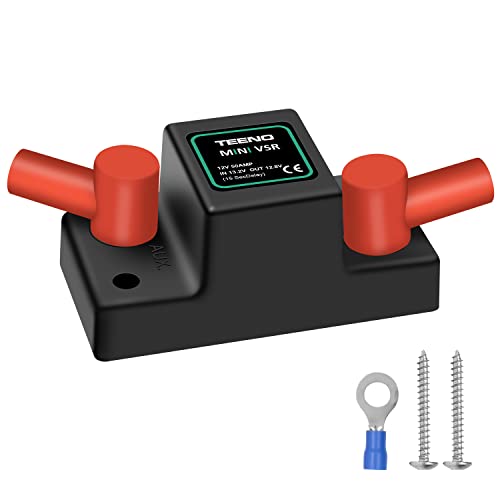
Dual Battery Isolator Kit, 140Amp Battery Isolator 12v Kit, Battery Disconnect Switch 12V | Cars, RV, UTV, ATV, Marine Battery Switch by KeyLine Chargers




Key features
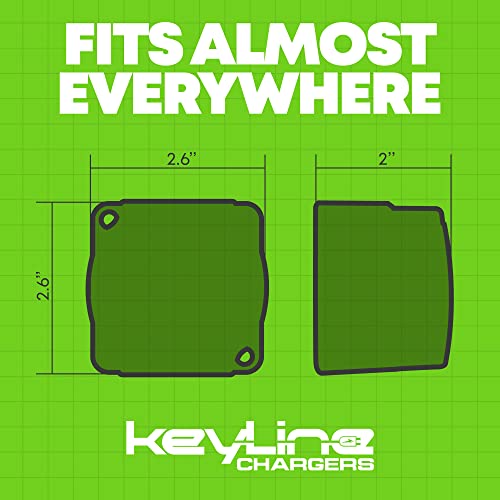
- •ZERO VOLTAGE DROP: Forget the traditional diode relays and so-called "solid state" devices that can rob you of almost 2 amps of output voltage! The KeyLine Dual Battery Isolator is the only unit designed with cutting edge programming to deliver optimum performance - with ZERO sacrifice. This compact battery isolator was built ultra-small (2.6" x 2.6" x 2") to fit almost anywhere! A perfect fit under the hood to get close to your dual batteries.
- •VOLTAGE SENSITIVE RELAY: The KeyLine Automatic 140 Amp Dual Battery Isolator is all you need to charge Two Battery Systems. Voltage Sensitive Relay (VSR) cuts in at 13.3 volts and cuts out at 12.8 volts to ensure your primary battery is always charged and ready to start your vehicle. It's like having two separate power sources for each battery while only having one alternator!
- •RUGGED DURABILITY: Unlike other isolators on the market, the KeyLine Automatic 140 Amp Dual Battery Isolator is IP65 Certified. This International Protection rating means that your KeyLine isolator is safe for use even for your off-road needs in dusty, wet and unexpected extreme weather environments. Great for extreme vibration applications as well.
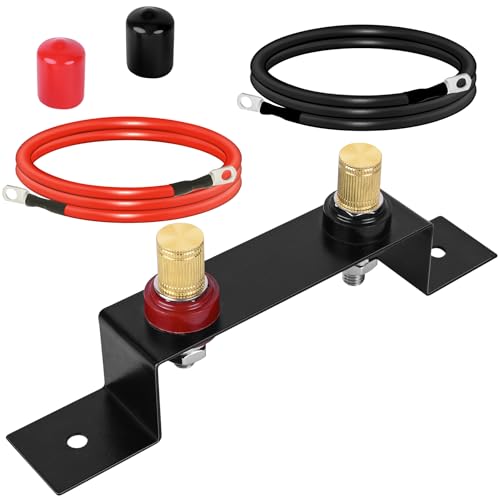
- •WHAT YOU GET: (1) 140 Amp Voltage Sensitive Relay (VSR); (1) 20 ft red battery cable; (1) 2ft black ground battery cable; (2) positive brass marine type battery terminals; (1) negative brass marine type battery terminal; tinned copper lugs & heat shrink; cable ties; easy-to-follow instructions. Easy-to-follow directions for the most novice DIYer. Power wire in, power wire out. What could be easier?
- •BUY WITH CONFIDENCE: Every 140 Amp Dual Battery Isolator is backed by an industry leading 12-month warranty. If you are not 100% satisfied with your purchase, simply take advantage of the No Questions Asked, 30-Day Money Back Guarantee!!
- •Zero Voltage Drop. Won't rob precious power from your batteries and electrical system, unlike heat sinking competitors'.
- •Small Convenient Size. Only about 2 inches tall, wide & deep (2.6" x 2.6" x 2") the isolater fits just about anywhere!
- •Fast & Easy Installation. Simple power wire IN, power wire OUT install. Comes with mounting plate/template.
- •IP65 Weather & Strong Vibration Protection. Suitable for all off-road vehicles and weather exposed applications.
- •Most Efficient Programming in the Business. Ensures your electrical system functions properly and batteries charge accurately.
- •Voltage Sensitive Relay (VSR). Specially designed for ATV, UTV, boats, RV's, campers, 5th wheels, off road vehicles, Rhino, Polaris, Artic, Cat, Etc.
- •Comes With Necessary Hardware & Mounting Instructions
- •Dual Battery Voltage Sensitive Isolator User Guide
- •Full 1 Year Warranty
Dual Battery Isolator Kit, 140Amp Battery Isolator 12v Kit, Battery Disconnect Switch 12V | Cars, RV, UTV, ATV, Marine Battery Switch by KeyLine Chargers
List Price: $167.14$150.43DEALYou Save: $16.71 (10%)
Free shippingFree Returns – 30 daysFree Order CancellationSecure Payment2–3 Days DeliveryGet It October 26, 2026In Stock (1)No marketing spamNo account requiredFulfilment by FedEx / Amazon / UPS / ShipwirePayPal / Card Buyer Protection
Customer Reviews
Reviews sourced from verified Amazon purchasers4.5
out of 5
Based on 10 reviews
5★
50%
4★
50%
3★
0%
2★
0%
1★
0%
Good so Far, Will update regardless of changes in time
KirbytheDiver✓ Verified Purchase•October 20, 2023
Thus far:
Install was easy enough, especially if you have experience with audio equipment.
Please ignore my lazy cable management (i haven't completed the build)
Product cuts in when alternator is on and cuts out at 12.8v like it says (tested with multimeter).
If you do what i did you will need 1x more 6 (couldn't find 7) gauge battery terminal connectors.
You will also need more heat shrink tube, just buy a length of it at 6 gauge.
Tools you will need:
Rachet set (varied sizes for bolts/nuts)
Razor blade (stripping 7 gauge wire (or if you're fancy you can buy a fancy smancy stripper))
Some kind of Wire cutter, i used a simple wire cutter.
Crimp tool (i used wire cutter ^)
Heat source for heat shrink (i used propane torch)
Multi meter (for testing grounds and voltages)
Anti Seize for connections (not necessary but very good investment)
12v Battery (preferably deep cycle with 100Ah)
12v Battery clamps, (see in pic 1/3 in the center of battery) was like $6 at O'Rielly's Auto.
Flat head for prying those snap cap thingys.
Make/Model:
2014 Chevy Silverado 1500 LT
Battery: SuperStart 27 ($92 O'Reilly's)
My Install:
I took the 20ft cable and split it, running one for positive and one for negative to
connect to the starter battery.
I took the included 2ft Ground battery and grounded to the engine block (see image 2)
Cut more of a hole than prescribed in the directions for the Isolator housing for the entry/exit cable holes
(^You'll see why)
I took a cylinder sanding wheel with a dremel tool to sand paint away from part of the cab near the
isolator for the isolator's 16-ish gauge ground and used a machine bolt for the fasten.
Used battery clamp/hook system to fasten battery to tray (forget about the chevy clamp, this is better)
Will update every few months
Install was easy enough, especially if you have experience with audio equipment.
Please ignore my lazy cable management (i haven't completed the build)
Product cuts in when alternator is on and cuts out at 12.8v like it says (tested with multimeter).
If you do what i did you will need 1x more 6 (couldn't find 7) gauge battery terminal connectors.
You will also need more heat shrink tube, just buy a length of it at 6 gauge.
Tools you will need:
Rachet set (varied sizes for bolts/nuts)
Razor blade (stripping 7 gauge wire (or if you're fancy you can buy a fancy smancy stripper))
Some kind of Wire cutter, i used a simple wire cutter.
Crimp tool (i used wire cutter ^)
Heat source for heat shrink (i used propane torch)
Multi meter (for testing grounds and voltages)
Anti Seize for connections (not necessary but very good investment)
12v Battery (preferably deep cycle with 100Ah)
12v Battery clamps, (see in pic 1/3 in the center of battery) was like $6 at O'Rielly's Auto.
Flat head for prying those snap cap thingys.
Make/Model:
2014 Chevy Silverado 1500 LT
Battery: SuperStart 27 ($92 O'Reilly's)
My Install:
I took the 20ft cable and split it, running one for positive and one for negative to
connect to the starter battery.
I took the included 2ft Ground battery and grounded to the engine block (see image 2)
Cut more of a hole than prescribed in the directions for the Isolator housing for the entry/exit cable holes
(^You'll see why)
I took a cylinder sanding wheel with a dremel tool to sand paint away from part of the cab near the
isolator for the isolator's 16-ish gauge ground and used a machine bolt for the fasten.
Used battery clamp/hook system to fasten battery to tray (forget about the chevy clamp, this is better)
Will update every few months
Lithium Ion Batteries, NO
John S✓ Verified Purchase•October 19, 2023
This product says it charges all batteries. But Lithium Ion batteries have a charge profile. Typically, its about 14.4 Volts. A vehicle alternator is below that. Also there is no limit on current limit other than a fuse.
However its okay as a battery isolator in conjunction with a dc to dc charger. I installed it as a alternator detector that switches on when vehicle running. It then connects to dc to dc charger which also then switches on when vehicle is running. The dc to dc converter needs a ignition ON signal, but to get that you only need to connect the (+) input from battery to D+ input on dc to dc charger (little red wire in photo 2). A 6 inch jump with a 16 gauge wire . Also with current limit (20 amps on dc to dc charger), you don't have to run a super low gauge wire from battery ($$$). My isolator is about 14 feet away from battery. I just ran a 6 gauge wire from + battery terminal on vehicle to (+) terminal of isolator. For the (-) terminal all you need is a chassis ground near dc to dc charger. You don't have to run a low gauge wire back to battery because vehicle is grounded to battery. When you do a jump start to can just clip black lead to any metal part on the car. Same idea.
However its okay as a battery isolator in conjunction with a dc to dc charger. I installed it as a alternator detector that switches on when vehicle running. It then connects to dc to dc charger which also then switches on when vehicle is running. The dc to dc converter needs a ignition ON signal, but to get that you only need to connect the (+) input from battery to D+ input on dc to dc charger (little red wire in photo 2). A 6 inch jump with a 16 gauge wire . Also with current limit (20 amps on dc to dc charger), you don't have to run a super low gauge wire from battery ($$$). My isolator is about 14 feet away from battery. I just ran a 6 gauge wire from + battery terminal on vehicle to (+) terminal of isolator. For the (-) terminal all you need is a chassis ground near dc to dc charger. You don't have to run a low gauge wire back to battery because vehicle is grounded to battery. When you do a jump start to can just clip black lead to any metal part on the car. Same idea.
Works as advertised
R. Smith ✓ Verified Purchase•October 14, 2023
Works well.
Works great, except for….
Al C.✓ Verified Purchase•October 13, 2023
Works great at keeping second battery charged. But if your main starting battery dies, you can't use the second battery as a backup battery to start the vehicle. Power only flows one way. You'll need a jump start from another source to start the vehicle. Other than that, it works good.
DOESN'T work for AGM with smart alternators
waggs✓ Verified Purchase•October 3, 2023
Plenty of wire although the ground wire could be longer. The positive is only 7 gauge wire and should be thicker but they give you 20 feet of it. The product works as it should and installing it was easy. The isolator cover has 4 knockouts in the cover to alow wire to go through the sides however none of them line up so you have to make your own holes. There is no manual control wire to close the circuit for jumping one battery off the other like some other brands. I ended up removing the isolator and installing a DC-DC charger from REDARC because I have a smart alternator system and this system won't fully charge my AGM auxiliary battery to full. If you have a shunt on you negative start battery post or somewhere on your negative cable then you have a smart alternator and this product will not work for you to it's full potential. It's fine for older vehicles. A smart alternator charges your start battery to full then drops off to 12.6 to 12.8 volts until the battery requires more charge. I suppose this is for full economy. When this happens no extra charge is available to your auxiliary battery and in the case of an AGM battery the voltage of 14.6 that is required is never reached. Some lithium batteries require 15 volts or more to fully charge. A DC-DC charger is customized to your auxiliary battery's needs. It monitors and charges it fully and indepently of your start battery regardless of the alternator output. I found this out the hard way so don't make my mistake by buying a simple isolator kit and realizing it won't do what you want it to. This is old technology for older cars.
Page 1 of 2