Midland GXT1030VP4 GMRS Two-Way Radio (50-Channel, Long Range, 142 Privacy Codes, SOS, NOAA, Rechargeable Nickel Battery, Black/Yellow, 2-Pack)


Key features
- •2-WAY RADIOS - These walkie-talkies feature 50 GMRS (General Mobile Radio Service) channels, along with channel scan to check for activity. The JIS4 Waterproof Protection prevents splashing water from having any harmful effect on it (splash resistant).
- •36-MILE RANGE - Longer range communication in open areas with little or no obstruction. Easy Voice and Sound Activation Transmission (eVOX) with 9 sensitivity levels for hands-free operation.
- •142 CTCSS/DCS PRIVACY CODES - The privacy codes give you up to 3,124 channel options to block other conversations.
- •NOAA WEATHER SCAN + ALERT - NOAA Weather Scan will automatically scan through 10 available weather (WX) band channels and locks onto the strongest weather channel to alert you of severe weather updates. NOAA Weather Alert will sound an alarm indicating that there is a risk of severe weather in your area.
- •INCLUDED IN THE BOX: Radios (x2), rechargeable battery packs (x2), boom mic headsets (x2), belt clips (x2), 120V dual desktop charger, AC adapter, DC adapter, and an owner's manual.
Midland GXT1030VP4 GMRS Two-Way Radio (50-Channel, Long Range, 142 Privacy Codes, SOS, NOAA, Rechargeable Nickel Battery, Black/Yellow, 2-Pack)
List Price: $130.94$117.85DEALYou Save: $13.09 (10%)
Free shippingFree Returns – 30 daysFree Order CancellationSecure Payment2–3 Days DeliveryGet It October 27, 2026In Stock (2)No marketing spamNo account requiredFulfilment by FedEx / Amazon / UPS / ShipwirePayPal / Card Buyer Protection
Customer Reviews
Reviews sourced from verified Amazon purchasers4.1
out of 5
Based on 10 reviews
5★
40%
4★
10%
3★
30%
2★
0%
1★
20%
Works great for a couple of miles - battery lasts all day without a problem!
Jeff K✓ Verified Purchase•May 4, 2018
Works great for what I purchased them for. I wheel with a group of Jeep enthusiasts in the Mid-West. We usually don't get more than a few miles from one another while trial riding. The Group recently switched from using CB radios to FRS radios. We were all getting tired of broken CB antennas and bad grounds and thought we'd give these little handhelds a try. We were recently at the Badlands Offroad Park in Indiana and personally I was impressed with these little radios. Communicating with everyone in the group wasn't an issue. The terrain can be extremely hilly in a heavily wooded area and I even talked to a member that was still at the local campground. Probably a 2-3 mile transmission while I was in a mud hole in the woods. After a 10 hour day of wheeling the battery level only dropped one bar - which is impressive considering how much we used them. The only con I have is the size - they were pretty easy to loose track of while bouncing over rocks. I finally clipped it to my rollbar padding to keep track of it. Sure you are not going to get 10 miles out of them but for our purpose they worked perfectly!
Good quality for the price.
Jeanna Moritz✓ Verified Purchase•March 26, 2018
I think these are great for the price. You'd pay much more for something truly water proof and with real range
Been using these for about ten years. Seven or eight are still operational. Originally got four of the GXT1000VP4's. A couple years ago additionally picked up the 1030's. We use them in our irrigation (lawn sprinkler) company. They are thoroughly used and abused.
Pro's
Put up with water, dirt, and mud.
Signal is ok for a couple blocks from inside a basement, shy a quarter mile vehicle to vehicle (unobstructed)
Three + solid days using Duracell "AA"s
Three year warranty
Cons
While handling water dirt and mud well, getting any combination of the afore mentioned, can make the mic. almost useless. It can sound like you are talking through a tin can a hundred miles away. That said, smacking the obstruction out, or using a pin or small wire to dig it out usually returns it to full function immediately.
The NiCad batteries included are just run of the mill. They will charge over night, but even when new, we rarely got more than a days worth of use before needing to recharge. After about two years of use they are down to about a half a day of medium to light use, per charge.
My older set had slots in front of the recharger housing to charge batteries by themselves, but the newer sets have to have the batteries in the radios to charge.
Other thoughts:
I did have to use the warranty on one of my first radios at 2 yrs 11 mos. They covered it no problem. I think they sent me a shipping label but don't quote me on that. Turn around time was about ten calendar days.
I have had two of these dropped into the ocean. The first one (a 1000 ) got wet inside the screen and never recovered. Two years later, the second one (a 1030) had to be fished out of five feet of water and was for the most part OK. I did dismantle it and let it dry out. The transmit key was a bit sticky for a while, but it still works.
I don't even waste my time on the rechargeables anymore. I just keep AA's on the trucks and they work great.
ALSO "“ the 1000s have a tone when you let off the transmit key, to let you know you have ended. The 1030s do not have this feature, and so when its cold out and your hands are numb, its hard to know for sure you actually pressed the key adequately to transmit, as there is no tone to let you know you just let go of the key.
Been using these for about ten years. Seven or eight are still operational. Originally got four of the GXT1000VP4's. A couple years ago additionally picked up the 1030's. We use them in our irrigation (lawn sprinkler) company. They are thoroughly used and abused.
Pro's
Put up with water, dirt, and mud.
Signal is ok for a couple blocks from inside a basement, shy a quarter mile vehicle to vehicle (unobstructed)
Three + solid days using Duracell "AA"s
Three year warranty
Cons
While handling water dirt and mud well, getting any combination of the afore mentioned, can make the mic. almost useless. It can sound like you are talking through a tin can a hundred miles away. That said, smacking the obstruction out, or using a pin or small wire to dig it out usually returns it to full function immediately.
The NiCad batteries included are just run of the mill. They will charge over night, but even when new, we rarely got more than a days worth of use before needing to recharge. After about two years of use they are down to about a half a day of medium to light use, per charge.
My older set had slots in front of the recharger housing to charge batteries by themselves, but the newer sets have to have the batteries in the radios to charge.
Other thoughts:
I did have to use the warranty on one of my first radios at 2 yrs 11 mos. They covered it no problem. I think they sent me a shipping label but don't quote me on that. Turn around time was about ten calendar days.
I have had two of these dropped into the ocean. The first one (a 1000 ) got wet inside the screen and never recovered. Two years later, the second one (a 1030) had to be fished out of five feet of water and was for the most part OK. I did dismantle it and let it dry out. The transmit key was a bit sticky for a while, but it still works.
I don't even waste my time on the rechargeables anymore. I just keep AA's on the trucks and they work great.
ALSO "“ the 1000s have a tone when you let off the transmit key, to let you know you have ended. The 1030s do not have this feature, and so when its cold out and your hands are numb, its hard to know for sure you actually pressed the key adequately to transmit, as there is no tone to let you know you just let go of the key.
Great radios, but forget about rechargeable batteries.
Sunny✓ Verified Purchase•March 19, 2018
The Good:
Midland is a great company, I've been using the old Midland GXT-400 radios with my family members ever since I was a child for over a decade. They never broke except my relative forgot batteries in them for storage and it leaked over one of them so it never worked the same again after I opened it up for cleaning. I got these as a replacement. I've been using these radios for almost a month now and they've worked great.
I took them on many trips and used both the included rechargeable battery pack and one time use batteries. My most major trip recently was using them in Yosemite National Park. I'm always on the GMRS channels so I can't comment on FRS broadcasts. So far the furthest I was able to transmit and still receive with my relatives was like 2 to 3 miles while snowshoeing on Glacier Point Road and around Crane Flat in the area. The area is somewhat of a climb with some downhill parts with lots of trees and snow. I was also able to pick up some broadcasts from Yosemite Valley which I'm guessing is 5 to 8 miles away judging from the content of the people's conversations. Normally I wouldn't eavesdrop like that but I really wanted to see how far of a signal I was picking up from. So the distance is great. To the people that say it doesn't work 36 miles, you obviously didn't do your research. That is theoretical distance, with no interference, obstructions (think mountain top to mountain top). In reality you'll get about a quarter to half a mile in cities/suburbs and extremely varied distance in forests depending on obstructions (I'd say 5-15 miles). So stop giving it 1 stars because it doesn't to the theoretical distance. This radio in my opinion works great, but is a bit more bulky than my old one (but it has a longer antenna and stronger transmitter, plus weather radio).
The NOAA weather radio is awesome. It warned me about an incoming storm in Yosemite and I got out back home just in time before it started pouring down like crazy. The weather radio is much more reliable than cellphone in the wilderness.
The Bad (why I took off 2 stars):
Now let's get on to the bad. The included rechargeable batteries is probably good for a short day trip at most. It is just 6 AAA rechargeables. It has very tiny capacity. I got 4 to 5 day light uses out of them before they ran out. By light uses I mean like 3 to 4 very short (less than 20 seconds) transmissions at max power a day and not being on the full day. I did also listen to the NOAA weather radio a couple times on those days. I really just recommend using regular one time use AA batteries for the radios.
The charger it comes with for the included rechargeable battery pack is also bad. It is a dumb charger. It doesn't have a smart chip inside to figure out when it is done charging, which is why they tell you to charge it 12 hours. I think the reason why so many of the reviews on here says the battery broke or poor battery life is because they charged it for 24 hours (which the manual says should be how long you charge it the first time) despite it being fully charge out of factory. Mine was fully charged out of the factory so I just didn't do the 24 hours initial charge. Midland needs to ship these out with bigger battery packs (I wouldn't mind a bigger battery compartment really) and a smart charger. Also I feel like Midland should have just shipped these out with the microphone port charger instead (the dock is too bulky to bring on trips), or just a battery charger, right now the cradle will only charge with the batteries inside the radio. They also need to put a smart chip in it, because the batteries are obviously breaking from being overcharged. Also I feel because the battery pack is just 5 AAA batteries, Midland should just make an empty battery pack and let us use our own rechargeables.
Now onto the last and the worst con of all. Like the old radios I had, out of the 4 AA batteries you put in, one of them goes up into the body of the radio inside a fitted compartment. So far the only battery I tried that won't jam is one time use AmazonBasics AA batteries. I tried to use my old white Eneloop rechargeables, my black Eneloop rechargeables, my black AmazonBasics high capacity rechargeables, and my new grey/green AmazonBasics rechargeables, but they all got jammed up inside the fitted compartment and one time I had to semi stab one of the rechargeables with my pocket knife just to get it out. Someone obviously didn't make the compartment up there up to spec as I never had issues with these batteries in any other devices. Midland needs to make that compartment up there just a tiny bit bigger.
Conclusion:
This is a great radio, but only usable with one time use AA batteries. The weather radio is a nice touch. The included rechargeable battery pack and charger is horrible, you might as well throw it out.
Midland is a great company, I've been using the old Midland GXT-400 radios with my family members ever since I was a child for over a decade. They never broke except my relative forgot batteries in them for storage and it leaked over one of them so it never worked the same again after I opened it up for cleaning. I got these as a replacement. I've been using these radios for almost a month now and they've worked great.
I took them on many trips and used both the included rechargeable battery pack and one time use batteries. My most major trip recently was using them in Yosemite National Park. I'm always on the GMRS channels so I can't comment on FRS broadcasts. So far the furthest I was able to transmit and still receive with my relatives was like 2 to 3 miles while snowshoeing on Glacier Point Road and around Crane Flat in the area. The area is somewhat of a climb with some downhill parts with lots of trees and snow. I was also able to pick up some broadcasts from Yosemite Valley which I'm guessing is 5 to 8 miles away judging from the content of the people's conversations. Normally I wouldn't eavesdrop like that but I really wanted to see how far of a signal I was picking up from. So the distance is great. To the people that say it doesn't work 36 miles, you obviously didn't do your research. That is theoretical distance, with no interference, obstructions (think mountain top to mountain top). In reality you'll get about a quarter to half a mile in cities/suburbs and extremely varied distance in forests depending on obstructions (I'd say 5-15 miles). So stop giving it 1 stars because it doesn't to the theoretical distance. This radio in my opinion works great, but is a bit more bulky than my old one (but it has a longer antenna and stronger transmitter, plus weather radio).
The NOAA weather radio is awesome. It warned me about an incoming storm in Yosemite and I got out back home just in time before it started pouring down like crazy. The weather radio is much more reliable than cellphone in the wilderness.
The Bad (why I took off 2 stars):
Now let's get on to the bad. The included rechargeable batteries is probably good for a short day trip at most. It is just 6 AAA rechargeables. It has very tiny capacity. I got 4 to 5 day light uses out of them before they ran out. By light uses I mean like 3 to 4 very short (less than 20 seconds) transmissions at max power a day and not being on the full day. I did also listen to the NOAA weather radio a couple times on those days. I really just recommend using regular one time use AA batteries for the radios.
The charger it comes with for the included rechargeable battery pack is also bad. It is a dumb charger. It doesn't have a smart chip inside to figure out when it is done charging, which is why they tell you to charge it 12 hours. I think the reason why so many of the reviews on here says the battery broke or poor battery life is because they charged it for 24 hours (which the manual says should be how long you charge it the first time) despite it being fully charge out of factory. Mine was fully charged out of the factory so I just didn't do the 24 hours initial charge. Midland needs to ship these out with bigger battery packs (I wouldn't mind a bigger battery compartment really) and a smart charger. Also I feel like Midland should have just shipped these out with the microphone port charger instead (the dock is too bulky to bring on trips), or just a battery charger, right now the cradle will only charge with the batteries inside the radio. They also need to put a smart chip in it, because the batteries are obviously breaking from being overcharged. Also I feel because the battery pack is just 5 AAA batteries, Midland should just make an empty battery pack and let us use our own rechargeables.
Now onto the last and the worst con of all. Like the old radios I had, out of the 4 AA batteries you put in, one of them goes up into the body of the radio inside a fitted compartment. So far the only battery I tried that won't jam is one time use AmazonBasics AA batteries. I tried to use my old white Eneloop rechargeables, my black Eneloop rechargeables, my black AmazonBasics high capacity rechargeables, and my new grey/green AmazonBasics rechargeables, but they all got jammed up inside the fitted compartment and one time I had to semi stab one of the rechargeables with my pocket knife just to get it out. Someone obviously didn't make the compartment up there up to spec as I never had issues with these batteries in any other devices. Midland needs to make that compartment up there just a tiny bit bigger.
Conclusion:
This is a great radio, but only usable with one time use AA batteries. The weather radio is a nice touch. The included rechargeable battery pack and charger is horrible, you might as well throw it out.
Defective (intermittent problem) and short return window.
Osprey✓ Verified Purchase•December 13, 2017
Caution before you buy; the pair I purchased are defective. Most importantly review the return policy; though I purchased through Amazon my return window was very short; like 3 weeks. Regarding the radios, I believe the pair I purchased are defective, I had intermittent problems with one the radios picking up my hunting partner who was on the other radio, he could hear me clearly and I could not hear him (same power settings). We did quite a bit of troubleshooting during our week long hunt; "new" AA batteries, played with power settings, talked on cell phone and moved to higher ground...since it was intermittent I believe there is a short or antennae directional issue. Oh well, guess I'm stuck with them...$65 down the tubes as I cannot trust then and will likely throw them away or let the grandkids play with them. Not sure if one or both have a transmit or receive issue...do know I'm not buying another pair to figure that out.
BATTERY LIFE IS SHORT - Be wary
Anonymous_User✓ Verified Purchase•November 11, 2017
These radios were field-tested in the mountains over a period of two weeks. Sitting basically idle (no transmissions, very little receive) the batteries would become weak enough to cause the radio to automatically drop from Hi power to Low power after 4 - 6 hours of idle "on" time. When transmission was attempted the radio would turn itself off. We found ourselves carrying and changing batteries out in the field.
Week 1:
1) Battery - AC Delco alkaline
2) Replaced batteries at least once daily
Week 2:
1) Battery - Energizer alkaline
2) Replaced batteries at least once daily
Reviewing the supplied owners manual, we attempted to turn off all settings which could consume battery power to minimize battery consumption but the result was the same. Batteries were consumed, rapidly.
To validate the test, we carried 5 year old Motorola radios with 25 mile range (theoretical). The Midland GXT1050VP4 did NOT provide greater value over the Motorola other than the NOAA weather capability. We did notice more background noise (hiss) while receiving from other radio transmissions to the Midland GXT1050VP4 than to the older Motorola. The Motorola was much more clear. The Midland GXT1050VP4 radios consumed batteries at a rate of at least one change out per day (4 batteries each) while the Motorola consumed a set of batteries once per week at identical use level.
I cannot return these radios to Amazon so I will give them to the kids to play with (using the supplied rechargeable batteries) and will begin the search for a good radio that is not built by a manufacturer with apparent stock in the battery industry.
Week 1:
1) Battery - AC Delco alkaline
2) Replaced batteries at least once daily
Week 2:
1) Battery - Energizer alkaline
2) Replaced batteries at least once daily
Reviewing the supplied owners manual, we attempted to turn off all settings which could consume battery power to minimize battery consumption but the result was the same. Batteries were consumed, rapidly.
To validate the test, we carried 5 year old Motorola radios with 25 mile range (theoretical). The Midland GXT1050VP4 did NOT provide greater value over the Motorola other than the NOAA weather capability. We did notice more background noise (hiss) while receiving from other radio transmissions to the Midland GXT1050VP4 than to the older Motorola. The Motorola was much more clear. The Midland GXT1050VP4 radios consumed batteries at a rate of at least one change out per day (4 batteries each) while the Motorola consumed a set of batteries once per week at identical use level.
I cannot return these radios to Amazon so I will give them to the kids to play with (using the supplied rechargeable batteries) and will begin the search for a good radio that is not built by a manufacturer with apparent stock in the battery industry.
Page 1 of 2
Related products

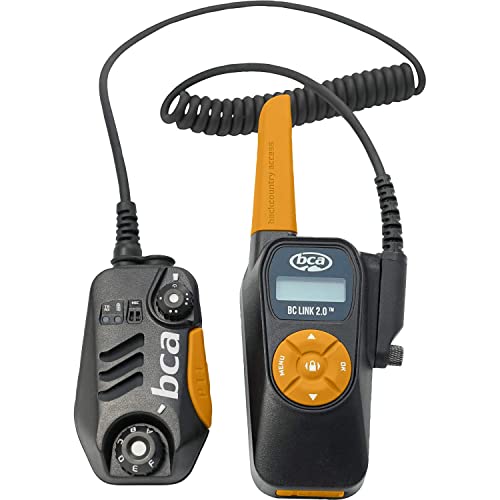
Backcountry Access BCA BC Link Group Communication Radio (Black 2.0, 2 Pack)
List: $463.13$416.82DEAL


