Peltor Sport Tactical 300 Electronic Hearing Protector, Ear Protection, NRR 24 dB, Ideal for Shooting and Hunting
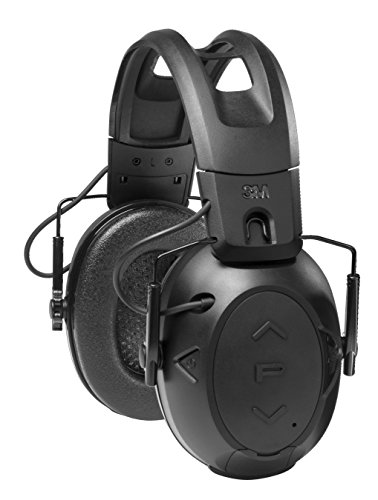
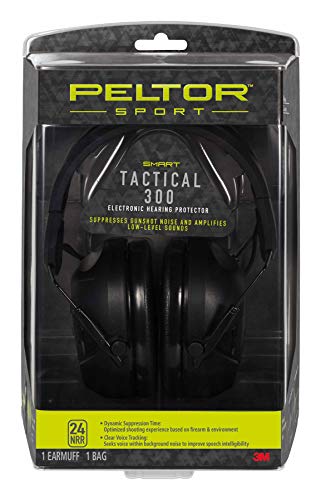
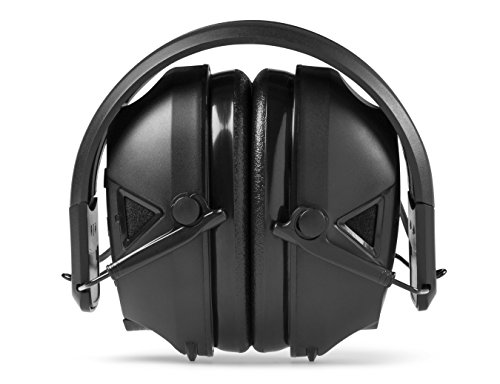
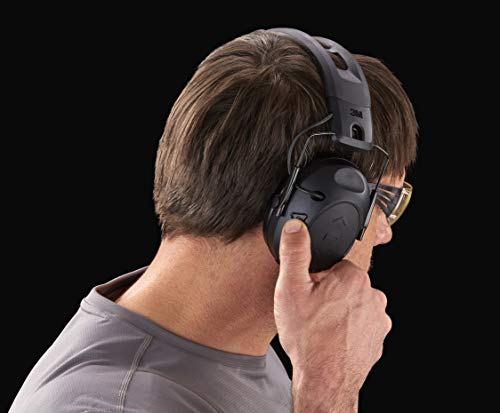
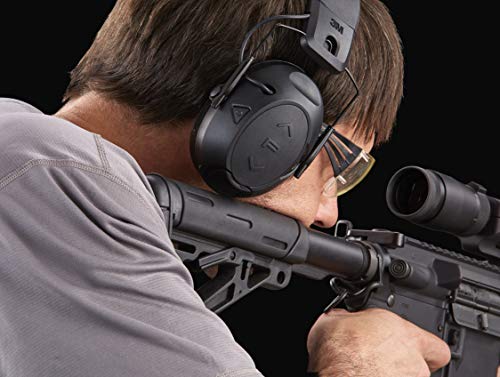

Key features
- •NRR: 24 dB noise reduction rating
- •IDEAL FOR both indoor and outdoor shooters and hunters
- •DYNAMIC SUPPRESSION TIME measures the energy in gunshot noise and automatically sets suppression time for reduced echoes and increased comfort
- •CLEAR VOICE TRACKING seeks voice within background noise and actively filters noise for improved speech intelligibility
- •DURABLE RECESSED MICROPHONES prevent damage and reduce wind noise
- •VENTED HEADBAND adjustable, improves comfort when worn with hats
Peltor Sport Tactical 300 Electronic Hearing Protector, Ear Protection, NRR 24 dB, Ideal for Shooting and Hunting
List Price: $128.48$115.63DEALYou Save: $12.85 (10%)
Free shippingFree Returns – 30 daysFree Order CancellationSecure Payment2–3 Days DeliveryGet It October 26, 2026In Stock (25)No marketing spamNo account requiredFulfilment by FedEx / Amazon / UPS / ShipwirePayPal / Card Buyer Protection
Customer Reviews
Reviews sourced from verified Amazon purchasers4.5
out of 5
Based on 10 reviews
5★
50%
4★
40%
3★
10%
2★
0%
1★
0%
Best pair of earmuffs I own so far. Not as comfortable as others
IV✓ Verified Purchase•November 21, 2017
When it comes to electronic earmuffs, the three most important characteristics are the NRR protection level, the clarity of sound and the comfort when wearing them for a long period of time. The Peltor Tac 300 are rated at 24 NRR and they do a great job indoors and outdoors for up to 45 caliber. They have good sound quality (more on this below) and although they are comfortable and don't irritate my ears, they have strong hard rubber as a headband and that makes them uncomfortable on the top of the head if I put them on for more than a couple of hours. Comfort is the reason I gave them only 4 stars but note that comfort varies from one individual to another and you may find them more comfortable than I do. You can always purchase a headband wrap and the 3M HY80 Gel pads (3M Peltor Camelback Gel Sealing Rings) to make them even more comfortable and seal your ears better when you put the safety glasses on because the gel padding will conform around the glasses arms. But these "add-ons" will raise the overall cost by a lot. I did purchase the Gel pads and found them to be high quality, very soft and surprisingly don't seem to cause my ears to sweat when I wear them for a prolonged period of time (2 to 3 hours).
I purchased the Peltor Tac 300 because I was looking for better quality electronic earmuffs that will protect my hearing and allow me to have conversations with other competitors while we wait for our turn. I also own the popular Howard Leight Impact Pro (30 NRR) and Howard Leight Impact Sport (22 NRR). I call the Howard Leight popular because they are priced well and I see many people around me wearing them at indoor and outdoor pistol competitions. I have some comparison information later in this review. The reason I own many different pairs is because I have a hearing impairment (hereditary not from shooting) and cannot hear anything from one ear which means that I have to protect my one working ear at all cost so I am always looking for a better pair of earmuffs.
Here are some things you may want to know:
- They do not amplify sounds and at the maximum volume setting the sound level is about the same as you would get with naked ears.
- Using the default settings, they offer good clarity of sound for speech and I don't find myself looking for the volume controls or leaning towards the person that speaks in order to hear what they are saying.
- Releasing the slide of a pistol triggers the sound cut off although it is not harmful to hearing and this also happens if you just pull the slide open on a S&W Victory 22 which is not loud at all but it appears that metallic sounds trigger the suppression at any level.
- They have a single power button located on the back side of the right ear opposite to the microphone and you must hold it in for 3 seconds until you hear the announcement "Power On" or "Power Off". This is somewhat annoying because it is just enough time to start wondering if you pressed the button hard enough and you also have to hold that button waiting for the announcement when you just want to get them off your head. There is no visual indicator to check if they are on or off.
- There is a setup mode where you can adjust the following functions:
o Adaptive Suppression Time: When On, it will provide the fastest suppression time possible
o Surround Sound Filtering: When On, it filters background noises giving priority to speech
o Auto Power Off: You can select between 2 or 4 hours
o Dosimeter/Limiter: When limiter is selected the audio input will not be allowed to exceed 82db
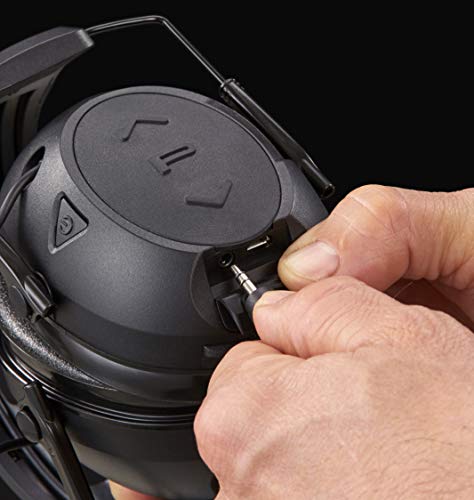
- You can connect your phone using a 4 pole 3.5mm cable (not included) and control tracks and pause/play using the "P" button but I find this useless in my case because I do not see myself at the range listening to music but then again this is up to you.
- You can purchase a rechargeable battery (3M ALPHA1100 Rechargeable Li-Ion Battery Pack) and charge it via the micro USB port located by the audio port. Both ports are under a rubber cover. Yet, I find that the normal 2AA batteries have lasted so far for over 40 hours so I would not spend money for the rechargeable battery. Besides, who wants to have one more thing that needs to be charged?
- They come with a nice cloth bag that keeps them dust free when you don't use them and because they fold inside the headband and the storage bag is cloth, they take remarkably small space in the range bag.
I compare the Peltor with the Howard Leight Impact Sport and Impact Pro because those are at a lower price than the Peltor Tac 300 and they have great reviews which makes them very appealing.
The Impact Sport have great sound. You can hear speech with them on better than not having earmuffs. The sound clarity is great and I have even used them to listen to the TV at volume levels that I could barely hear without them. But they are rated at 22 NRR and in my opinion they should be rated less than that when compared to the Peltor Tac 300. So for me the Impact Sport are great when used outdoors and up to 9 mm caliber or indoors up to 22 caliber. They are comfortable on the ears and headband even after many hours. They are slim and fold inside the headband nicely taking less space than the Peltor Tac 300 to the point that you may even fit them in your jacket pocket.
The Impact Pro, are rated at 30 NRR and they do a fantastic job reducing gun fire sounds even indoors with large caliber pistols but they are horrible when it comes to hearing speech with them on and I find myself struggling to understand what people say around me. The problem is not so much with the maximum volume level but more like in the attempt to cut off loud noises, speech filtering quality suffers a lot. Thay are comfortable to wear but they are bulky and do not fold in the headband which makes them too big for some range bags.
The Peltor 300 are rated at 24 NRR and I am comfortable with the protection level indoors and outdoors for up to 45 caliber. I would prefer them to be 30 NRR so for "big bore" competitions I prefer the Impact Pro. Peltor offers the Tac 500 which are 26 NRR and have integrated Bluetooth but I find that useless because if I need to talk on the phone, I will need to be somewhere that there is no more than 80db ambient noise which means I can take them off and answer the phone.
If you ask which ones I would purchase now that I have experienced all 3 of them I would definitely say the Peltor but if you have the budget to go further, I suggest the Peltor and the Impact Pro because although I am not impressed with the Impact Pro, having them both will possibly cover all your needs. I have modified all of them by adding a ¼ inch camera mount so I can record competitions with my Contour Roam 3 camera which has a rotating lens and allow to adjust the horizon of the picture frame so it can be mounted at almost any angle. For that I used the following parts:
Contour ROAM3 Waterproof HD Video Camera (Black)
Fotasy SCX2 1/4-Inch 20 Tripod Screw to Hot Shoe Adapter with Premier Cleaning Cloth (Black)
I have also modified the Peltor Tac 300 to accommodate my hearing impairment by moving both speakers to the side of my good ear. This way, I can hear sounds picked up from the left and right microphone. My hearing problem may be fairly unique but if you happen to be able to benefit from such modification, you can see how I did it in the youtube video I made by searching for the title "Earmuffs modification for hearing impairment (Peltor Tactical 300)"
I purchased the Peltor Tac 300 because I was looking for better quality electronic earmuffs that will protect my hearing and allow me to have conversations with other competitors while we wait for our turn. I also own the popular Howard Leight Impact Pro (30 NRR) and Howard Leight Impact Sport (22 NRR). I call the Howard Leight popular because they are priced well and I see many people around me wearing them at indoor and outdoor pistol competitions. I have some comparison information later in this review. The reason I own many different pairs is because I have a hearing impairment (hereditary not from shooting) and cannot hear anything from one ear which means that I have to protect my one working ear at all cost so I am always looking for a better pair of earmuffs.
Here are some things you may want to know:
- They do not amplify sounds and at the maximum volume setting the sound level is about the same as you would get with naked ears.
- Using the default settings, they offer good clarity of sound for speech and I don't find myself looking for the volume controls or leaning towards the person that speaks in order to hear what they are saying.
- Releasing the slide of a pistol triggers the sound cut off although it is not harmful to hearing and this also happens if you just pull the slide open on a S&W Victory 22 which is not loud at all but it appears that metallic sounds trigger the suppression at any level.
- They have a single power button located on the back side of the right ear opposite to the microphone and you must hold it in for 3 seconds until you hear the announcement "Power On" or "Power Off". This is somewhat annoying because it is just enough time to start wondering if you pressed the button hard enough and you also have to hold that button waiting for the announcement when you just want to get them off your head. There is no visual indicator to check if they are on or off.
- There is a setup mode where you can adjust the following functions:
o Adaptive Suppression Time: When On, it will provide the fastest suppression time possible
o Surround Sound Filtering: When On, it filters background noises giving priority to speech
o Auto Power Off: You can select between 2 or 4 hours
o Dosimeter/Limiter: When limiter is selected the audio input will not be allowed to exceed 82db
- You can connect your phone using a 4 pole 3.5mm cable (not included) and control tracks and pause/play using the "P" button but I find this useless in my case because I do not see myself at the range listening to music but then again this is up to you.
- You can purchase a rechargeable battery (3M ALPHA1100 Rechargeable Li-Ion Battery Pack) and charge it via the micro USB port located by the audio port. Both ports are under a rubber cover. Yet, I find that the normal 2AA batteries have lasted so far for over 40 hours so I would not spend money for the rechargeable battery. Besides, who wants to have one more thing that needs to be charged?
- They come with a nice cloth bag that keeps them dust free when you don't use them and because they fold inside the headband and the storage bag is cloth, they take remarkably small space in the range bag.
I compare the Peltor with the Howard Leight Impact Sport and Impact Pro because those are at a lower price than the Peltor Tac 300 and they have great reviews which makes them very appealing.
The Impact Sport have great sound. You can hear speech with them on better than not having earmuffs. The sound clarity is great and I have even used them to listen to the TV at volume levels that I could barely hear without them. But they are rated at 22 NRR and in my opinion they should be rated less than that when compared to the Peltor Tac 300. So for me the Impact Sport are great when used outdoors and up to 9 mm caliber or indoors up to 22 caliber. They are comfortable on the ears and headband even after many hours. They are slim and fold inside the headband nicely taking less space than the Peltor Tac 300 to the point that you may even fit them in your jacket pocket.
The Impact Pro, are rated at 30 NRR and they do a fantastic job reducing gun fire sounds even indoors with large caliber pistols but they are horrible when it comes to hearing speech with them on and I find myself struggling to understand what people say around me. The problem is not so much with the maximum volume level but more like in the attempt to cut off loud noises, speech filtering quality suffers a lot. Thay are comfortable to wear but they are bulky and do not fold in the headband which makes them too big for some range bags.
The Peltor 300 are rated at 24 NRR and I am comfortable with the protection level indoors and outdoors for up to 45 caliber. I would prefer them to be 30 NRR so for "big bore" competitions I prefer the Impact Pro. Peltor offers the Tac 500 which are 26 NRR and have integrated Bluetooth but I find that useless because if I need to talk on the phone, I will need to be somewhere that there is no more than 80db ambient noise which means I can take them off and answer the phone.
If you ask which ones I would purchase now that I have experienced all 3 of them I would definitely say the Peltor but if you have the budget to go further, I suggest the Peltor and the Impact Pro because although I am not impressed with the Impact Pro, having them both will possibly cover all your needs. I have modified all of them by adding a ¼ inch camera mount so I can record competitions with my Contour Roam 3 camera which has a rotating lens and allow to adjust the horizon of the picture frame so it can be mounted at almost any angle. For that I used the following parts:
Contour ROAM3 Waterproof HD Video Camera (Black)
Fotasy SCX2 1/4-Inch 20 Tripod Screw to Hot Shoe Adapter with Premier Cleaning Cloth (Black)
I have also modified the Peltor Tac 300 to accommodate my hearing impairment by moving both speakers to the side of my good ear. This way, I can hear sounds picked up from the left and right microphone. My hearing problem may be fairly unique but if you happen to be able to benefit from such modification, you can see how I did it in the youtube video I made by searching for the title "Earmuffs modification for hearing impairment (Peltor Tactical 300)"
Best electronic hearing protection I've ever used. Much better than Howard leight impact pro and impact sport.
VIB007✓ Verified Purchase•August 28, 2017
Best electronic hearing protection I've ever used. Much better than Howard Leight impact pro and impact sport.
I have bought Howard Leight Impact Pro first. It is good for gun shot protection, but too bulky. When using with shotgun, once the impact pro felt off because gun stock push it over. Make my right ear ringing so bad. I need something more slim. However, I still keep it for pistol shooting.
Next, I bought Howard Leight Impact Sport. It is slim and no problem when shooting long gun stock. However, the sound protection is not good. The first time I used it, the gun shot from nearby shooters still loud. After the first time using it, my ears was still ringing for week. I decided to go further with other brands. I sold this pair to my friend.
Finally, I decided to buy Peltor Sport Tactical 300. It is the best of all three. Sound proof is perfect. Conversation voice is clear and crisp. Protection from gun shot is excellent. Worth paying the price twice of Howard Leight to protect your permanent hearing loss that cannot be recovered.
I choose 300 over 500 because I do not need bluetooth and 300 is cheaper. Worth the trial.
Strongly Recommended.
I have bought Howard Leight Impact Pro first. It is good for gun shot protection, but too bulky. When using with shotgun, once the impact pro felt off because gun stock push it over. Make my right ear ringing so bad. I need something more slim. However, I still keep it for pistol shooting.
Next, I bought Howard Leight Impact Sport. It is slim and no problem when shooting long gun stock. However, the sound protection is not good. The first time I used it, the gun shot from nearby shooters still loud. After the first time using it, my ears was still ringing for week. I decided to go further with other brands. I sold this pair to my friend.
Finally, I decided to buy Peltor Sport Tactical 300. It is the best of all three. Sound proof is perfect. Conversation voice is clear and crisp. Protection from gun shot is excellent. Worth paying the price twice of Howard Leight to protect your permanent hearing loss that cannot be recovered.
I choose 300 over 500 because I do not need bluetooth and 300 is cheaper. Worth the trial.
Strongly Recommended.
Gunfire attenuation GREAT! Comfort, not so much. . .
Stewart E.✓ Verified Purchase•May 7, 2017
I am an NRA Certified (soon to be Chief) Range Safety officer who works @ a local indoor 20 lane range. We get everything from a .22 to a .338 Lapua Magnum. . . shotguns, AR pistols, .308s, blah blah blah. The gunfire attenuation on this unit is fabulous! Further, I love the fact that I can stream classical music as well as make & receive phone calls.
I was once in the range listening to classical music, when the GF called. The unit lowered the music in the background while we were talking. Since the music was classical, it was no bother. However, if the music had been rock, metal, hip-hop & the like, it might have been quite a distraction to the conversation. . . something to think about.
The biggest drawback to this unit is the headband. It tends to stretch out flat on top of the head rather than following the natural rounded contour such as a Tac Pro or 100. As well, there is NO cushioning on the underside. Hence, the headband is VERY uncomfortable, especially 1.5 or more hours later.
To be fair, I might also preface the fact that my hat size is approx 7.5. And, I am not the average case spending anywhere from 4-6 hours @ a time in the range. I cut a washcloth in half & folded one of those halves in half, then put that under my ball cap. It provided some relief, but why should I have to do that with a $200 MSRP unit. What speaks to me is the fact that this unit hit the market 2 months ago @ the aforementioned MSRP & has plummeted to an avg of $150 or less in said time.
Finally, I end with the size of my ears. The muff opening is a standard 1.5" wide x 2.63" in length. . . my ear is just shy of 3". Therefore, after a few hours my lobe gets mashed causing great discomfort & even headaches @ times. The synopsis? IF you have a small to medium sized melon & average ears, the 500 might work for you on an average comfort level.
I was once in the range listening to classical music, when the GF called. The unit lowered the music in the background while we were talking. Since the music was classical, it was no bother. However, if the music had been rock, metal, hip-hop & the like, it might have been quite a distraction to the conversation. . . something to think about.
The biggest drawback to this unit is the headband. It tends to stretch out flat on top of the head rather than following the natural rounded contour such as a Tac Pro or 100. As well, there is NO cushioning on the underside. Hence, the headband is VERY uncomfortable, especially 1.5 or more hours later.
To be fair, I might also preface the fact that my hat size is approx 7.5. And, I am not the average case spending anywhere from 4-6 hours @ a time in the range. I cut a washcloth in half & folded one of those halves in half, then put that under my ball cap. It provided some relief, but why should I have to do that with a $200 MSRP unit. What speaks to me is the fact that this unit hit the market 2 months ago @ the aforementioned MSRP & has plummeted to an avg of $150 or less in said time.
Finally, I end with the size of my ears. The muff opening is a standard 1.5" wide x 2.63" in length. . . my ear is just shy of 3". Therefore, after a few hours my lobe gets mashed causing great discomfort & even headaches @ times. The synopsis? IF you have a small to medium sized melon & average ears, the 500 might work for you on an average comfort level.
Good, but lacking comfort.
William Grose✓ Verified Purchase•April 17, 2017
This will be a combination 300/500 review for those cross-shopping the two, since I have both sets in my possession.
These new Peltor headsets make up part of a range of new sets for 2017. They're pretty great for shooting with, but also when you're doing "work-y" things like hammering nails, using a nail gun, lawn-mowing etc.
That said, these aren't perfect, so let's start at the beginning.
(Note: I have the Peltor TacticalPro that I've used for years, and which have worked very well. They're very comfortable across the top of my head, don't squish my ears too much, and the buttons are tactile and easy to use once you've worn the headset a few times. The battery compartment needs a coin of some sort (a dime works great) to open, which is a bit of a pain, but not something done often. The microphones also stick out, and the mic covers can be knocked off and lost if you're not careful.)
The Peltor 300/500 come packaged well. Initially I thought I'd have to cut them out of the package, but nope - once you remove the cardboard around the outside of the plastic, the box opens without any scissors/knives/bleeding all over the table required. Whew.
The Peltor 300, with 2xAA batteries installed (not included with either headset) weighs 350 grams.
The Peltor 500, with 2x AA batteries installed weighs 420 grams.
So the 500 weighs 20% more than the 300, and I can tell you the difference is pretty noticeable. It increases the downward pressure on your ears, as well as the downward pressure on the top of your head.
Speaking of which, the headband on the Peltor 300/500 is not anywhere near comfortable for me as the one on the TacticalPro. The design of the headband on the 300/500 can only be described as... peculiar. Rather than distribute the weight of the headset across your entire head, there are these rubbery protrusions downward that make contact with your head. Two, in the case of my head. Which means the entire weight of the headset is concentrated in just two places on the top of my head. Because the band is not stretchy or adjustable, if this doesn't work for you - there's no adjustment to be made in the headband itself. With the TacticalPro, the entire headband stretches really well as you put it on your head, and the weight of the headset itself is distributed across your entire head, no matter what size head you have. The regression here with the 300/500 is unfortunate.
Setting up the 300/500 is pretty self-explanatory. You need to use a fingernail to dig out the battery cover, which was actually a little trickier than I'd have liked, even knowing what to do. The AA batteries x2 that you shove in there need a GOOD shove to sit in place, too. At least they won't knock loose when subjected to large-caliber recoil!
In terms of noise reduction, both the 300/500 do absolutely superbly, much like the TacticalPro. High-frequency sounds like people talking or eating a bag of chips, or your pet scurrying across your wood floor - picked up and amplified by the 300/500. Low-frequency sounds e.g. firing guns - attenuate the sound to a huge degree. This does mean you can't actually speak while firing, as the entire sound-stage is dampened. Once firing/loud tools stop the headset from attenuating, you'll be able to resume chatting at a normal level. Yes, you can absolutely talk at a normal discussion level at the firing range while no gunfire is ringing out - as long as the person next to you is also wearing a similar style of headset that works this way to be able to actually hear you!
The microphones in the 300/500 (which pick up the audio and cancel it as necessary) are much better designed than the TacticalPro mics. Those microphones on the TacticalPro have always annoyed me. They stick out, the covers get lost pretty easily - and really, the only way forward in this regard! The 300/500 mics are recessed into the earpieces, and should never cause an issue. This is a positive design choice.
The 500's maximum dB reduction is 26 dB, whereas on the 300 it's 24 dB, but I was hard pressed to tell any difference between them, so I'd advise you not to make your purchasing decision based on this.
Bluetooth: The one really tangible area of difference between the 500 and 300 (aside from the weight) is the inclusion of Bluetooth on the 500. Pairing the headset with my iPhone 7 Plus was simple. Holding down the Bluetooth symbol on the 500 put the headset into pairing mode, and I was able to connect to my phone in seconds. The unit remembers the connection even when turned off and on, as it should of course do.
I was, however, disappointed that there's a high-pitch squealing sound easily (and I mean easily) heard through the headset when your phone first connects. However, after about 30 seconds or so, the sound goes away completely. However, it does come back and stay on while you're listening to music. This was and still is super annoying to me. Music quality isn't great anyway, for what it's worth, but it's certainly good enough if you can get over the squealing sound. The squeal is also there, but greatly minimized, when using the phone to make calls over Bluetooth, but I can't say I see the point of using this type of headset for phone calls. After all, do you really want your caller to know you're in a war-zone? :D
Overall, in terms of comfort I easily would go with the TacticalPro over the 500. Both have the same 26 dB noise reduction, but the comfort of the TacticalPro is well worth it over the Peltor 500.
With that said, if you've no interest in the Bluetooth feature of the 500, I'd go with the Peltor 300 over the 500. It's lighter, more comfortable because of this, and of course - cheaper.
Neither the 300 or 500 are as comfortable as the TacticalPro, and that's a shame, since so much else Peltor/3M got right. The new microphone design is great, the easy-to-feel buttons are also great, and no tools required to open the battery compartment is another pro. But comfort is of paramount importance!
It's good to have choices when it comes to headsets like this, and here is my race results!"¨"¨First place: Peltor TacticalPro
Second place: Peltor 300 (if you don't care about Bluetooth)
Third place: Peltor 500
In this review, the Peltor 500 gets 3.75 out of 5. It's good, but certainly not perfect. I'd pocket the savings and get the Peltor 300 for the greater comfort, (or a different headse entirely!).
These new Peltor headsets make up part of a range of new sets for 2017. They're pretty great for shooting with, but also when you're doing "work-y" things like hammering nails, using a nail gun, lawn-mowing etc.
That said, these aren't perfect, so let's start at the beginning.
(Note: I have the Peltor TacticalPro that I've used for years, and which have worked very well. They're very comfortable across the top of my head, don't squish my ears too much, and the buttons are tactile and easy to use once you've worn the headset a few times. The battery compartment needs a coin of some sort (a dime works great) to open, which is a bit of a pain, but not something done often. The microphones also stick out, and the mic covers can be knocked off and lost if you're not careful.)
The Peltor 300/500 come packaged well. Initially I thought I'd have to cut them out of the package, but nope - once you remove the cardboard around the outside of the plastic, the box opens without any scissors/knives/bleeding all over the table required. Whew.
The Peltor 300, with 2xAA batteries installed (not included with either headset) weighs 350 grams.
The Peltor 500, with 2x AA batteries installed weighs 420 grams.
So the 500 weighs 20% more than the 300, and I can tell you the difference is pretty noticeable. It increases the downward pressure on your ears, as well as the downward pressure on the top of your head.
Speaking of which, the headband on the Peltor 300/500 is not anywhere near comfortable for me as the one on the TacticalPro. The design of the headband on the 300/500 can only be described as... peculiar. Rather than distribute the weight of the headset across your entire head, there are these rubbery protrusions downward that make contact with your head. Two, in the case of my head. Which means the entire weight of the headset is concentrated in just two places on the top of my head. Because the band is not stretchy or adjustable, if this doesn't work for you - there's no adjustment to be made in the headband itself. With the TacticalPro, the entire headband stretches really well as you put it on your head, and the weight of the headset itself is distributed across your entire head, no matter what size head you have. The regression here with the 300/500 is unfortunate.
Setting up the 300/500 is pretty self-explanatory. You need to use a fingernail to dig out the battery cover, which was actually a little trickier than I'd have liked, even knowing what to do. The AA batteries x2 that you shove in there need a GOOD shove to sit in place, too. At least they won't knock loose when subjected to large-caliber recoil!
In terms of noise reduction, both the 300/500 do absolutely superbly, much like the TacticalPro. High-frequency sounds like people talking or eating a bag of chips, or your pet scurrying across your wood floor - picked up and amplified by the 300/500. Low-frequency sounds e.g. firing guns - attenuate the sound to a huge degree. This does mean you can't actually speak while firing, as the entire sound-stage is dampened. Once firing/loud tools stop the headset from attenuating, you'll be able to resume chatting at a normal level. Yes, you can absolutely talk at a normal discussion level at the firing range while no gunfire is ringing out - as long as the person next to you is also wearing a similar style of headset that works this way to be able to actually hear you!
The microphones in the 300/500 (which pick up the audio and cancel it as necessary) are much better designed than the TacticalPro mics. Those microphones on the TacticalPro have always annoyed me. They stick out, the covers get lost pretty easily - and really, the only way forward in this regard! The 300/500 mics are recessed into the earpieces, and should never cause an issue. This is a positive design choice.
The 500's maximum dB reduction is 26 dB, whereas on the 300 it's 24 dB, but I was hard pressed to tell any difference between them, so I'd advise you not to make your purchasing decision based on this.
Bluetooth: The one really tangible area of difference between the 500 and 300 (aside from the weight) is the inclusion of Bluetooth on the 500. Pairing the headset with my iPhone 7 Plus was simple. Holding down the Bluetooth symbol on the 500 put the headset into pairing mode, and I was able to connect to my phone in seconds. The unit remembers the connection even when turned off and on, as it should of course do.
I was, however, disappointed that there's a high-pitch squealing sound easily (and I mean easily) heard through the headset when your phone first connects. However, after about 30 seconds or so, the sound goes away completely. However, it does come back and stay on while you're listening to music. This was and still is super annoying to me. Music quality isn't great anyway, for what it's worth, but it's certainly good enough if you can get over the squealing sound. The squeal is also there, but greatly minimized, when using the phone to make calls over Bluetooth, but I can't say I see the point of using this type of headset for phone calls. After all, do you really want your caller to know you're in a war-zone? :D
Overall, in terms of comfort I easily would go with the TacticalPro over the 500. Both have the same 26 dB noise reduction, but the comfort of the TacticalPro is well worth it over the Peltor 500.
With that said, if you've no interest in the Bluetooth feature of the 500, I'd go with the Peltor 300 over the 500. It's lighter, more comfortable because of this, and of course - cheaper.
Neither the 300 or 500 are as comfortable as the TacticalPro, and that's a shame, since so much else Peltor/3M got right. The new microphone design is great, the easy-to-feel buttons are also great, and no tools required to open the battery compartment is another pro. But comfort is of paramount importance!
It's good to have choices when it comes to headsets like this, and here is my race results!"¨"¨First place: Peltor TacticalPro
Second place: Peltor 300 (if you don't care about Bluetooth)
Third place: Peltor 500
In this review, the Peltor 500 gets 3.75 out of 5. It's good, but certainly not perfect. I'd pocket the savings and get the Peltor 300 for the greater comfort, (or a different headse entirely!).
Howard Leight Impact Sport vs Peltor Sport Tactical 100
Mark✓ Verified Purchase•January 16, 2017
I've used the Howard Leight Impact Sport and the Peltor Sport Tactical 100 and I'm liking the Peltors way more because of the ear seals on the Peltors. I get a full seal with prescription glasses and that keeps the sound of gunfire out especially in a indoor range. I can hear people too pretty easily with the electronic sound feature. Don't get me wrong the Howard Leight Impact Sport are good muffs too and cost less than the Peltors but with my glasses I wasn't getting a full seal and the sound of gunfire slipping through the ear seals was getting annoying and I want to protect my hearing. So if you're looking for electronic muffs and have prescription glasses I would suggest the Peltors but if you can get eyepro that is low profile and slim then the Howard Leight will do well for you.
Page 1 of 2