G Key Dizi Bitter Bamboo Flute for Beginners with Free Membrane & Glue & Protector Set Traditional Chinese Instrument(Key of G/Bitter Bamboo)



Key features
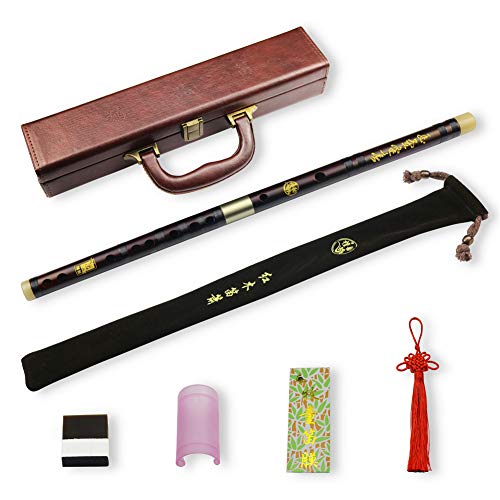
- •♪Material♪ The body is made of Bitter bamboo (More than 3 years). Dried for 2 years, the bamboo pattern is fine and straight. The flute is flat and smooth without cracks.
- •♪Hardware♪ Joint is made of high polished brass. Head and tail are made of synthetic horns.
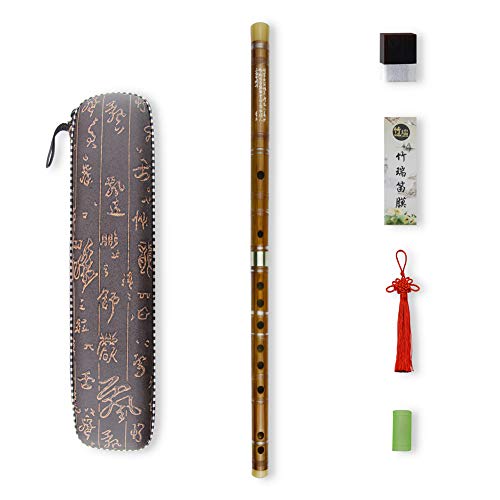
- •♪Free accessories♪ 1 pack of Professional level Dizi membrane,1 Membrane protector for specified Key,1 Professional Dizi box,1 piece of Gelatin Dizi membrane glue.
- •♪Tone quality♪ The voice is melodious and euphemistic, and the tunes played are beautiful, delicate, and gorgeous.
- •♪Measurement♪ Length 19in, diameter 0.8in, weight 75g.
G Key Dizi Bitter Bamboo Flute for Beginners with Free Membrane & Glue & Protector Set Traditional Chinese Instrument(Key of G/Bitter Bamboo)
List Price: $43.63$39.27DEALYou Save: $4.36 (10%)
Free shippingFree Returns – 30 daysFree Order CancellationSecure Payment2–3 Days DeliveryGet It October 26, 2026In Stock (2)No marketing spamNo account requiredFulfilment by FedEx / Amazon / UPS / ShipwirePayPal / Card Buyer Protection
Customer Reviews
Reviews sourced from verified Amazon purchasers4.2
out of 5
Based on 10 reviews
5★
70%
4★
30%
3★
0%
2★
0%
1★
0%
Dimo usage
Sam Lichtenstein✓ Verified Purchase•December 16, 2023
I like how it can help make the dizi sound unique with the small buzzing sound.
The C key is great bamboo flute
Will0ver9000✓ Verified Purchase•December 1, 2023
This was a great purchase for my first bamboo flute! Of course I'll give you all a honest review
This is a good easy to play flute, the sound is very beautiful and rich the overall sound quality is amazing. To achieve such beautiful sounds you must cover up the First hole from the mouth piece or it will not sound.
I don't have much cons for this other than the fingering chat for complete beginners.
The fingering chart provided is overall good but it lacks (Letter Notes) like what key you are using
Of you could just learn music theory. Otherwise you'll need to research for the keys online.
Besides that it's very simple to play! It is a bit longer than a metal flute.
So I highly recommend this for flute for beginners and musicians who want to try a bamboo flute
Keep on playing!!
This is a good easy to play flute, the sound is very beautiful and rich the overall sound quality is amazing. To achieve such beautiful sounds you must cover up the First hole from the mouth piece or it will not sound.
I don't have much cons for this other than the fingering chat for complete beginners.
The fingering chart provided is overall good but it lacks (Letter Notes) like what key you are using
Of you could just learn music theory. Otherwise you'll need to research for the keys online.
Besides that it's very simple to play! It is a bit longer than a metal flute.
So I highly recommend this for flute for beginners and musicians who want to try a bamboo flute
Keep on playing!!
Great sounding Dizi at a great price.
Amazon Customer✓ Verified Purchase•December 1, 2023
Fast delivery and great value. I got this Dizi because it was rosewood and I would not have to worry as much about cracking as with bamboo. The flute is beautiful and has a great sound. The Chinese script is a nice addition. I play this flute a lot and would highly recommend it.
A good step up from a beginner bamboo Dizi
Hope this helps✓ Verified Purchase•November 18, 2023
I had gotten a cheaper beginner Dizi and was looking for a good step up. This definitely did it for me. It comes with everything you would need plus some extras I didn't think I would need. Here are my main points about it:
1. The flute itself is really well made. It's heavier and feels a lot more solid and durable than my beginner bamboo Dizi. Also, it is much less prone to cracking than the bamboo one (which mine did due to extreme temperature changes...nothing baking soda and crazy glue can't fix though).
2. I love the warmer timbre of this flute versus the more nasal sound that my bamboo one had. It's much more pleasant for others to listen to and in my opinion can be more widely used in a variety of musical situations. Plus, I feel like I have more options in controlling how mellow or bright the sound can be just by the way I play. The intonation on mine was pretty good to.
3. The case is really well built and has enough room to fit some extras (I added miniature scissors so as to always be able to cut membrane pieces). It is a two sectioned case but your flute won't take the entire space of it. It feels like a wood construction with velvet inner lining and a neatly wrapped pleather exterior. Mine is black and has what appears to be a gold-colored die cast latch and handle. It has a good presence and can even be placed out in the open as a decorative piece.
4. It has the essentials: Several three packs of the membranes and one glue (just add water to it). It also carries a membrane protector which I've never used before but now that I have, I wonder why I never did. It helps protect the membrane during storage and transport. This way you don't run the risk of knocking the membrane out of place prematurely. Also, there is a cool tassel to add some character.
5. The only semi-downside is the little intro pamphlet they include. The pamphlet is useful for those who have not used a Dizi before in that it has good real pictures explaining how to place the membrane, and it has a good section explaining basic maintenance. However, the fingering chart is not very clear especially to those from a western music tradition. So, I'd recommend printing out a separate fingering chart for a 6-hole Dizi and sticking it in there, too, as reference.
*NOTE = One thing to clarify as I noted some confusion about proper tuning keys in other reviews. The tuning of the Dizi is found after covering the top three holes. So, my flute is in D...so I hit the D note when covering the top three holes. The same thing with my other C Dizi which plays a "C" after covering the top three holes. This can be confusing to many of us who have played western flutes in C where the "C" can be found after more or less covering all the holes. Be sure to print out a 6-hole Dizi fingering chart once you get this instrument.
1. The flute itself is really well made. It's heavier and feels a lot more solid and durable than my beginner bamboo Dizi. Also, it is much less prone to cracking than the bamboo one (which mine did due to extreme temperature changes...nothing baking soda and crazy glue can't fix though).
2. I love the warmer timbre of this flute versus the more nasal sound that my bamboo one had. It's much more pleasant for others to listen to and in my opinion can be more widely used in a variety of musical situations. Plus, I feel like I have more options in controlling how mellow or bright the sound can be just by the way I play. The intonation on mine was pretty good to.
3. The case is really well built and has enough room to fit some extras (I added miniature scissors so as to always be able to cut membrane pieces). It is a two sectioned case but your flute won't take the entire space of it. It feels like a wood construction with velvet inner lining and a neatly wrapped pleather exterior. Mine is black and has what appears to be a gold-colored die cast latch and handle. It has a good presence and can even be placed out in the open as a decorative piece.
4. It has the essentials: Several three packs of the membranes and one glue (just add water to it). It also carries a membrane protector which I've never used before but now that I have, I wonder why I never did. It helps protect the membrane during storage and transport. This way you don't run the risk of knocking the membrane out of place prematurely. Also, there is a cool tassel to add some character.
5. The only semi-downside is the little intro pamphlet they include. The pamphlet is useful for those who have not used a Dizi before in that it has good real pictures explaining how to place the membrane, and it has a good section explaining basic maintenance. However, the fingering chart is not very clear especially to those from a western music tradition. So, I'd recommend printing out a separate fingering chart for a 6-hole Dizi and sticking it in there, too, as reference.
*NOTE = One thing to clarify as I noted some confusion about proper tuning keys in other reviews. The tuning of the Dizi is found after covering the top three holes. So, my flute is in D...so I hit the D note when covering the top three holes. The same thing with my other C Dizi which plays a "C" after covering the top three holes. This can be confusing to many of us who have played western flutes in C where the "C" can be found after more or less covering all the holes. Be sure to print out a 6-hole Dizi fingering chart once you get this instrument.
Excellent Dizi. Research of which Key to buy.
Katherine Hernandez✓ Verified Purchase•October 23, 2023
First of all, excellent instrument.
Second, here is why I ended up buying 3 of them.
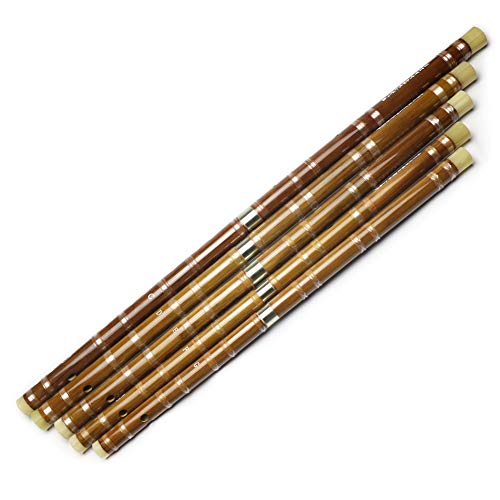
I first bought a C dizi, which is definitely my favorite one to play now, but at first it wasn't. Each dizi is a different size depending on the key, this includes the length of the instrument, the size of the holes and how far apart the holes are. Due to the size difference, each one sounds different too, thus the Key they are assigned (the higher the letter the higher the sound ie C has lower sounds than G). My favorite sounding one is the C, but at first the holes where too far apart for my hands and the holes a bit to big for my fingers, specially on the right hand. I was frustrated because I couldn't close the holes well enough to produce clear sounds.
I really wanted to play a dizi, so I did more research on whole sizes and didn't find a clear answer. I then decided to try out a D dizi and a G dizi so see which one would be a better fit, so I bought them both. I definitely like the D and G. If your fingers are on the slimmer side, G is good to play, but because the key is so high, its more difficult to produce clear sounds (and that's coming from someone who has no problem playing a western flute). The D dizi is a really good choice if you aren't 100% sure on sound and size. It's not that hard to produce clear sounds on the D, and the wholes aren't too far apart. If you can only invest in one, I would say D is the best start.
Now, if your fingers are on the slimmer side and you still want to play a C dizi, or your dizi still feels big for your hands, you can adjust your playing style and use the second joint of your fingers instead of the tip to cover the holes. This works very well for me and I actually play all my dizi this way now, regardless of size. If you aren't sure on what I mean, look up some videos on professionals playing the Dizi and you'll see that many of them don't use the tip of their fingers to cover the hole, specially the holes of the right hand. I still use the tip of my fingers to cover the holes on the left. Also, don't be deceived by your own fingers just because you are on the bigger side. I'm 5'10", 180 Lbs and the tip of my fingers are still smaller than I thought. But again, you can always adjust playing style.
In summary, this is a great choice for a dizi, specially if you're just starting. Think well about what size would be a good fit for your hands and which sounds you prefer, and I think you'll be very happy with your Dizi.
PS: Do some research on the membrane too.
Second, here is why I ended up buying 3 of them.
I first bought a C dizi, which is definitely my favorite one to play now, but at first it wasn't. Each dizi is a different size depending on the key, this includes the length of the instrument, the size of the holes and how far apart the holes are. Due to the size difference, each one sounds different too, thus the Key they are assigned (the higher the letter the higher the sound ie C has lower sounds than G). My favorite sounding one is the C, but at first the holes where too far apart for my hands and the holes a bit to big for my fingers, specially on the right hand. I was frustrated because I couldn't close the holes well enough to produce clear sounds.
I really wanted to play a dizi, so I did more research on whole sizes and didn't find a clear answer. I then decided to try out a D dizi and a G dizi so see which one would be a better fit, so I bought them both. I definitely like the D and G. If your fingers are on the slimmer side, G is good to play, but because the key is so high, its more difficult to produce clear sounds (and that's coming from someone who has no problem playing a western flute). The D dizi is a really good choice if you aren't 100% sure on sound and size. It's not that hard to produce clear sounds on the D, and the wholes aren't too far apart. If you can only invest in one, I would say D is the best start.
Now, if your fingers are on the slimmer side and you still want to play a C dizi, or your dizi still feels big for your hands, you can adjust your playing style and use the second joint of your fingers instead of the tip to cover the holes. This works very well for me and I actually play all my dizi this way now, regardless of size. If you aren't sure on what I mean, look up some videos on professionals playing the Dizi and you'll see that many of them don't use the tip of their fingers to cover the hole, specially the holes of the right hand. I still use the tip of my fingers to cover the holes on the left. Also, don't be deceived by your own fingers just because you are on the bigger side. I'm 5'10", 180 Lbs and the tip of my fingers are still smaller than I thought. But again, you can always adjust playing style.
In summary, this is a great choice for a dizi, specially if you're just starting. Think well about what size would be a good fit for your hands and which sounds you prefer, and I think you'll be very happy with your Dizi.
PS: Do some research on the membrane too.
Page 1 of 2