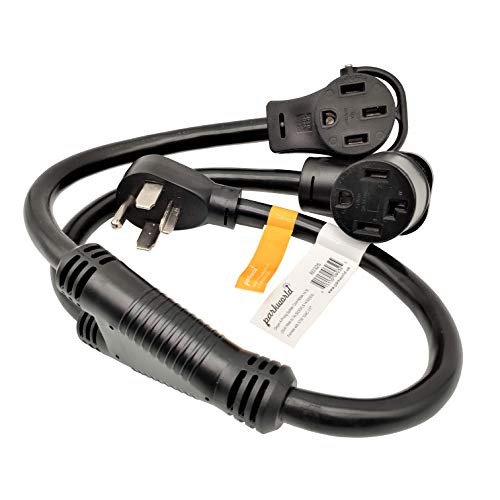
Parkworld 60325 Dryer Splitter to EV, NEMA 14-30 Male Plug to 14-30 & RV/EV 14-50 Female Receptacle, Dryer 4-Prong 30 AMP Y Adapter Cord (3FT)




Key features
- •AC Power Splitter 14-30P to 14-30P and 14-50R 250V/7500W, 36 inch.
- •NEMA 14-30P Plug*1 , 30 AMP 4-prong Dryer male.
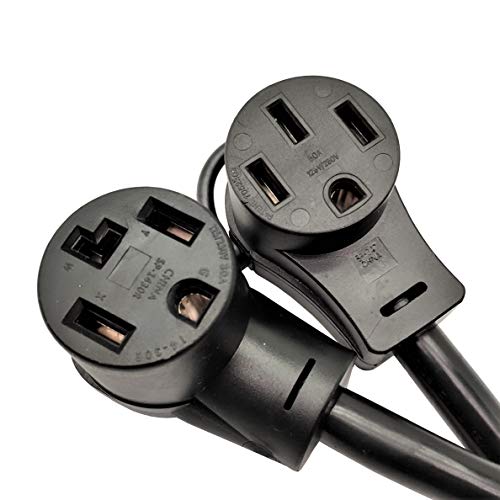
- •NEMA 14-30R Receptacle*1 , 30 AMP 4-prong Dryer female connector.
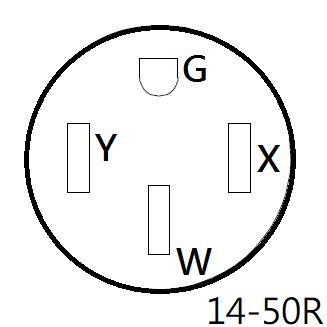
- •NEMA 14-50R Receptacle*1 with handle, 50 AMP 4-prong female connector for both RV and EV.
- •Used UL 62 standard STW 10/4C cable with molded connectors. Test electrical function by UL & cUL standard, Heavy-duty power adapter cord, 100% cooper conductor inside.
Parkworld 60325 Dryer Splitter to EV, NEMA 14-30 Male Plug to 14-30 & RV/EV 14-50 Female Receptacle, Dryer 4-Prong 30 AMP Y Adapter Cord (3FT)
List Price: $96.60$86.94DEALYou Save: $9.66 (10%)
Free shippingFree Returns – 30 daysFree Order CancellationSecure Payment2–3 Days DeliveryGet It June 25, 2026In Stock (2)No marketing spamNo account requiredFulfilment by FedEx / Amazon / UPS / ShipwirePayPal / Card Buyer Protection
Customer Reviews
Reviews sourced from verified Amazon purchasers4.7
out of 5
Based on 10 reviews
5★
90%
4★
10%
3★
0%
2★
0%
1★
0%
The Solution for our Dryer and EV Charger
Jay✓ Verified Purchase•October 25, 2023
The NEMA 14-30 electrical outlet (also known as a receptacle or socket) for our electric dryer was most likely not manufactured to endure continuous plug pull-outs and push-ins. So the question we had was how best to use that NEMA 14-30 dryer outlet to also charge our electric vehicle? (Continuous swapping-out of the dryer plug for the 240v EV charger plug was not a long-term option.) This was our solution, a simple splitter. Now our dryer and EV charger can share that 14-30 outlet, in lieu of immediately adding another outlet or some cottage industry dryer splitter with a fancy meter (either would end-up costing 3x to 20x the cost of this splitter). Parkworld's splitter's wiring is flexible and the plugs appear factory molded, rather than put together with screws. The sheathing reflects 600v and 10AWG wiring. China is listed [as the country of origin]. The only caveat is not seeing a UL listing, anywhere. Our EV charger, which has a NEMA 14-50 plug, can be dialed down, via an App, to pull (24) amps, which is the recommended (80%) max on our 14-30 outlet (30 amp circuit). Trying to pull more amps than recommended by your electrical code is not the splitter's fault, such action is more akin to "user error." Also, we do NOT run the dryer and charger at the same time, as that, once again, would be an attempt to draw more amps than code allows. Know what you are doing and what your are buying. We would buy this again, for our particular use.
Works well
Hembrook✓ Verified Purchase•October 24, 2023
This has done just what we needed"¦works great!
sturdiness
Jeffrey H.✓ Verified Purchase•October 23, 2023
works great.
EV CHARGING APPROVED
Cameron Reed✓ Verified Purchase•October 14, 2023
I was receiving quotes to install a 240V outlet for EV charging in my garage between $1,000 and $3,000! A YouTuber put me on to this item to split the dryer connection and run the charger from your laundry into the garage. This works seamlessly with my Tesla, fully charging in 6 hours or less. If your laundry room is next to your garage and you're considering an EV, this is a great solution to charge your vehicle. Please remember, you cannot charge and dry your clothes at the same time. I don't find it to be an inconvenience.
Works great when laundry room is next to the garage.
Toby in Denver✓ Verified Purchase•October 11, 2023
Just got a Tesla Y a few weeks ago. I've been charging on Level 1 using a garage outlet at 1.4 kWh which gives me 4 miles of charge every hour. With this I can get 5.8 kWh or 20 miles every hour.
The Tesla thought it was a 40 amp circuit and defaulted to 32 amp charge. As advised from other reviews I set the charge rate to 24 amps since it's a 30 amp/240 volt circuit. To prevent tripping the breaker, I used scheduled charging to tell it to start in an hour. Then plugged it in and changed the amp rate before turning charging back on. Two charges so far were at 94% efficiency vs the 84% I was getting using a wall outlet. I leave the 40 amp pigtail plugged in and just pull the Tesla charging cable out from the base. I'll install a Level 2 at some point but for under $70 this is a pretty cheap bridge solution.
Edit: I do agree with other users that if the whole cable or the EV side were 1 to 2 feet longer it would be a nice design improvement for reach/accessibility/safety reasons. Also the Tesla remembers the amp rate based on location, so once you set it to 24 on first use, you don't have to do it everytime. I spend $30/month in total charging costs and only use this splitter once or twice a month, using the garage level 1 outlet the rest of the time. So the 10% efficiency loss when I'm not using this is $3 per month. This cable makes it really hard to justify spending $500+ on a permanent level 2 because the payback period would take forever.
The Tesla thought it was a 40 amp circuit and defaulted to 32 amp charge. As advised from other reviews I set the charge rate to 24 amps since it's a 30 amp/240 volt circuit. To prevent tripping the breaker, I used scheduled charging to tell it to start in an hour. Then plugged it in and changed the amp rate before turning charging back on. Two charges so far were at 94% efficiency vs the 84% I was getting using a wall outlet. I leave the 40 amp pigtail plugged in and just pull the Tesla charging cable out from the base. I'll install a Level 2 at some point but for under $70 this is a pretty cheap bridge solution.
Edit: I do agree with other users that if the whole cable or the EV side were 1 to 2 feet longer it would be a nice design improvement for reach/accessibility/safety reasons. Also the Tesla remembers the amp rate based on location, so once you set it to 24 on first use, you don't have to do it everytime. I spend $30/month in total charging costs and only use this splitter once or twice a month, using the garage level 1 outlet the rest of the time. So the 10% efficiency loss when I'm not using this is $3 per month. This cable makes it really hard to justify spending $500+ on a permanent level 2 because the payback period would take forever.
Page 1 of 2