Lomi Classic | World’s First Smart Waste™ Home Food Upcycler | Turn Waste into Natural Fertilizer with a Single Button with Lomi Classic, The Smart Waste™ Electric Kitchen Food Recycler


Key features
- •Quick Clean-Up: Just scrape your plates directly into Lomi. Note: click 'See All Buying Options' to purchase your LOMI
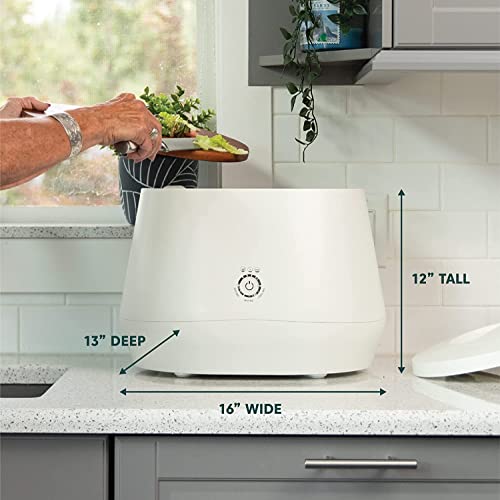
- •Compact & Efficient Design: Turn food waste into dirt in as little as 4 hours.
- •Odor Neutralized: Garbage cans are full of old food decomposing at room temperature. You'll never smell garbage again.
- •Reduce your Carbon Footprint: Reduce your weekly garbage by up to 80%.
- •Create a Waste-Free Future: Lomi produces nutrient-rich dirt which you can use for your garden or houseplants. Every Lomi includes your first 45 cycles of Filters + Pods!
Lomi Classic | World’s First Smart Waste™ Home Food Upcycler | Turn Waste into Natural Fertilizer with a Single Button with Lomi Classic, The Smart Waste™ Electric Kitchen Food Recycler
List Price: $551.45$496.31DEALYou Save: $55.14 (10%)
Free shippingFree Returns – 30 daysFree Order CancellationSecure Payment2–3 Days DeliveryGet It October 29, 2026In Stock (1)No marketing spamNo account requiredFulfilment by FedEx / Amazon / UPS / ShipwirePayPal / Card Buyer Protection
Customer Reviews
Reviews sourced from verified Amazon purchasers4.4
out of 5
Based on 10 reviews
5★
90%
4★
10%
3★
0%
2★
0%
1★
0%
It works but your mulch depends on what you put into it.
Amazon Customer✓ Verified Purchase•July 7, 2023
UPDATE:
I have attached some photos showing the energy consumption and some final product. The power consumption is about 500 watts when it is running. A full batch of compost consumed just under 1 kWh of energy over about 14 hours. I turned about 3 - 4 quarts of rough product into about 2 to 3 cups of compost. Based on the fact that energy in my part of the US consists of roughly 37% coal, 25% natural gas, 30% wind, 3% hydroelectric, 4% solar, and 1% other, it is safe to predict that my carbon emissions was between 500g and 600g to produce the compost. FYI, it takes about 1.12 pounds of coal (1000g CO2), 7.36 cubic feet of natural gas (500g of CO2), or .08 gallons of oil (600-750g of CO2) to produce 1 kWh of energy. The estimated emissions of hydroelectric, wind, and solar is about 50g of CO2 emissions.
It is easy to think your mulch is going to come out perfect every time if you read the writeup or watch the videos or commercials for this or similar products. I have made mulch in piles and portable rollers. Living in the cold, dry Rocky Mountain West, it is really difficult to make mulch in time to plant using standard methods. By the time your pile is really cooking, you are harvesting your July crops. The rollers are even more difficult because of how difficult it is to get a good mixture of green and brown media into the roller. Once again, in a cold, dry climate, you are harvesting before you get your first real batch of mulch.
Enter the Lomi or similar products. It is part dehydrator, part composter, part grinder. The final result is a ground media / mulch hybrid. It handles egg shells and citrus peels far better than the outdoor pile in cold climates. It can break down pineapple cores, banana peels, and limited meat or fat trimmings. That is pretty impressive. If you get enough rotten, juicy produce mixed with the peels and other drier materials, you get pretty good product. If you are mostly dry, expect something that resembles pebbles cereal. If you are too wet, expect stinky, muddy sludge stuck to the pan. Get the mix just right, and you get decent mulch. Proper mulch should smell similar to soil. It should be loose, but you should have no problem packing it into a ball. Reading a few gardening books or a little Internet research will help you get the dry to wet mix better for your climate. Expect a trial and error learning curve. It is okay to mix too dry with too wet with close to right mulch. Nothing is not usable. Keep in mind that if you plan on using mulch in a garden do not put bones, produce stickers, compostable plastics, pet waste, sanitary waste, or other not truly compostable products in the Lomi. As a side note, stringy items like kale, spinach, flower stems, asparagus, and similar items need to be cut up or else they will bind up around the grinding mechanism.
It is about the size of a bread machine. It uses a fair amount of energy.. You can hear it running. It is certainly louder than my 20 year old dishwasher or 10 year old refrigerator. You can smell it running. If you store media in it before running a batch, it can get pretty ripe. It is loud and smelly enough that I store it and run it in the garage. If you are sensitive to noise and / or smell, this is not a great countertop device so plan on storing it elsewhere. For convenience, I use a small covered waste can next to my trash can that I dump into the Lomi a few times per week. So far, no fruit flies, but it isn't summer yet either.
Ultimately am I happy with it? The mulch that I have produced looks and feels pretty good. I will mix it with other mulch and renewed soil this summer to see how well it works in my vegetable garden. I like the idea of taking my egg shells, juicer waste, vegetable trimmings, tea bags, coffee & filters, rotten veggies, and other compostable waste and putting it into my garden instead of a landfill. I like the idea of producing a batch regardless of it being below zero outside or 100 degrees outside. I don't believe I am saving the world with it, but I hope it will make my garden better.
I have attached some photos showing the energy consumption and some final product. The power consumption is about 500 watts when it is running. A full batch of compost consumed just under 1 kWh of energy over about 14 hours. I turned about 3 - 4 quarts of rough product into about 2 to 3 cups of compost. Based on the fact that energy in my part of the US consists of roughly 37% coal, 25% natural gas, 30% wind, 3% hydroelectric, 4% solar, and 1% other, it is safe to predict that my carbon emissions was between 500g and 600g to produce the compost. FYI, it takes about 1.12 pounds of coal (1000g CO2), 7.36 cubic feet of natural gas (500g of CO2), or .08 gallons of oil (600-750g of CO2) to produce 1 kWh of energy. The estimated emissions of hydroelectric, wind, and solar is about 50g of CO2 emissions.
It is easy to think your mulch is going to come out perfect every time if you read the writeup or watch the videos or commercials for this or similar products. I have made mulch in piles and portable rollers. Living in the cold, dry Rocky Mountain West, it is really difficult to make mulch in time to plant using standard methods. By the time your pile is really cooking, you are harvesting your July crops. The rollers are even more difficult because of how difficult it is to get a good mixture of green and brown media into the roller. Once again, in a cold, dry climate, you are harvesting before you get your first real batch of mulch.
Enter the Lomi or similar products. It is part dehydrator, part composter, part grinder. The final result is a ground media / mulch hybrid. It handles egg shells and citrus peels far better than the outdoor pile in cold climates. It can break down pineapple cores, banana peels, and limited meat or fat trimmings. That is pretty impressive. If you get enough rotten, juicy produce mixed with the peels and other drier materials, you get pretty good product. If you are mostly dry, expect something that resembles pebbles cereal. If you are too wet, expect stinky, muddy sludge stuck to the pan. Get the mix just right, and you get decent mulch. Proper mulch should smell similar to soil. It should be loose, but you should have no problem packing it into a ball. Reading a few gardening books or a little Internet research will help you get the dry to wet mix better for your climate. Expect a trial and error learning curve. It is okay to mix too dry with too wet with close to right mulch. Nothing is not usable. Keep in mind that if you plan on using mulch in a garden do not put bones, produce stickers, compostable plastics, pet waste, sanitary waste, or other not truly compostable products in the Lomi. As a side note, stringy items like kale, spinach, flower stems, asparagus, and similar items need to be cut up or else they will bind up around the grinding mechanism.
It is about the size of a bread machine. It uses a fair amount of energy.. You can hear it running. It is certainly louder than my 20 year old dishwasher or 10 year old refrigerator. You can smell it running. If you store media in it before running a batch, it can get pretty ripe. It is loud and smelly enough that I store it and run it in the garage. If you are sensitive to noise and / or smell, this is not a great countertop device so plan on storing it elsewhere. For convenience, I use a small covered waste can next to my trash can that I dump into the Lomi a few times per week. So far, no fruit flies, but it isn't summer yet either.
Ultimately am I happy with it? The mulch that I have produced looks and feels pretty good. I will mix it with other mulch and renewed soil this summer to see how well it works in my vegetable garden. I like the idea of taking my egg shells, juicer waste, vegetable trimmings, tea bags, coffee & filters, rotten veggies, and other compostable waste and putting it into my garden instead of a landfill. I like the idea of producing a batch regardless of it being below zero outside or 100 degrees outside. I don't believe I am saving the world with it, but I hope it will make my garden better.
Omg this is HUGE!
Rebekah✓ Verified Purchase•July 7, 2023
Okay, she just arrived and upon opening the box my initial reaction was "OMG THIS IS MASSIVE!" Even though I watched videos and read reviews, I never truly grasped how large this gal truly is! My boyfriend and I are Whole Food Plant Based/Frugavores and our initial concern was that this wouldn't be large enough to handle how much fruit and vegetables we consume on a daily bases. I will aim to write a review again once we have used the machine, but I have a feeling this is going to be amazing! I can't wait!!
works like a charm
very satisfied✓ Verified Purchase•June 16, 2023
So far this product does what it says"”- turns food scraps into a dirt like material. Definitely reduces waste. Definitely worth the money for the positive effect on our planet. Each of us can contribute to a better planet for our children and their children"”the Lomi product is part of taking a small step toward the solution.
Compost is great !!!
Judson Herter✓ Verified Purchase•June 9, 2023
It was easy to setup and operate in all options. We use it two to three times per week. It is a very worthwhile addition to our desire to recycle garbage.
My wife loves this thing
Stan✓ Verified Purchase•June 4, 2023
My wife is very big on conservation and taking care of the planet. She uses this thing once if not twice a day. We put all our veggie scraps in and then dump the results in the garden or just out in the yard/landscaping. We haven't replaced the charcoal pellets so the smell has gotten pretty rank - so we usually just run it in the garage. I've read that you can get cheaper pellets that are used in fish tanks so we may try that. Either way, if you cook a lot of veggies like we do, this thing is amazing and is keeping tons of organic waste out of our garbage bins and therefore out of the dump. It's a bit pricey but it makes my wife really happy and therefore me happy - so it's worth it to me
Page 1 of 2