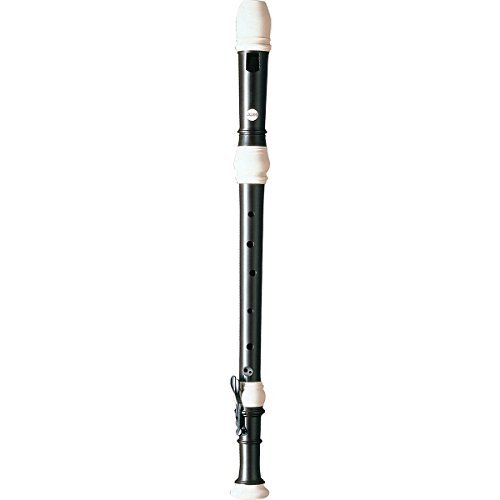
Aulos Recorder (A507B)
Key features
- •Recorder
Aulos Recorder (A507B)
List Price: $121.90$109.71DEALYou Save: $12.19 (10%)
Free shippingFree Returns – 30 daysFree Order CancellationSecure Payment2–3 Days DeliveryGet It October 25, 2026In Stock (6)No marketing spamNo account requiredFulfilment by FedEx / Amazon / UPS / ShipwirePayPal / Card Buyer Protection
Customer Reviews
Reviews sourced from verified Amazon purchasers3.7
out of 5
Based on 10 reviews
5★
60%
4★
0%
3★
30%
2★
0%
1★
10%
Top-notch plastic tenor
David✓ Verified Purchase•June 19, 2017
This is an excellent plastic tenor. With separate C and C# keys, these low register notes are strong. Full range, strong tone make this a best buy. This replaced my Yamaha tenor, and I am glad I tried this Aulos model. I recommend this instrument without reservation.
Aulos 211A Robin versus Yamaha YRT304B
Michael Dubhagain✓ Verified Purchase•June 22, 2016
The Yamaha YRT304B has a very strong low C and C#. It resonates beautifully.
The Aulos 211A has a very weak low C and C#. It's thin and muted even when you get it right.
This is the most noticeable difference between them, and it's more than enough reason to recommend the Yamaha YRT304B over the Aulos 211A.
The finger hole spacing on both the Yamaha YRT304B and the Aulos 211A are virtually the same. I have X-Large hands (I wear men's X-Large gloves) and the finger hole spacing on both of them is very comfortable for me. I think it would also be comfortable for Large size hands. I think it might be a slight stretch for Medium size hands on either the Yamaha YRT304B or the Aulos 211A.
Aulos 211A Robin Tenor Recorder
Low C and C# are VERY weak and easily overblown (it squeals when overblown).
Overall tone is the same as Yamaha (except for low C and C#).
Does not have keys for the low C and C#.
The low F# is weak (low F# is normally weak on plastic tenor recorders "“ it plays a little better after it warms up).
The low G# is weak (weaker than the Yamaha).
The Aulos is an inch shorter than the Yamaha, but the finger hole spacing is virtually the same on both of them.
(The middle section, also known as the barrel, is the same length on both the Aulos and the Yamaha.)
Aulos recorders come with a 5" by 14" fingering chart that has fingerings for the notes on one side and clearly shows fingering for trills on the reverse side. This is by far the best fingering chart I've seen.
Yamaha YRT304B Tenor Recorder
Low C and C# are very strong and clear "“ much stronger and clearer than the Aulos 211A.
Overall tone is the same as Aulos (except for low C and C#).
Does have keys for the low C and C#.
The low F# is weak (low F# is normally weak on plastic tenor recorders "“ it plays a little better after it warms up).
The low G# is a little weak (stronger than the Aulos).
The Yamaha is an inch longer than the Aulos, but the finger hole spacing is virtually the same on both of them.
(The middle section, also known as the barrel, is the same length on both the Yamaha and the Aulos.)
Yamaha recorders come with a 4" by 12" fingering chart (does not show trills).
If you want an inexpensive tenor recorder, purchase the Yamaha YRT304B. If you want a tenor recorder that's a little nicer than the Yamaha, is a little more expensive, and sounds about the same, purchase the Aulos 511B (instead of the Aulos 211A).
Note: The Aulos website says this about the Aulos 211A, "Smaller and less widely spaced finger holes make this instrument very suitable for the smaller hand". This is not true. I put the Aulos 211A and the Yamaha YRT304B side by side and the finger holes are spaced almost exactly the same. The Aulos 211A measures a total of 1/8" shorter if you measure from the first hole to the sixth hole. There is very little difference in finger hole spacing between the Yamaha YRT304B and the Aulos 211A.
Note: The Aulos 211A is described as "Great for younger students". It's great for younger students if you want to teach them how frustrating life can be! Low C and low C# are impossible to play strong and clearly on the Aulos 211A recorder.
Use your browser to search on "blokis recorder fingerings" to see a number of complete sets of recorder fingerings for all types of recorders.
Use your browser to search on "lazars early music" to see an amazing selection of recorders! If you're looking to spend $700 to $1,000 for a tenor recorder that's truly comfortable in your hands:
1. Select Mollenhauer from the drop down menu
2. Scroll down and select Canta Recorders
3. Scroll down to Comfort Tenor (2445C)
or
1. Select Mollenhauer from the drop down menu
2. Scroll down and select Denner Recorder Description
3. Scroll down to Comfort Tenor (5416C, 5430C, and 5432C).
Use your browser to search on "michala petri" and listen to her play Bach and Vivaldi on YouTube. Michala Petri is sometimes referred to as the "Queen of the Recorder". She plays Mollenhauer recorders.
The Aulos 211A has a very weak low C and C#. It's thin and muted even when you get it right.
This is the most noticeable difference between them, and it's more than enough reason to recommend the Yamaha YRT304B over the Aulos 211A.
The finger hole spacing on both the Yamaha YRT304B and the Aulos 211A are virtually the same. I have X-Large hands (I wear men's X-Large gloves) and the finger hole spacing on both of them is very comfortable for me. I think it would also be comfortable for Large size hands. I think it might be a slight stretch for Medium size hands on either the Yamaha YRT304B or the Aulos 211A.
Aulos 211A Robin Tenor Recorder
Low C and C# are VERY weak and easily overblown (it squeals when overblown).
Overall tone is the same as Yamaha (except for low C and C#).
Does not have keys for the low C and C#.
The low F# is weak (low F# is normally weak on plastic tenor recorders "“ it plays a little better after it warms up).
The low G# is weak (weaker than the Yamaha).
The Aulos is an inch shorter than the Yamaha, but the finger hole spacing is virtually the same on both of them.
(The middle section, also known as the barrel, is the same length on both the Aulos and the Yamaha.)
Aulos recorders come with a 5" by 14" fingering chart that has fingerings for the notes on one side and clearly shows fingering for trills on the reverse side. This is by far the best fingering chart I've seen.
Yamaha YRT304B Tenor Recorder
Low C and C# are very strong and clear "“ much stronger and clearer than the Aulos 211A.
Overall tone is the same as Aulos (except for low C and C#).
Does have keys for the low C and C#.
The low F# is weak (low F# is normally weak on plastic tenor recorders "“ it plays a little better after it warms up).
The low G# is a little weak (stronger than the Aulos).
The Yamaha is an inch longer than the Aulos, but the finger hole spacing is virtually the same on both of them.
(The middle section, also known as the barrel, is the same length on both the Yamaha and the Aulos.)
Yamaha recorders come with a 4" by 12" fingering chart (does not show trills).
If you want an inexpensive tenor recorder, purchase the Yamaha YRT304B. If you want a tenor recorder that's a little nicer than the Yamaha, is a little more expensive, and sounds about the same, purchase the Aulos 511B (instead of the Aulos 211A).
Note: The Aulos website says this about the Aulos 211A, "Smaller and less widely spaced finger holes make this instrument very suitable for the smaller hand". This is not true. I put the Aulos 211A and the Yamaha YRT304B side by side and the finger holes are spaced almost exactly the same. The Aulos 211A measures a total of 1/8" shorter if you measure from the first hole to the sixth hole. There is very little difference in finger hole spacing between the Yamaha YRT304B and the Aulos 211A.
Note: The Aulos 211A is described as "Great for younger students". It's great for younger students if you want to teach them how frustrating life can be! Low C and low C# are impossible to play strong and clearly on the Aulos 211A recorder.
Use your browser to search on "blokis recorder fingerings" to see a number of complete sets of recorder fingerings for all types of recorders.
Use your browser to search on "lazars early music" to see an amazing selection of recorders! If you're looking to spend $700 to $1,000 for a tenor recorder that's truly comfortable in your hands:
1. Select Mollenhauer from the drop down menu
2. Scroll down and select Canta Recorders
3. Scroll down to Comfort Tenor (2445C)
or
1. Select Mollenhauer from the drop down menu
2. Scroll down and select Denner Recorder Description
3. Scroll down to Comfort Tenor (5416C, 5430C, and 5432C).
Use your browser to search on "michala petri" and listen to her play Bach and Vivaldi on YouTube. Michala Petri is sometimes referred to as the "Queen of the Recorder". She plays Mollenhauer recorders.
Experience after a year
David•October 18, 2015
I purchased this recorder in June 2014, so I've got a bit more than a year's experience with it as of this writing. My other records (SAB) are Yamaha 300 series. I got this Aulos because I wasn't very comfortable playing the Yamaha 300 series tenor. I'm an intermediate player; probably others with more experience do more with the instrument than I, but I think I can at least speak to what it does well and what requires more struggle.
The good:
Definitely the reach is easier than on the Yamaha 300 tenor that I used for a while. My middle three fingers can comfortably span 4", or can do 5" with a stretch. My first finger to pinky is 6" comfortably, 7" stretching. I could manage with the Yamaha, but this is less tiring during longer sessions. The one caveat is that I find the low C to be a little finicky. It probably depends somewhat on things like the humidity (and therefore the condition of my skin), but some days it seems I require either more force to get a good seal or a somewhat awkward twist on the right wrist and/or elbow.
I like the sound in the middle part of the range; the instrument plays very easily there. Up through high G is no trouble.
The price I paid was very reasonable.
The bad:
I don't like the low C. Even when it's not finicky to produce, it has a thin and somewhat weak tone. Perhaps that's a compromise from having such a short instrument. The Yamaha that I used had a key/lever for the low C/C# instead of the double hole that the Aulos features. I prefer the Aulos arrangement on purely ergonomic grounds, but I liked the Yamaha sound better. Low D is better, though still a bit weak. I think the sweet spot starts with the E.
High A and above starts to require more care, though I can generally manage at least the A reliably. This is similar to my skill with the Yamaha though, so I don't have reason to think the instrument has a problem with higher notes. Fortunately I rarely encounter a need for the higher notes in the music that my consort plays.
I have significantly more clogging issues with this recorder than I do with my Yamahas. The frequency of clogging is one aspect, but I find that the rate at which the recorder goes from sounding good to sounding weak and airy is worse. With the Yamahas, I feel like I have lots of time before there's any noticeable effect, plus plenty of time between when the tone is beginning to deteriorate and when it really sounds bad. That warning time is usually enough that I'll come to a spot where I can clear it before it gets to the bad stage. The Aulos seems to fall apart more rapidly, so I have to be very diligent about clearing every chance I get, and even then I sometimes run into issues with longer passages where there's no good spot to clear.
Overall: a reasonable instrument for the money, pretty comfortable to play, but with a couple of compromises.
The good:
Definitely the reach is easier than on the Yamaha 300 tenor that I used for a while. My middle three fingers can comfortably span 4", or can do 5" with a stretch. My first finger to pinky is 6" comfortably, 7" stretching. I could manage with the Yamaha, but this is less tiring during longer sessions. The one caveat is that I find the low C to be a little finicky. It probably depends somewhat on things like the humidity (and therefore the condition of my skin), but some days it seems I require either more force to get a good seal or a somewhat awkward twist on the right wrist and/or elbow.
I like the sound in the middle part of the range; the instrument plays very easily there. Up through high G is no trouble.
The price I paid was very reasonable.
The bad:
I don't like the low C. Even when it's not finicky to produce, it has a thin and somewhat weak tone. Perhaps that's a compromise from having such a short instrument. The Yamaha that I used had a key/lever for the low C/C# instead of the double hole that the Aulos features. I prefer the Aulos arrangement on purely ergonomic grounds, but I liked the Yamaha sound better. Low D is better, though still a bit weak. I think the sweet spot starts with the E.
High A and above starts to require more care, though I can generally manage at least the A reliably. This is similar to my skill with the Yamaha though, so I don't have reason to think the instrument has a problem with higher notes. Fortunately I rarely encounter a need for the higher notes in the music that my consort plays.
I have significantly more clogging issues with this recorder than I do with my Yamahas. The frequency of clogging is one aspect, but I find that the rate at which the recorder goes from sounding good to sounding weak and airy is worse. With the Yamahas, I feel like I have lots of time before there's any noticeable effect, plus plenty of time between when the tone is beginning to deteriorate and when it really sounds bad. That warning time is usually enough that I'll come to a spot where I can clear it before it gets to the bad stage. The Aulos seems to fall apart more rapidly, so I have to be very diligent about clearing every chance I get, and even then I sometimes run into issues with longer passages where there's no good spot to clear.
Overall: a reasonable instrument for the money, pretty comfortable to play, but with a couple of compromises.
My least favorite instrument among my plastic instruments made by Aulos
T. Horowitz•August 28, 2015
I bought the 211A because I have very small hands, and my hands start aching after a while when I play a normal tenor (wooden or plastic) with wider reaches and keys for the low C and C#. I also dislike the clicking sound those keys tend to make on a plastic tenor. Since I have many other excellent Aulos instruments, including their plastic imitation Grenser Baroque flute, I had high expectations for this one.
I have to say that I was disappointed. It is certainly easy to play, but its tone quality is not even remotely comparable to the tone quality of the Yamaha 300 series plastic tenor recorder which I play most of the time. I would still have given it a four-star rating except for one thing: it has no high C# ! That's right, the second to top note in the standard range of the instrument is simply missing. The standard fingering doesn't work for it, and the fingering chart from Aulos which came with the instrument omits this pitch. I tried other fingerings, and nothing worked. I did find a fingering online which involves stopping the end of the instrument with one's knee (one can get an entire extra octave above the standard range using fingerings like that), but I have never considered this practical for normal performing.
D major is a fairly common key in early music (many of the early flutes had D as their lowest pitch instead of C), so the fact that the high C# is missing is a serious problem for anyone interested in playing Renaissance and Baroque pieces. Taking that together with the unimpressive tone color, I think this instrument rates only three stars. If the high C# isn't important to you, take my rating as a four star rating instead.
I have to say that I was disappointed. It is certainly easy to play, but its tone quality is not even remotely comparable to the tone quality of the Yamaha 300 series plastic tenor recorder which I play most of the time. I would still have given it a four-star rating except for one thing: it has no high C# ! That's right, the second to top note in the standard range of the instrument is simply missing. The standard fingering doesn't work for it, and the fingering chart from Aulos which came with the instrument omits this pitch. I tried other fingerings, and nothing worked. I did find a fingering online which involves stopping the end of the instrument with one's knee (one can get an entire extra octave above the standard range using fingerings like that), but I have never considered this practical for normal performing.
D major is a fairly common key in early music (many of the early flutes had D as their lowest pitch instead of C), so the fact that the high C# is missing is a serious problem for anyone interested in playing Renaissance and Baroque pieces. Taking that together with the unimpressive tone color, I think this instrument rates only three stars. If the high C# isn't important to you, take my rating as a four star rating instead.
Love it
Jenn•January 18, 2015
This is my second tenor recorder. I bought it after realizing that the standard size (even with keys) would just not ever work with my hands. This one is MUCH better, although people with small hands may still have a problem. It will probably take me a few months to comfortably play all of the notes. It sounds beautiful, much warmer than my previous plastic tenor. Overall i'm very happy with it.
Page 1 of 2





