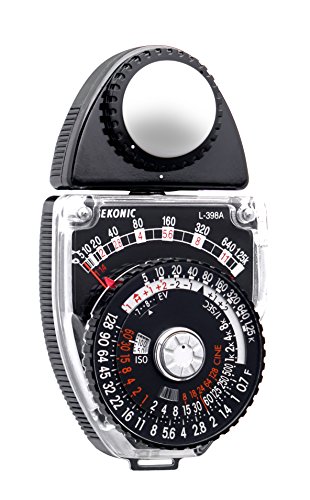
Sekonic L-398A Light Meter Studio Deluxe III (401-399)
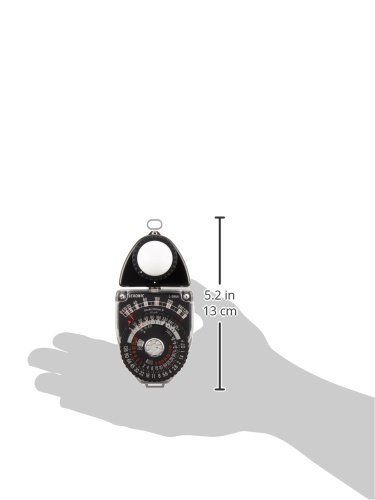

Key features
- •ONLY SEKONIC METERS THAT ARE SHIPPED BY AND SOLD BY AMAZON.COM OR OTHER AUTHORIZED SEKONIC DEALERS CAN ENSURE THAT YOU ARE RECEIVING GOODS THAT HAVE PROPER FCC COMMUNICATION AND ARE COVERED BY A USA WARRANTY. THE AMAZON OFFER MAY BE SEEN TO THE RIGHT. GREY MARKET SEKONIC METERS WILL NOT APPLICABLE FOR A US WARRANTY.
- •Ideal prime or back-up meter for still photography and cinematography use
- •Amorphous photocell requires no batteries or external power source.
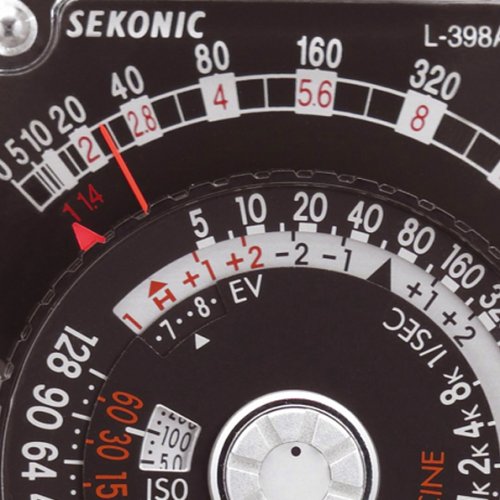
- •ISO range 6 to 12,000 in 1/3 step increments
- •60-seconds to 1/8000th, f/0.7 to f/128, 8-fps to 128-fps
BrandSekonic
CategoryCamera & Photo
ColorBlack
Warranty1-Year Warranty, extendable at no charge to 3 years total (USA only) after registration, backed by our outstanding customer support team
Sekonic L-398A Light Meter Studio Deluxe III (401-399)
List Price: $317.19$285.47DEALYou Save: $31.72 (10%)
Free shippingFree Returns – 30 daysFree Order CancellationSecure Payment2–3 Days DeliveryGet It October 25, 2026In Stock (4)No marketing spamNo account requiredFulfilment by FedEx / Amazon / UPS / ShipwirePayPal / Card Buyer Protection
Customer Reviews
Reviews sourced from verified Amazon purchasers4.2
out of 5
Based on 10 reviews
5★
90%
4★
10%
3★
0%
2★
0%
1★
0%
Gotta love a meter that doesn't need batteries - perfect for ...
Mark Hayes•July 11, 2017
Gotta love a meter that doesn't need batteries - perfect for my old film cameras that don't have batteries either.
Always had sekonic, had this model before I lost ...
T_Dogger•July 2, 2017
Always had sekonic, had this model before I lost it, and hopefully will have this one for another 10 years.
Five Stars
Amazon Customer•April 5, 2017
i LOVE this meter. A must-have for any lighting designer and cinematographer.
This is now my favorite light meter
CA•October 1, 2016
Background: I own a Sekonic L-758DR, a Gossen Digisix 2, and a Lumu light meter. This is now my favorite light meter, above all those others. Why? Well, the L-758DR (really, they need to work on these names cause I can never remember these stupid numbers), may be supposedly weatherproof, but I think they are some of the shoddiest meters on the planet. The buttons stick, the buttons break, and the unit feels cheap for how much money it costs. The L-398A is solid, and feels solid. No sticky push buttons = nothing to wear out or pop off. The needle button on this is a simple spring; no circuit boards to replace. The only reason I still have a L-758DR? Wireless sync with my Bowens via PocketWizard. Really though, that's about it. The spot meter never seems sensitive enough to read the shadows I point it at so that's a non starter either.
So what about the Gossen? I hear a lot of people saying they would go with that over the L-398A. Probably a Ken Rockwell thing. The Digisix has a bunch of digital features like an alarm clock and temperature. But so what? I can't tell you how many times the stupid button got pressed in a bag and the alarm was set and I get woken up in the middle of the night trying to figure out where the hell that phantom beeping is coming from. Plus you have to press and hold to change ISO, which is wasted seconds when you're trying to work fast. I like that the Digisix reads some low EV, but the dial is set up backwards to how my mind works. Maybe I'm the only one, but if I'm on some third stops away from a full EV, it takes time for my brain to figure out if I'm increasing or decreasing time when reading the dial. The Sekonic is laid out the opposite way; the apertures and the speeds increase towards the left, which make it so much easier on my brain. The real problem though is that you have to awkwardly hold the Gossen to take your readings, and it's hard not to have your hand affect the light. It's like it was meant to be attached to the shoe on a camera (which I have the -added accessory- to do), but that's only useful with the reflected meter mode. The Sekonic was designed to be held and make a reading at the same time moving only your thumb. Much more ergonomic.
And the Lumu? Great meter with a lot of options! But really, if you're shooting film (which I'm assuming most people buying this who aren't cinematographers are), using your phone is a bit awkward, especially when you have to hold it upside down, and have have to keep flipping orientation between readings or autolock. And there's the battery issue. But if I need to sweep a backdrop in footcandles to check eveness, the Lumu gives me a digital readout to the tenths, so I can get an order of magnitude more scientific on my scene that I ever knew I needed to get. Honestly, I use it over the Sekonic in these sitautions. But for general indoor and outdoor reading I prefer using the Sekonic. I do have a Lumu Power on order, and really that along with this Sekonic will be in my bag for all situations (Lumu Power for low light, digital precision and color temp, and Sekonic for regular EV reading). The L-758DR will primarily collect dust and fall apart with long dead batteries.
Cons of the Sekonic:
- EV 4 @ ISO 100 is not very sensitive. But it's sensitive enough in my opinion. If you're shooting a medium that needs precision metering (like slide film), then that's not really a limitation because your scene is going to need at least that much light to record anything within useful settings anyway. If you're in a situation that dips below EV 4, put it on a tripod and use a manual preset from an EV chart, factoring in reciprocity. Or add lighting like the cinematographers this thing was invented for would do. The Sekonic then becomes the threshold to tell you if you have just enough light to shoot with sensible settings or if you're going to call the room candlelight and give it a default low light exposure. If you're shooting low light on film there's no getting past the testing you're going to need to do to determine what works best with your camera and stock. If you're shooting digital.. who cares. Pump the ISO and chimp it, man.
- Analog needle: there's always a worry about damaging a needle, but judging by the reports of people using these things for decades I don't think I'll worry about it too much. My L-758DR needs 1000x more babying than this thing does.
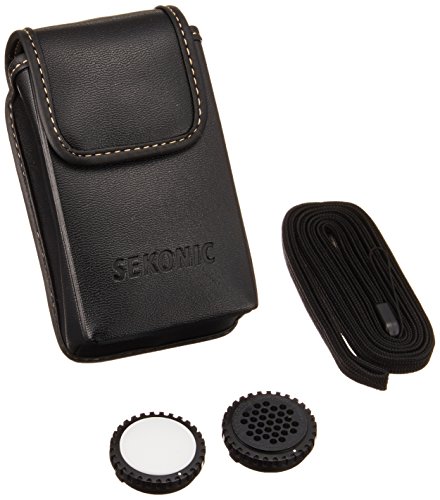
-Size: ergonomic, yes. But can be a bit fat and heavy for a shirt pocket. Unless you're on a set, you're going to look like a doofus if you've got it swinging from your neck. Or you can put it in the supplied fanny pack. Either way, you're going to be nerding it.
-Reflected readings: wouldn't trust it.
-Flat disc attachment: jury's out on how much I'll use it.
So what about the Gossen? I hear a lot of people saying they would go with that over the L-398A. Probably a Ken Rockwell thing. The Digisix has a bunch of digital features like an alarm clock and temperature. But so what? I can't tell you how many times the stupid button got pressed in a bag and the alarm was set and I get woken up in the middle of the night trying to figure out where the hell that phantom beeping is coming from. Plus you have to press and hold to change ISO, which is wasted seconds when you're trying to work fast. I like that the Digisix reads some low EV, but the dial is set up backwards to how my mind works. Maybe I'm the only one, but if I'm on some third stops away from a full EV, it takes time for my brain to figure out if I'm increasing or decreasing time when reading the dial. The Sekonic is laid out the opposite way; the apertures and the speeds increase towards the left, which make it so much easier on my brain. The real problem though is that you have to awkwardly hold the Gossen to take your readings, and it's hard not to have your hand affect the light. It's like it was meant to be attached to the shoe on a camera (which I have the -added accessory- to do), but that's only useful with the reflected meter mode. The Sekonic was designed to be held and make a reading at the same time moving only your thumb. Much more ergonomic.
And the Lumu? Great meter with a lot of options! But really, if you're shooting film (which I'm assuming most people buying this who aren't cinematographers are), using your phone is a bit awkward, especially when you have to hold it upside down, and have have to keep flipping orientation between readings or autolock. And there's the battery issue. But if I need to sweep a backdrop in footcandles to check eveness, the Lumu gives me a digital readout to the tenths, so I can get an order of magnitude more scientific on my scene that I ever knew I needed to get. Honestly, I use it over the Sekonic in these sitautions. But for general indoor and outdoor reading I prefer using the Sekonic. I do have a Lumu Power on order, and really that along with this Sekonic will be in my bag for all situations (Lumu Power for low light, digital precision and color temp, and Sekonic for regular EV reading). The L-758DR will primarily collect dust and fall apart with long dead batteries.
Cons of the Sekonic:
- EV 4 @ ISO 100 is not very sensitive. But it's sensitive enough in my opinion. If you're shooting a medium that needs precision metering (like slide film), then that's not really a limitation because your scene is going to need at least that much light to record anything within useful settings anyway. If you're in a situation that dips below EV 4, put it on a tripod and use a manual preset from an EV chart, factoring in reciprocity. Or add lighting like the cinematographers this thing was invented for would do. The Sekonic then becomes the threshold to tell you if you have just enough light to shoot with sensible settings or if you're going to call the room candlelight and give it a default low light exposure. If you're shooting low light on film there's no getting past the testing you're going to need to do to determine what works best with your camera and stock. If you're shooting digital.. who cares. Pump the ISO and chimp it, man.
- Analog needle: there's always a worry about damaging a needle, but judging by the reports of people using these things for decades I don't think I'll worry about it too much. My L-758DR needs 1000x more babying than this thing does.
-Size: ergonomic, yes. But can be a bit fat and heavy for a shirt pocket. Unless you're on a set, you're going to look like a doofus if you've got it swinging from your neck. Or you can put it in the supplied fanny pack. Either way, you're going to be nerding it.
-Reflected readings: wouldn't trust it.
-Flat disc attachment: jury's out on how much I'll use it.
Stop contemplating and just buy this. It's a game changer.
Ben Saren•December 11, 2015
I don't know how I've managed for so long without a light meter. This is a game changer. I always figured a light reader was for film photography, and over-the-top for digital photography, but boy am I wrong. My Sekonic L-398A arrived today, and I've spent the past 3 hours learning how to use it (thank you YouTube) and experimenting with it both indoors and outdoors, with the high slide and without, and in various settings with various subjects. The results have been absolute perfection. I think it's time to say goodbye to in-camera metering and say hello to manual metering.
If you're contemplating a light meter, stop - just buy one and you'll never look back.
If you're contemplating a light meter, stop - just buy one and you'll never look back.
Page 1 of 2