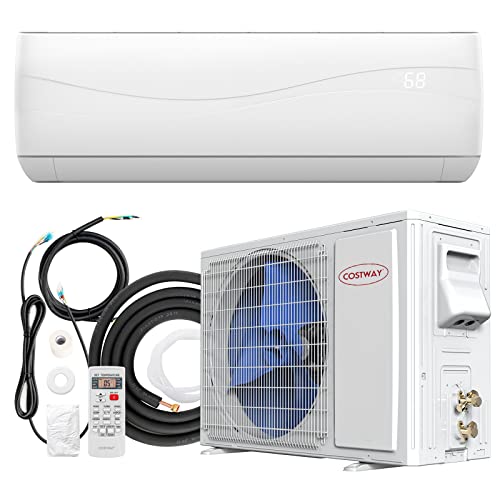
Senville LETO Series Mini Split Air Conditioner Heat Pump, 9000 BTU 110/120V, Inverter, Works with Alexa, SEER2 21.5, White
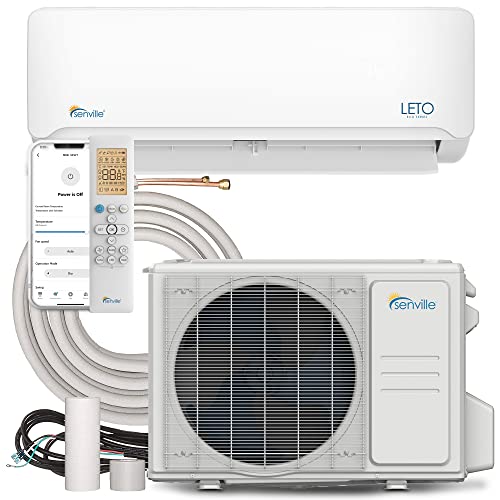


Key features
- •Mini Split Ductless Air Conditioner and Heater - 19 SEER
- •4-in-1 Design - With air conditioning, heating, dehumidifier and fan
- •Low Ambient Kit - Cool and heat your room even in temperatures as low as 5F
- •Includes Easy Installation Kit with 16 Ft. Copper Line Set
- •Whisper Technology for Quiet Operation, Great for Bedrooms, Additions, Living Rooms and Commercial Applications.
Brandsenville
CategorySplit-System
Size9000 BTU 110/120V
ColorWhite
Warranty2 Years (Parts) / 5 Year (Compressor). Labor Not Included.
Senville LETO Series Mini Split Air Conditioner Heat Pump, 9000 BTU 110/120V, Inverter, Works with Alexa, SEER2 21.5, White
List Price: $1149.44$1034.50DEALYou Save: $114.94 (10%)
Free shippingFree Returns – 30 daysFree Order CancellationSecure Payment2–3 Days DeliveryGet It October 27, 2026In Stock (1)No marketing spamNo account requiredFulfilment by FedEx / Amazon / UPS / ShipwirePayPal / Card Buyer Protection
Customer Reviews
Reviews sourced from verified Amazon purchasers4.6
out of 5
Based on 10 reviews
5★
100%
4★
0%
3★
0%
2★
0%
1★
0%
Don't buy a window or thru wall, BUY THIS!!
Trip✓ Verified Purchase•July 24, 2023
9K 110 volt LETO
2 full months of use MAY and JUNE midwest
This is my first mini split i've purchased and i installed it myself. Super simple to install, buy the vacuum pump and gauge set off of amazon. I installed my line set down thru the a 2x6 wall and ran them thru a 3" sewer pvc pipe incase i need to replace and to protect lines in the wall (much cleaner look, but more difficult to hang indoor unit as you can't mount it and connect everything on outside of wall per manual). I did not have a problem with bending hi/low copper lines nor did i have any leaks, i just pressurized it when releasing refrigerant from compressor and sprayed my fittings, i did not use nitrogen. I am running this 9K unit in my new office addition on house that is only 100 sqft, so my unit will probably wear out sooner due to short cycling, but its so quiet and better than a window or thruwall unit so i don't mind. I have 2 thermometers on my desk which is directly below unit (air blows over desk and circulates off wall behind me and back), with the system set at 73 my range is within 2 degrees of that but 90% perfectly at 73 it fluctuates more when i leave my office door open to rest of house.
I utilize the Honeywell/Resideo T5 and T10 thermostats between our 3 forced air HVACS, I am bummed i can not integrate this mini split in with those geofence settings, however the Alexa app i was successful in setting up geofence routines to control the mini split to change temps, i am not turning mine off completely, my away modes just increase cool temp by 5 degrees within 20 mile radius and 10 degrees within 100 mile radius for those longer trips. I've also purchased the Sensibo controller to see how it works (not impressed) but i do like the backup communication to mini split while away from house if i need it.
I had never heard of Senville before looking at mini splits and after doing a year of research i settled with Senville as their parent company owns some great hvac companies that are known for their quality.
I like this one so much i just placed an order for a 24K Senville Auro unit (better SEER rating and works when outside temp drops to -22 all this equals more money) to replace a 14K PTAC for our sunroom that can not heat or cool the room, and to help supplement the heat pump hvac on those hot and cold days.
This unit in cool mode is CONSTANTLY BLOWING air. I like it because i keeps air circulating i guess that why people set their units to turn off while gone but i honestly don't care, but when you pick out a place for your unit find a place you don't mind constant air blowing during the summer months and where you want the heat during the winter.
I can not speak yet on longevity nor operation in extreme temps, but am excited to see how it holds up. If you know how to change oil in your car and install an electrical outlet you should be able to figure this out and shouldn't be scared to install this yourself*, if you are unsure how to do electrical be smart and don't put yourself at risk.
*Note: if you install this yourself you DO NOT have a warranty, they make this clear but just incase.
Strongly suggest having whole house surge protector, i already installed one prior to installing the mini split, but i've read the board on compressor (outdoor unit) is usually what fails from lightening strikes and surges and is a pain to replace so keep that in mind.
I'll update my review if i have problems like sub 5 degree F temps, otherwise if you don't see anything after a couple of years take it as a win.
2 full months of use MAY and JUNE midwest
This is my first mini split i've purchased and i installed it myself. Super simple to install, buy the vacuum pump and gauge set off of amazon. I installed my line set down thru the a 2x6 wall and ran them thru a 3" sewer pvc pipe incase i need to replace and to protect lines in the wall (much cleaner look, but more difficult to hang indoor unit as you can't mount it and connect everything on outside of wall per manual). I did not have a problem with bending hi/low copper lines nor did i have any leaks, i just pressurized it when releasing refrigerant from compressor and sprayed my fittings, i did not use nitrogen. I am running this 9K unit in my new office addition on house that is only 100 sqft, so my unit will probably wear out sooner due to short cycling, but its so quiet and better than a window or thruwall unit so i don't mind. I have 2 thermometers on my desk which is directly below unit (air blows over desk and circulates off wall behind me and back), with the system set at 73 my range is within 2 degrees of that but 90% perfectly at 73 it fluctuates more when i leave my office door open to rest of house.
I utilize the Honeywell/Resideo T5 and T10 thermostats between our 3 forced air HVACS, I am bummed i can not integrate this mini split in with those geofence settings, however the Alexa app i was successful in setting up geofence routines to control the mini split to change temps, i am not turning mine off completely, my away modes just increase cool temp by 5 degrees within 20 mile radius and 10 degrees within 100 mile radius for those longer trips. I've also purchased the Sensibo controller to see how it works (not impressed) but i do like the backup communication to mini split while away from house if i need it.
I had never heard of Senville before looking at mini splits and after doing a year of research i settled with Senville as their parent company owns some great hvac companies that are known for their quality.
I like this one so much i just placed an order for a 24K Senville Auro unit (better SEER rating and works when outside temp drops to -22 all this equals more money) to replace a 14K PTAC for our sunroom that can not heat or cool the room, and to help supplement the heat pump hvac on those hot and cold days.
This unit in cool mode is CONSTANTLY BLOWING air. I like it because i keeps air circulating i guess that why people set their units to turn off while gone but i honestly don't care, but when you pick out a place for your unit find a place you don't mind constant air blowing during the summer months and where you want the heat during the winter.
I can not speak yet on longevity nor operation in extreme temps, but am excited to see how it holds up. If you know how to change oil in your car and install an electrical outlet you should be able to figure this out and shouldn't be scared to install this yourself*, if you are unsure how to do electrical be smart and don't put yourself at risk.
*Note: if you install this yourself you DO NOT have a warranty, they make this clear but just incase.
Strongly suggest having whole house surge protector, i already installed one prior to installing the mini split, but i've read the board on compressor (outdoor unit) is usually what fails from lightening strikes and surges and is a pain to replace so keep that in mind.
I'll update my review if i have problems like sub 5 degree F temps, otherwise if you don't see anything after a couple of years take it as a win.
Easy to install and works great!
Jeffrey✓ Verified Purchase•July 17, 2023
This 12,000 BTU (110/120v) unit was purchased to heat and cool just under 500 sq. ft of our sunroom that is connected to our primary suite. This unit is doing a great job at cooling the sunroom and our primary suite!
The only confusion we had was with the wiring to the outdoor condenser unit. Be sure to match up wires 1,2,&3 of the indoor unit to 1,2,&3 of the outdoor condenser unit (see pictures). The label sticker on the outdoor condenser unit cover can lead you astray.
Be very careful with the line set! We opted not to use a line set cover because we didn't want to risk kinking the copper lines.
For this install, I purchased a 2 1/2 inch hole saw, a up to 60 amp non-fusible AC disconnect box, a 20 amp single pole breaker, a 6 ft whip, and several feet of 10 or 12 gauge white, black, and green wire. I was told that I should not used Romex wire for this install. Luckily, our breaker box was just on the other side of the wall we chose to install the outdoor unit on. All wiring goes to the outdoor condenser unit, then a provided black wire set is ran to the indoor unit from the outdoor unit.
We chose to mount the outdoor condenser unit to the side of the house, and it does vibrate the wall when it speeds up and down. It sounds like a pickup truck or diesel is outside idling. We have ordered some rubber anti-vibration pads to put behind the mount and see if that helps. If not, we will be moving it to a stand. However, the outdoor and indoor units are very quiet. The vibration just drives me a bit crazy. No fault of the company or unit. This seems to be a common complaint among mini-split owners.
I will say, if you have any questions or need anything, their customer service was quick, easy, and awesome! I so appreciate them!
The only confusion we had was with the wiring to the outdoor condenser unit. Be sure to match up wires 1,2,&3 of the indoor unit to 1,2,&3 of the outdoor condenser unit (see pictures). The label sticker on the outdoor condenser unit cover can lead you astray.
Be very careful with the line set! We opted not to use a line set cover because we didn't want to risk kinking the copper lines.
For this install, I purchased a 2 1/2 inch hole saw, a up to 60 amp non-fusible AC disconnect box, a 20 amp single pole breaker, a 6 ft whip, and several feet of 10 or 12 gauge white, black, and green wire. I was told that I should not used Romex wire for this install. Luckily, our breaker box was just on the other side of the wall we chose to install the outdoor unit on. All wiring goes to the outdoor condenser unit, then a provided black wire set is ran to the indoor unit from the outdoor unit.
We chose to mount the outdoor condenser unit to the side of the house, and it does vibrate the wall when it speeds up and down. It sounds like a pickup truck or diesel is outside idling. We have ordered some rubber anti-vibration pads to put behind the mount and see if that helps. If not, we will be moving it to a stand. However, the outdoor and indoor units are very quiet. The vibration just drives me a bit crazy. No fault of the company or unit. This seems to be a common complaint among mini-split owners.
I will say, if you have any questions or need anything, their customer service was quick, easy, and awesome! I so appreciate them!
Truly phenomenal
Super Toaster✓ Verified Purchase•July 16, 2023
I installed this in a 100-year-old home with propane heat that usually burns 800 gallons throughout the winter to keep the house at 72F. When the price of propane shot up 50% in 2022 I decided to look into other options to save money. I installed this myself in an afternoon, but paid a HVAC technician $300 to pump the lines down and charge it. From November through March, my electricity bill increased an average of $150, but without having to pay for propane this unit paid for itself, the install, and the electricity it used in that time period. It starts to lose efficiency below freezing, and below 20F the temperature in the house dropped to the mid-60s. Our average daily temperatures rarely go below 20F, but if yours do you may want to get a higher efficiency unit rated for negative temperatures.
In the summertime, I was surprised to discover this setup also saves $50-$100 each month while cooling the house better- The central air conditioner is newer (replaced in 2018) but the blower fan consumes a lot of power just to move the air around the house, around 800 watts. We decided to install a window unit on the second floor (Midea U, also excellent units, and likely the manufacturer of the compressor in this mini split) to help on days when it's above 80F outside which will pay for itself this summer in energy savings compared to the central air.
I regret paying thousands of dollars replacing the central air system and furnace and wish I knew more about mini splits five years ago, with how well this unit works I doubt I will need to use the central system again. If you are heating with oil, propane, or electric baseboard heaters this system will pay for itself in the first year, and unless you have a high-efficiency heat pump with a variable speed blower it won't come close to this unit in terms of efficiency in the summertime either. I'm not even considering geothermal anymore as I don't think the potential energy savings would justify the installation cost in the long run even if I had to install a new mini split every 5 years.
In the summertime, I was surprised to discover this setup also saves $50-$100 each month while cooling the house better- The central air conditioner is newer (replaced in 2018) but the blower fan consumes a lot of power just to move the air around the house, around 800 watts. We decided to install a window unit on the second floor (Midea U, also excellent units, and likely the manufacturer of the compressor in this mini split) to help on days when it's above 80F outside which will pay for itself this summer in energy savings compared to the central air.
I regret paying thousands of dollars replacing the central air system and furnace and wish I knew more about mini splits five years ago, with how well this unit works I doubt I will need to use the central system again. If you are heating with oil, propane, or electric baseboard heaters this system will pay for itself in the first year, and unless you have a high-efficiency heat pump with a variable speed blower it won't come close to this unit in terms of efficiency in the summertime either. I'm not even considering geothermal anymore as I don't think the potential energy savings would justify the installation cost in the long run even if I had to install a new mini split every 5 years.
Great Value and Performance. I've installed one of these for my best friend and one for my mother
Kengineer✓ Verified Purchase•July 13, 2023
For the money you cannot beat these Senville units. I installed one of these for my best friend about a year ago and one for my mother last week. As with most HVAC quality of installation is KEY to longevity and performance.
In Turbo cooling mode I measured one of the units putting out 13,800k BTU vs. the rated 12,000k BTU which is great. My friend mentions regularly how this 12k Senville destroys the 14.5k portable hose exhaust unit he had before it. The Senville is also about 4 times quieter than the portable.
The quality and price that Senville is offering is impressive to me. If I did not already have a decent 36k BTU 16 SEER central heat pump on my personal home I would probably give the Senville 36K BTU (SENDC-36HF-16) a shot even though I cannot find any reviews on it. Again, the quality on these for the money has really impressed me.
I like the idea of the Senville units over the Mr. Cool as the Senville is tried and time tested vs. the precharged quick connect Mr. Cool line sets that in my mind introduce a few really unknown variables. I am not an HVAC technician but I am a mechanical engineer who has geeked out on HVAC, got my EPA 608 license, and purchased some HVAC tools.
Tips:
1) Pressure test the unit with nitrogen before pulling a vacuum. I know it is tempting to skip this step and not deal with purchasing or renting a nitrogen tank with regulator but if you really want to ensure you will not have leaks in the future it is the way to go. The dry nitrogen also helps remove moisture introduced to the hermetic system during installation prior to pulling a vacuum. I tested with 300psi for 30 minutes and found a tiny leak on one of the flare fittings that I corrected by giving it a little extra torque. I also use Nylog Blue on the male tips of the flares.
2) I use a micron gage when pulling a vacuum I know they are expensive (~$200) but its worth it to know you are getting all the moisture out of the lines as that is what leads to decreased output and premature failure on so many of these. I pulled down to 213 microns and did a 30 minute decay test. It only rose to 219 microns which is very good.
3) It probably does not matter but I like to release the refrigerant slowly to avoid any pressure spikes. I also like to back out the valves all the way and then turn them back in about 1/16th of a turn so it is open but not sitting on the hard stop.
4) Do not vertically coil the line set behind the unit. This can produce and oil trap that can degrade the performance and lifespan of the unit. If you need to coil the line set do so horizontally. On the one I installed in my mothers house I cut the line set to 7.5 feet. Recommended minimum is 10 feet so I recovered 0.7oz of the factory refrigerant charge. Senville Tech Support Chat wasn't the most helpful on this but I can understand why. I deviated from the installation recommendations and that is on me. I did check vapor line pressures in cooling with the unit on regular and Turbo afterwards and everything looked good.
In Turbo cooling mode I measured one of the units putting out 13,800k BTU vs. the rated 12,000k BTU which is great. My friend mentions regularly how this 12k Senville destroys the 14.5k portable hose exhaust unit he had before it. The Senville is also about 4 times quieter than the portable.
The quality and price that Senville is offering is impressive to me. If I did not already have a decent 36k BTU 16 SEER central heat pump on my personal home I would probably give the Senville 36K BTU (SENDC-36HF-16) a shot even though I cannot find any reviews on it. Again, the quality on these for the money has really impressed me.
I like the idea of the Senville units over the Mr. Cool as the Senville is tried and time tested vs. the precharged quick connect Mr. Cool line sets that in my mind introduce a few really unknown variables. I am not an HVAC technician but I am a mechanical engineer who has geeked out on HVAC, got my EPA 608 license, and purchased some HVAC tools.
Tips:
1) Pressure test the unit with nitrogen before pulling a vacuum. I know it is tempting to skip this step and not deal with purchasing or renting a nitrogen tank with regulator but if you really want to ensure you will not have leaks in the future it is the way to go. The dry nitrogen also helps remove moisture introduced to the hermetic system during installation prior to pulling a vacuum. I tested with 300psi for 30 minutes and found a tiny leak on one of the flare fittings that I corrected by giving it a little extra torque. I also use Nylog Blue on the male tips of the flares.
2) I use a micron gage when pulling a vacuum I know they are expensive (~$200) but its worth it to know you are getting all the moisture out of the lines as that is what leads to decreased output and premature failure on so many of these. I pulled down to 213 microns and did a 30 minute decay test. It only rose to 219 microns which is very good.
3) It probably does not matter but I like to release the refrigerant slowly to avoid any pressure spikes. I also like to back out the valves all the way and then turn them back in about 1/16th of a turn so it is open but not sitting on the hard stop.
4) Do not vertically coil the line set behind the unit. This can produce and oil trap that can degrade the performance and lifespan of the unit. If you need to coil the line set do so horizontally. On the one I installed in my mothers house I cut the line set to 7.5 feet. Recommended minimum is 10 feet so I recovered 0.7oz of the factory refrigerant charge. Senville Tech Support Chat wasn't the most helpful on this but I can understand why. I deviated from the installation recommendations and that is on me. I did check vapor line pressures in cooling with the unit on regular and Turbo afterwards and everything looked good.
Solid unit for the price
Ashley Warren✓ Verified Purchase•June 17, 2023
I bought this Senville Leto 24K as the first mini-split for my 30x50 steel shop. Later on I purchased the more expensive Aura unit of the same size, which allowed me to draw some comparisons between the two.
The inexpensive Leto is a fine unit. Easy to install, everything needed was there. You want heat, cooling, it does both and did a reasonably good job maintaining a set temperature in this large building by itself. I opted for a second unit (the Aura), only so I could bring building to desired temperature faster, as I don't typically leave them on all the time.
The Leto is your typical Chevrolet-- nothing fancy but gets the job done. It is an inverter model, which I suspect simply means it has a DC fan / compressor. The best that I can tell, it does not have a variable speed compressor/fan which likely explains the efficiency difference between it and the more expensive Aura. The outside unit is either commanded on or off, there's no in between. One observation is that the physical size is noticeably smaller than the Aura for both the indoor and outdoor units. It also draws less power (requires a 20A circuit vs the Aura's 25A requirement) despite being less efficient. This leads me to believe the Aura has at the very least, greater heating capacity, possibly cooling capacity as well, despite both being listed as 2 ton / 24K BTU.
I haven't tested heat out fully, but it puts out hot air. Haven't had anything other than high 40's, low 50's outside temps since I've owned it, but will update review when real cold hits. It cools nicely even on our 90+ degree humid days.
All the other functions work fine-- dry/dehumidify is a nice feature, though it puts out colder air which might be undesirable if you don't want to cool your space.
Only complaints I have are:
For the longest time the remote operated very poorly. You'd have to press the same button several times for the unit to register the command. Strangely it seems to have improved over time (despite having same [good] batteries installed); now 80%+ of the time, it will register the command on first try, even from 10+ feet away.
With two Senville units (Leto / Aura installed on same wall), one remote will sometimes command both units. They are two different remote models, and this is a completely random occurrence-- it doesn't do it all the time. Mildly frustrating, but not enough to knock a star because if you're careful with pointing the remote, it can be avoided.
Some crude measurements using my utility company electronic service meter, suggests this unit draws around 1500W when in cooling mode. I did a very unscientific test by leaving it running set to 78 degrees 24/7 for the first month (in cooling mode) in this building and it added about $30 to my electric bill. High temps during this time were anywhere from high 70's to high 80's.
In conclusion, if you need a solid heat/air unit at the lowest cost, this unit is near impossible to beat IMO. After installing the Aura, I believe the Aura wins hands down if you can stomach the extra cost. In the photos, the Leto is the smaller outdoor unit on the right. Indoor unit, Leto is on the left.
The inexpensive Leto is a fine unit. Easy to install, everything needed was there. You want heat, cooling, it does both and did a reasonably good job maintaining a set temperature in this large building by itself. I opted for a second unit (the Aura), only so I could bring building to desired temperature faster, as I don't typically leave them on all the time.
The Leto is your typical Chevrolet-- nothing fancy but gets the job done. It is an inverter model, which I suspect simply means it has a DC fan / compressor. The best that I can tell, it does not have a variable speed compressor/fan which likely explains the efficiency difference between it and the more expensive Aura. The outside unit is either commanded on or off, there's no in between. One observation is that the physical size is noticeably smaller than the Aura for both the indoor and outdoor units. It also draws less power (requires a 20A circuit vs the Aura's 25A requirement) despite being less efficient. This leads me to believe the Aura has at the very least, greater heating capacity, possibly cooling capacity as well, despite both being listed as 2 ton / 24K BTU.
I haven't tested heat out fully, but it puts out hot air. Haven't had anything other than high 40's, low 50's outside temps since I've owned it, but will update review when real cold hits. It cools nicely even on our 90+ degree humid days.
All the other functions work fine-- dry/dehumidify is a nice feature, though it puts out colder air which might be undesirable if you don't want to cool your space.
Only complaints I have are:
For the longest time the remote operated very poorly. You'd have to press the same button several times for the unit to register the command. Strangely it seems to have improved over time (despite having same [good] batteries installed); now 80%+ of the time, it will register the command on first try, even from 10+ feet away.
With two Senville units (Leto / Aura installed on same wall), one remote will sometimes command both units. They are two different remote models, and this is a completely random occurrence-- it doesn't do it all the time. Mildly frustrating, but not enough to knock a star because if you're careful with pointing the remote, it can be avoided.
Some crude measurements using my utility company electronic service meter, suggests this unit draws around 1500W when in cooling mode. I did a very unscientific test by leaving it running set to 78 degrees 24/7 for the first month (in cooling mode) in this building and it added about $30 to my electric bill. High temps during this time were anywhere from high 70's to high 80's.
In conclusion, if you need a solid heat/air unit at the lowest cost, this unit is near impossible to beat IMO. After installing the Aura, I believe the Aura wins hands down if you can stomach the extra cost. In the photos, the Leto is the smaller outdoor unit on the right. Indoor unit, Leto is on the left.
Page 1 of 2
Related products

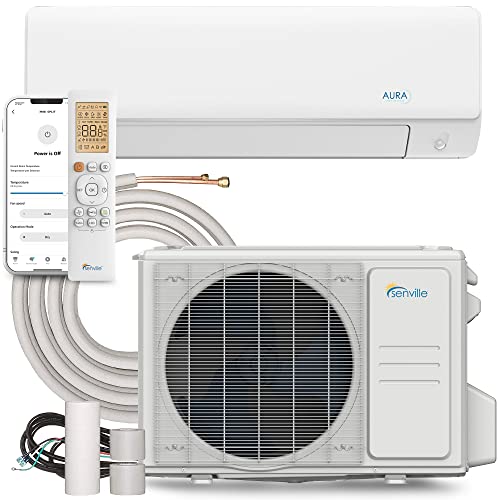


Mrcool DIY 12K BTU 4th Gen Energy Star Ductless Mini-Split Air Conditioner
List: $2528.79$2275.91DEAL