Henoda 15PCS Self-Watering Probes - Indoor Automatic Watering System Houseplant Spikes for Plant
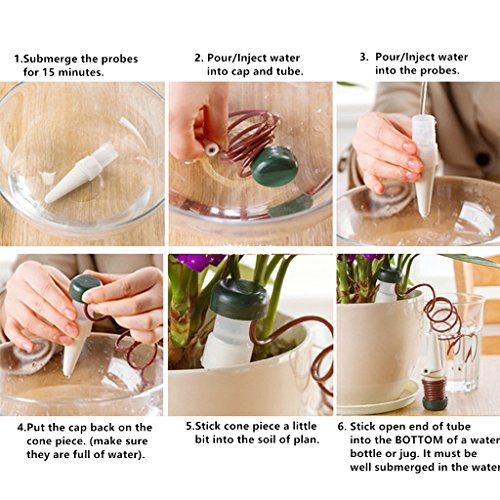
Key features
- •This watering device is really automatic, and suitable for seeding and planting
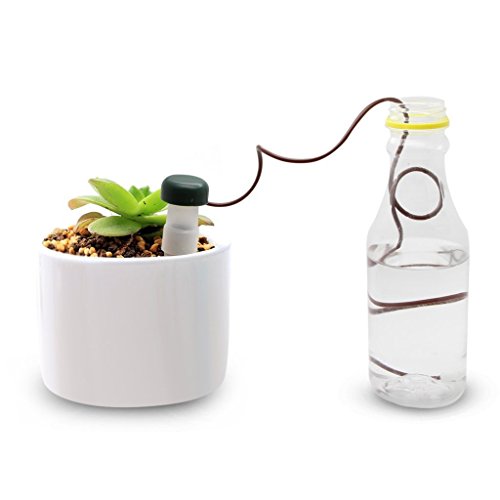
- •Just put one side of the tube in a vase or bowl of water, and the other in plant
- •Don't let your plants get too thirsty!
- •Simple and effective tools to water your plants while you are on vacation
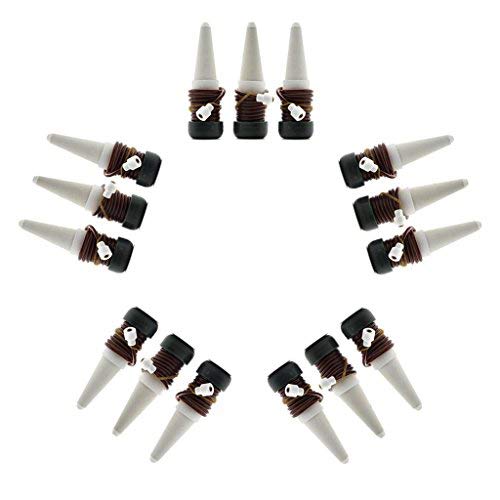
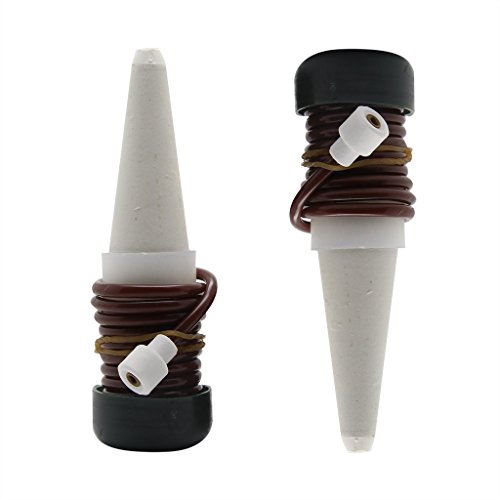
- •Cable Length: 700mm; Package Quantity:15 Pcs , before you use this product, please refer Product Description
BrandHenoda
CategorySelf-Watering Stakes
Henoda 15PCS Self-Watering Probes - Indoor Automatic Watering System Houseplant Spikes for Plant
List Price: $78.88$70.99DEALYou Save: $7.89 (10%)
Free shippingFree Returns – 30 daysFree Order CancellationSecure Payment2–3 Days DeliveryGet It October 26, 2026In Stock (1)No marketing spamNo account requiredFulfilment by FedEx / Amazon / UPS / ShipwirePayPal / Card Buyer Protection
Customer Reviews
Reviews sourced from verified Amazon purchasers3.4
out of 5
Based on 10 reviews
5★
40%
4★
50%
3★
0%
2★
0%
1★
10%
Does not work !
Blutsauger✓ Verified Purchase•September 14, 2017
I am looking for an efficient self - watering device to help keep my container plants evenly moist as well as to use less water. I tried this product because it had good reviews. I followed the instructions by soaking the product , then adding water into the top holding chamber of the spike , stuck it into the soil , and moistened the soil in the pot. One of the first issues I encountered was that the top regulating chamber , which was suppose to always hold water and suck in more from the reservoir always dried out , so I had to use a baby nasal aspirator to suck out some water from the main tube and fill the holding chamber with water again before sticking it back into the ground. It never sucked water from the main water reservoir and I am doing more work than using a watering can.
If you set them up right, they'll save you work and worry!
KRA2008✓ Verified Purchase•June 24, 2017
These are great. I bought 15 of them and was so happy with them I bought 15 more. I'm using them with old milk jugs to grow crops on my 6'x8' apartment porch. On average I've found each cone delivers up to 1/2 cup of water per day, but this amount will vary depending on your plants' needs. Some people seem to have trouble getting these to work, but I've found they work great as long as you watch out for these three pitfalls:
~~~1) Make sure there is no air in the spike or the hose before you stick the spike in the dirt (or else water won't flow). To be sure there is no air in the hose or the spike I filled a 5 gallon bucket with water and messed around with the spikes and tubes under water until I was sure there was no air left, then I quickly got the open end of the tube into a water-filled jug before a lot of water could drip out.
~~~2) Make sure the open end of the hose is on the bottom of the jug (or else water will run out too soon). These come with little ceramic weights on the ends of the hoses but I didn't think they were big enough so I hooked up some thick wire to the ends of the hoses to give the ends some more weight.
~~~3) Make sure the spike itself is ABOVE the water line in the jug or else siphon action will quickly dump the water until the spike is above the water line - I've seen a spike dump up to a half gallon a day due to this effect. If you want, you can play around with this siphon action before you put the spike in the dirt just to make sure water is flowing - it should drip every few seconds.
Other things that have helped make my porch farm a success:
--- Plastic pots to reduce evaporation
--- Mulch to reduce evaporation
--- Add another watering spike when a plant seems to get consistently droopy at noon
With the above practices in hand and 20 of these spikes, I am currently able to sustain 1 sunflower, 1 pumpkin, 8 tomatoes, 3 dahlias, 2 cucumbers, a pot of petunias, a pot of alyssum, a pot of chrysanthemums, about 8 peas, and a pot of mini roses - all while only adding water to the jugs, never to the pots themselves. I'm also confident I will not be encountering root rot this way because the spikes work by capillary action, so they'll only add as much water as is actually needed.
~~~1) Make sure there is no air in the spike or the hose before you stick the spike in the dirt (or else water won't flow). To be sure there is no air in the hose or the spike I filled a 5 gallon bucket with water and messed around with the spikes and tubes under water until I was sure there was no air left, then I quickly got the open end of the tube into a water-filled jug before a lot of water could drip out.
~~~2) Make sure the open end of the hose is on the bottom of the jug (or else water will run out too soon). These come with little ceramic weights on the ends of the hoses but I didn't think they were big enough so I hooked up some thick wire to the ends of the hoses to give the ends some more weight.
~~~3) Make sure the spike itself is ABOVE the water line in the jug or else siphon action will quickly dump the water until the spike is above the water line - I've seen a spike dump up to a half gallon a day due to this effect. If you want, you can play around with this siphon action before you put the spike in the dirt just to make sure water is flowing - it should drip every few seconds.
Other things that have helped make my porch farm a success:
--- Plastic pots to reduce evaporation
--- Mulch to reduce evaporation
--- Add another watering spike when a plant seems to get consistently droopy at noon
With the above practices in hand and 20 of these spikes, I am currently able to sustain 1 sunflower, 1 pumpkin, 8 tomatoes, 3 dahlias, 2 cucumbers, a pot of petunias, a pot of alyssum, a pot of chrysanthemums, about 8 peas, and a pot of mini roses - all while only adding water to the jugs, never to the pots themselves. I'm also confident I will not be encountering root rot this way because the spikes work by capillary action, so they'll only add as much water as is actually needed.
It looks like this product works as advertised through some sort of ...
JLB✓ Verified Purchase•January 30, 2017
I installed watering Spikes in my containers last night being sure to soak the white spikes and submerge the whole thing when capping together. I was using old water bottles (16 oz) to pull the water from and had my doubts if they would work. Much to my pleasant surprise this morning when I checked this morning 8 ounces or so were gone from all the water bottles. It looks like this product works as advertised through some sort of Capillary action or osmosis but it works. I now have to get bigger water containers and make them opaque.
Water well... maybe too well?
Ian Nesbit✓ Verified Purchase•January 11, 2017
Pretty excellent method of lazy plant watering, but read the other reviews for some of the caveats and how-tos. I soaked the ceramic for a long time while stretching out the tubes, then sucked water through the tube and submerged it to connect it to the ceramic spike. That led to definite water movement, but I discovered fairly quickly that it was actually moving the water way too fast and it was flooding the plant. Never completely solved the plants getting continuous moisture (I'm not great with plants but I'm assuming this wouldn't be great for some plants), but fixed the running-out-of-water-too-fast problem.
Here's what I came up with after some experimenting. The water container should place the bottom of the water just below the bottom of the plant pot, with the top of the water well below the green cap on the spike. That means for most houseplants it can't hold a huge amount of water, unless the container is wide. I used a gallon jug on it's side for my indoor basil when I left for 3 weeks in winter, and it was just finishing the water when I got back. For my outdoor plants I used an oil-change traybottlething, because it's wide and shallow and has a filter over the large whole, which allowed rain to get in without animals drinking the water up. That seemed to work pretty well, and I could water several plants from the same container, thus allowing for minimal watering, and none if it rains fairly often.
Here's what I came up with after some experimenting. The water container should place the bottom of the water just below the bottom of the plant pot, with the top of the water well below the green cap on the spike. That means for most houseplants it can't hold a huge amount of water, unless the container is wide. I used a gallon jug on it's side for my indoor basil when I left for 3 weeks in winter, and it was just finishing the water when I got back. For my outdoor plants I used an oil-change traybottlething, because it's wide and shallow and has a filter over the large whole, which allowed rain to get in without animals drinking the water up. That seemed to work pretty well, and I could water several plants from the same container, thus allowing for minimal watering, and none if it rains fairly often.
Works great, but follow directions and soak the Probes.
Jimmy Newtron✓ Verified Purchase•August 13, 2016
Works perfectly once done correctly. I submerged the entire probe and hose in a bucket of water. I then let it sit for about 5 minutes for the ceramic part to soak up the water. Make sure to let all the air out, then cap the probe. Next, find a water source and make sure it's below level of the planting pots. Add the hose to the water source and insert the Probe(s) into the soil of the Pots.
I have small herb plants and 1 probe works fine for each. The parts are about 6" diameter pots. It takes me 3 weeks to refill the gallon of water. Occasional I would feed them some plant foods to get the happy and strong.
Overall, this item works great. I travel sometimes and need the plants to stay alive when I get back. Rosemary died because I didn't have this product before my recent travel.
I have small herb plants and 1 probe works fine for each. The parts are about 6" diameter pots. It takes me 3 weeks to refill the gallon of water. Occasional I would feed them some plant foods to get the happy and strong.
Overall, this item works great. I travel sometimes and need the plants to stay alive when I get back. Rosemary died because I didn't have this product before my recent travel.
Page 1 of 2