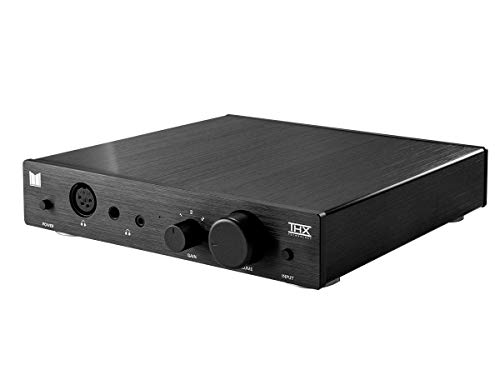
AudioQuest Dragonfly Red USB Digital-to-Analog Converter


Key features
- •32-Bit SABRE DAC
- •2.1v Output Drives Almost Any Headphones
- •Works With Apple and Android devices when paired with a simple adapter
- •Plays everything from MP3s to 24-bit/96kHz high-resolution files
- •This versatile DAC improves everything - detail, transparency, immediacy, richness, tone
AudioQuest Dragonfly Red USB Digital-to-Analog Converter
List Price: $254.61$229.15DEALYou Save: $25.46 (10%)
Free shippingFree Returns – 30 daysFree Order CancellationSecure Payment2–3 Days DeliveryGet It October 25, 2026In Stock (4)No marketing spamNo account requiredFulfilment by FedEx / Amazon / UPS / ShipwirePayPal / Card Buyer Protection
Customer Reviews
Reviews sourced from verified Amazon purchasers4.4
out of 5
Based on 10 reviews
5★
80%
4★
20%
3★
0%
2★
0%
1★
0%
Notable improvment in sound quality, even better than the Chord Qutest
The Z Man✓ Verified Purchase•January 8, 2024
I had the Dragonfly Black, which I found added a delightful quality to the music I play from my desktop. I was so impressed I decided to try the Red to see if it was better. I'm absolutely impressed by the improvement in the sound. The instruments are sharper, clearer, more musical. The highs are better defined and clearer. In fact, the musicality is dramatically improved overall. I then tried the Chord Qutest, and found it to be surprisingly inferior to the Red, lacking in detail and harmonics. So....the Red beats the Chord Qutest! And by a lot. That's saying something. And for 1/10th the price, although money is not the object here. I now use the Black on my iPhone, and keep the Red on my desktop. I listen with a pair of Grado GS1000i and a Schiit Asgard headphone amp, and also with a pair of Fostex 900s and Woo Audio 6A, so it's quality enough to identify the nuance in sound signature. Give the Red a try on your desktop computer. I think you'll hear an amazing difference. By the way, I found it too sharp for my iPhone, but the Black is perfect for that. Good luck.
None
Amazon Customer✓ Verified Purchase•December 30, 2023
Everything from Amazon I like.
What’s Old is New Again.
HYenDC✓ Verified Purchase•December 22, 2023
What's Old is New Again.
All the reviews out there in the blogosphere/vlogosphere that tout the Dragonfly Cobalt and its ability to enhance your listening experience are overwhelmingly positive, so you can certainly look up any of those reviews from an expert's point-of-view. But from an Average Guy's view (like me), I can definitely hear the difference when using this device.
I tend to listen to music in my car more so than any other place. And, for that, I usually stream music via my phone (Amazon Music HD) through the car's AUX port. I have been doing this by simply taking a high quality 3.5mm audio stereo cable with two male heads and plugging one head into the AUX port and the other into the phone's headphone jack. I own an LG G8 Thinq (the last flagship phone LG made in 2019 prior to exiting the smartphone segment; and this phone features that rare headphone 3.5mm headphone jack). Back then (and even today in late 2021), that in-phone DAC was generally regarded as the best by quite a margin (the phone's max sample rate output is 24-bit / 48 KHz).
Meanwhile, I own a 2014 BMW 3 Series and I have done lots to improve its musical components. I've upgraded my amplifier (Up7BMW) and all speakers/A-Pillar tweeters (FOCAL brand). And, I purchased an Equalizer app on the Google Play Store. Still, wanting higher fidelity, I then purchased the Dragonfly Cobalt DAC.
Immediately, even with all of the upgrades that I've invested into my car's sound system, I could hear a musical boost. And when I play my favorite songs, old and new, the enhanced fidelity peels back all of these musical elements that I had never really noticed before (a more pronounced drum beat; the sliding of the fingers along the neck of a guitar; the raw emotion of a singer's voice; better defined strumming from a generally-hard-to-notice acoustical guitar, etc"¦ - what audiophiles would describe as neutrality). I've read various articles stating that listening to your radio does sound muddy, which it does. You can (and I can) hear a difference when playing a CD. But, adding a good DAC takes it up one notch further, and you feel like you're right there in the front row of a concert or at the recording studio itself.
Now, your listening experience may differ because not everyone "hears" the same or perhaps as well. So, if seeing a number helps you to visualize improvement (although "seeing-is-believing" is different than "hearing-is-believing" in this case), here's what I'm seeing with my LG G8 ThinQ. Without the Cobalt, the phone's DAC can stream music at up to a sample rate of 24-bit / 48 khz, which is pretty good. I know this because with Amazon Music HD, you can press the music quality "badge" to bring up this kind of info. Now, with the Cobalt plugged in, the output increases to 24-bit / 96 khz. I've read that the max output, though, would be 24-bit / 192 khz, so let's quickly talk about that pinnacle of sound quality for a second. The only way of possibly getting there from my readings (and I'm sure there are other ways that I haven't discovered yet) is by subscribing to Tidal's HiFi Plus Tier (which is their top tier) AND also downloading onto your phone an app called USB Audio Player Pro (also known as UAPP). Somehow "“ and I profess my ignorance on this as I'm not a sound engineer "“ this app plus the Dragonfly Cobalt plus its ability to play well with Tidal (the technical term sound engineers use is "unfolding") allows access to that 24-bit / 192 khz musical experience
Anyway, as you'll already know, the Dragonfly has this helpful light that defines the quality of the music you're hearing. Unfortunately though, unless you're paying $240 a year for Tidal's top hi-res tier, that light then also gives you a sense of FOMO. I pay $80 a year for Amazon Music HD (as I am already an Amazon Prime member). Now, for just $80 a year and despite not being able to reach that 24-bit / 192 Khz threshold, I can still attain musical nirvana. So, Amazon Music HD is totally worth it. And the Dragonfly Cobalt, IMHO, is totally worth it too.
But, as with all things subjective (like hearing), your mileage may vary. Will this be worth it to you? In this case, there are four things that you'll want to consider
A) Can you hear the difference? Again, some of us have better hearing than others. If you can't hear much the difference between music over the radio and music on a CD, then you probably won't hear much of a sonic upgrade here.
B) How many hours a day will you use this? That is, why purchase a pricey doodad if you're only going to use it now and then? It's kind of the same in-your-head argument when you think about joining a gym or subscribing to Disney+.
C) Think about your music source. The idea of a DAC is to allow it to further "unwrap" the audio file to allow for that richer listening music (again, using that term "neutrality"). But, if you're listening and happy with Spotify Free or any other lossy music tier (usually the free ones with possible ads), those files won't have much to reveal anyway. The entry point at which to consider whether to invest in a DAC or not is when you are subscribing to a hi-res music service (i.e.: Quboz; Amazon Prime HD; Tidal Hi-Fi; etc"¦).
D) Finally, think about the equipment that will be outputting your sound (e.g. earphones, earbuds, speaker systems). If they are of low quality, then a DAC probably won't do much. And keep in mind that this DAC would also probably cost MORE than most run-of-the-mill earphones, earbuds, speakers).
Oh, I do want to bring up one thing if you subscribe to Amazon Music HD. I saw on their FAQ page that Amazon Music HD is not always reliable in giving max audio quality if it doesn't sense a super-fast internet connection (or maybe if a lot of subscribers are trying to stream hi-res music at the same time "“ let's call it "˜congestion'), so I've seen the light turn both powder blue (denoting a bitstream of 96 KHz) as well as cobalt blue (denoting a bitstream 48 KHz for the same song during different times of the day, but never below that number if you've set songs to play at HD or better quality). In fact, on its FAQ page, it does say, "For streaming, the current source file quality may change due to varying network conditions." So, if you're subscribing to Amazon Music HD and see this happening, it's not the Cobalt malfunctioning.
Finally "¦ here's a question you'll want to ask yourself and a suggestion. Have you looked at the THX Onyx? It is also a very well-regarded DAC and probably a 2nd place runner-up if you read the various reviews out there about DACs (with the Cobalt being the consensus winner when talking about power/portability). However, at the time of this writing, the Onyx is currently on sale for $150 (down from about $200, and can be found here on Amazon or on Razer.com). Hmmm"¦ $150 for the Onyx vs $330 for the Cobalt? That does make the Cobalt a tougher sell, actually.
Again, the only real downer here is the price. $330 seems pricey, even though it's a svelte yet powerful top-of-the-line product.
If you are willing to consider really good dongle DACs with perhaps less of a svelte/compact form factor that cost just half as much, you may also want to check out these very worthy alternatives, also found here on Amazon.
- THX Onyx, $150
- Helm Bolt DAC, $150
- Astell & Kern USB-C Dual DAC Cable, $100
In the end, the Dragonfly Cobalt is a 5-star product (although I'm not convinced that it's $150 better than the THX). I'm very happy with this product. If you tend to listen to music quite a bit to complement your day, then investing in a really good DAC like the Dragonfly Cobalt makes for a solid purchase decision.
Good luck on finding what suits you best.
All the reviews out there in the blogosphere/vlogosphere that tout the Dragonfly Cobalt and its ability to enhance your listening experience are overwhelmingly positive, so you can certainly look up any of those reviews from an expert's point-of-view. But from an Average Guy's view (like me), I can definitely hear the difference when using this device.
I tend to listen to music in my car more so than any other place. And, for that, I usually stream music via my phone (Amazon Music HD) through the car's AUX port. I have been doing this by simply taking a high quality 3.5mm audio stereo cable with two male heads and plugging one head into the AUX port and the other into the phone's headphone jack. I own an LG G8 Thinq (the last flagship phone LG made in 2019 prior to exiting the smartphone segment; and this phone features that rare headphone 3.5mm headphone jack). Back then (and even today in late 2021), that in-phone DAC was generally regarded as the best by quite a margin (the phone's max sample rate output is 24-bit / 48 KHz).
Meanwhile, I own a 2014 BMW 3 Series and I have done lots to improve its musical components. I've upgraded my amplifier (Up7BMW) and all speakers/A-Pillar tweeters (FOCAL brand). And, I purchased an Equalizer app on the Google Play Store. Still, wanting higher fidelity, I then purchased the Dragonfly Cobalt DAC.
Immediately, even with all of the upgrades that I've invested into my car's sound system, I could hear a musical boost. And when I play my favorite songs, old and new, the enhanced fidelity peels back all of these musical elements that I had never really noticed before (a more pronounced drum beat; the sliding of the fingers along the neck of a guitar; the raw emotion of a singer's voice; better defined strumming from a generally-hard-to-notice acoustical guitar, etc"¦ - what audiophiles would describe as neutrality). I've read various articles stating that listening to your radio does sound muddy, which it does. You can (and I can) hear a difference when playing a CD. But, adding a good DAC takes it up one notch further, and you feel like you're right there in the front row of a concert or at the recording studio itself.
Now, your listening experience may differ because not everyone "hears" the same or perhaps as well. So, if seeing a number helps you to visualize improvement (although "seeing-is-believing" is different than "hearing-is-believing" in this case), here's what I'm seeing with my LG G8 ThinQ. Without the Cobalt, the phone's DAC can stream music at up to a sample rate of 24-bit / 48 khz, which is pretty good. I know this because with Amazon Music HD, you can press the music quality "badge" to bring up this kind of info. Now, with the Cobalt plugged in, the output increases to 24-bit / 96 khz. I've read that the max output, though, would be 24-bit / 192 khz, so let's quickly talk about that pinnacle of sound quality for a second. The only way of possibly getting there from my readings (and I'm sure there are other ways that I haven't discovered yet) is by subscribing to Tidal's HiFi Plus Tier (which is their top tier) AND also downloading onto your phone an app called USB Audio Player Pro (also known as UAPP). Somehow "“ and I profess my ignorance on this as I'm not a sound engineer "“ this app plus the Dragonfly Cobalt plus its ability to play well with Tidal (the technical term sound engineers use is "unfolding") allows access to that 24-bit / 192 khz musical experience
Anyway, as you'll already know, the Dragonfly has this helpful light that defines the quality of the music you're hearing. Unfortunately though, unless you're paying $240 a year for Tidal's top hi-res tier, that light then also gives you a sense of FOMO. I pay $80 a year for Amazon Music HD (as I am already an Amazon Prime member). Now, for just $80 a year and despite not being able to reach that 24-bit / 192 Khz threshold, I can still attain musical nirvana. So, Amazon Music HD is totally worth it. And the Dragonfly Cobalt, IMHO, is totally worth it too.
But, as with all things subjective (like hearing), your mileage may vary. Will this be worth it to you? In this case, there are four things that you'll want to consider
A) Can you hear the difference? Again, some of us have better hearing than others. If you can't hear much the difference between music over the radio and music on a CD, then you probably won't hear much of a sonic upgrade here.
B) How many hours a day will you use this? That is, why purchase a pricey doodad if you're only going to use it now and then? It's kind of the same in-your-head argument when you think about joining a gym or subscribing to Disney+.
C) Think about your music source. The idea of a DAC is to allow it to further "unwrap" the audio file to allow for that richer listening music (again, using that term "neutrality"). But, if you're listening and happy with Spotify Free or any other lossy music tier (usually the free ones with possible ads), those files won't have much to reveal anyway. The entry point at which to consider whether to invest in a DAC or not is when you are subscribing to a hi-res music service (i.e.: Quboz; Amazon Prime HD; Tidal Hi-Fi; etc"¦).
D) Finally, think about the equipment that will be outputting your sound (e.g. earphones, earbuds, speaker systems). If they are of low quality, then a DAC probably won't do much. And keep in mind that this DAC would also probably cost MORE than most run-of-the-mill earphones, earbuds, speakers).
Oh, I do want to bring up one thing if you subscribe to Amazon Music HD. I saw on their FAQ page that Amazon Music HD is not always reliable in giving max audio quality if it doesn't sense a super-fast internet connection (or maybe if a lot of subscribers are trying to stream hi-res music at the same time "“ let's call it "˜congestion'), so I've seen the light turn both powder blue (denoting a bitstream of 96 KHz) as well as cobalt blue (denoting a bitstream 48 KHz for the same song during different times of the day, but never below that number if you've set songs to play at HD or better quality). In fact, on its FAQ page, it does say, "For streaming, the current source file quality may change due to varying network conditions." So, if you're subscribing to Amazon Music HD and see this happening, it's not the Cobalt malfunctioning.
Finally "¦ here's a question you'll want to ask yourself and a suggestion. Have you looked at the THX Onyx? It is also a very well-regarded DAC and probably a 2nd place runner-up if you read the various reviews out there about DACs (with the Cobalt being the consensus winner when talking about power/portability). However, at the time of this writing, the Onyx is currently on sale for $150 (down from about $200, and can be found here on Amazon or on Razer.com). Hmmm"¦ $150 for the Onyx vs $330 for the Cobalt? That does make the Cobalt a tougher sell, actually.
Again, the only real downer here is the price. $330 seems pricey, even though it's a svelte yet powerful top-of-the-line product.
If you are willing to consider really good dongle DACs with perhaps less of a svelte/compact form factor that cost just half as much, you may also want to check out these very worthy alternatives, also found here on Amazon.
- THX Onyx, $150
- Helm Bolt DAC, $150
- Astell & Kern USB-C Dual DAC Cable, $100
In the end, the Dragonfly Cobalt is a 5-star product (although I'm not convinced that it's $150 better than the THX). I'm very happy with this product. If you tend to listen to music quite a bit to complement your day, then investing in a really good DAC like the Dragonfly Cobalt makes for a solid purchase decision.
Good luck on finding what suits you best.
Good, sleek, portable inline Dac. May require an adapter for phone or tablet.
Tommy Calloni✓ Verified Purchase•December 21, 2023
I like the sound quality, added volume, and portability. This replaces my dragonfly red that failed. I bought the warranty for it and with the credit I replaced it with this. I use it inline with my iPad going to a klipsch 2.1 computer speakers in the shop. The headphones at home I used on this Dac and the Dragonfly red were Sennheiser 599's. My son upgraded his Dac(to an RME ADI-2 pro) and headphones (to Hifiman). While my dragonfly red was out for repair, I got a chance to use my sons older set up - a jds labs element 2 and Sennheiser Hd700's.
I can tell you with certainty, that these inline amps are for different needs than the dacs that require external power source. The lack of an external power source or lion battery will limit amplification, especially higher impedance headphones - there just isn't enough required voltage to drive the internal amp louder. IC companies are getting much better at providing an op amp that has more gain with the same audio input level than earlier op-amps. This means you get more volume with the same signal level. This is the path Audioquest has chosen. You'll need a USB A female to USB C adapter or USB A female to lightning depending on your mobile device. See my pic, apple camera adapter. It allows me to keep my iPad charged while I play it. It doesn't give it any extra juice for amplification. There are portables that you have to charge first and it plays on battery power - IFI has some I would love to try.
I know many people claim they don't hear the difference or can't hear the difference between internal vs external dacs. OR they can't hear any difference even with 44k streaming - internal Dac vs external Dac. My dad is 83 and we did many AB comparisons with straight 44k and even these Dragonfly's are better than OEM apple dacs. I know they use good stuff, but I can easily tell the difference. I can't speak for the Cobalt version (Blue), but these inline dacs are made for portability, louder, and better sound - which they do.
Where these dacs come into their own is 88k sampling and above. Try a streaming source like Qobuz or such and download some hi-res version of the songs that make these thing shine. Streaming an 88k and above is an issue due to how big the file is. Downloading eliminates buffering. I get a warning on Qobuz that lets me know I'm not allowed to play a hi- res version without downloading it first. Maybe if I had fiber internet it wouldn't be an issue.
The difference in what a Dac can do for you is best described by the day I got my first HDCD transport. When a drummer hits a cymbal during a soft part of the song - how long do you hear the ring. With cheaper dacs and smaller sampling 44k and lower, there is data missing from the original recording - the cymbal decays quicker. Us old farts that love vinyl are attracted to high sample rates and lost-less files. We each prefer or dislike certain types of files or recording options. Sound is as subjective as food, colors, cars, and friends. Again if you don't hear the difference, don't hate, just save your money for something else ;)
Happy listening.
I can tell you with certainty, that these inline amps are for different needs than the dacs that require external power source. The lack of an external power source or lion battery will limit amplification, especially higher impedance headphones - there just isn't enough required voltage to drive the internal amp louder. IC companies are getting much better at providing an op amp that has more gain with the same audio input level than earlier op-amps. This means you get more volume with the same signal level. This is the path Audioquest has chosen. You'll need a USB A female to USB C adapter or USB A female to lightning depending on your mobile device. See my pic, apple camera adapter. It allows me to keep my iPad charged while I play it. It doesn't give it any extra juice for amplification. There are portables that you have to charge first and it plays on battery power - IFI has some I would love to try.
I know many people claim they don't hear the difference or can't hear the difference between internal vs external dacs. OR they can't hear any difference even with 44k streaming - internal Dac vs external Dac. My dad is 83 and we did many AB comparisons with straight 44k and even these Dragonfly's are better than OEM apple dacs. I know they use good stuff, but I can easily tell the difference. I can't speak for the Cobalt version (Blue), but these inline dacs are made for portability, louder, and better sound - which they do.
Where these dacs come into their own is 88k sampling and above. Try a streaming source like Qobuz or such and download some hi-res version of the songs that make these thing shine. Streaming an 88k and above is an issue due to how big the file is. Downloading eliminates buffering. I get a warning on Qobuz that lets me know I'm not allowed to play a hi- res version without downloading it first. Maybe if I had fiber internet it wouldn't be an issue.
The difference in what a Dac can do for you is best described by the day I got my first HDCD transport. When a drummer hits a cymbal during a soft part of the song - how long do you hear the ring. With cheaper dacs and smaller sampling 44k and lower, there is data missing from the original recording - the cymbal decays quicker. Us old farts that love vinyl are attracted to high sample rates and lost-less files. We each prefer or dislike certain types of files or recording options. Sound is as subjective as food, colors, cars, and friends. Again if you don't hear the difference, don't hate, just save your money for something else ;)
Happy listening.
Enjoy great sound + scoff at those who take out 2nd mortgages to pay for their gear
KC_Crunch✓ Verified Purchase•October 24, 2023
I discovered the audiophile world (or rabbit hole, depending on who you ask) several months ago, and have enjoyed trying various headphones + DACs/AMPs + hi-res tracks over that time. My goal is to (1) find combinations I like and stick with them vs endlessly salivating over things I don't own, (2) find good values that fit my lifestyle and make common sense (e.g. no telling my kids they can't go to college because I need new headphones, but also not fooling myself into thinking a $20 pair will somehow sound summit-fi) and (3) never become the guy who uses snooty "audio sommelier" terms I read all too often on message boards.
In the DAC/AMP world I've already gone through the Fiio Q1 (was fine, but didn't really do much for me) and the OPPO HA-2 (looked super slick -- made everything louder -- but ultimately was too harsh/sterile in the treble dept). I've lusted over the Chord Mojo for quite some time and would love to listen to it. I have no doubt it sounds great! But my fear is that it won't sound "$600 great" to me (see point #2 above). And then I stumbled across the Darko review of this new Red just a few weeks ago and knew I had to try it.
I'm playing it through an iPhone 5s connected via the Apple CCK (using Onkyo HF Player), an iPod Touch 6th Gen (through Korg's iAudioGate) and also through my Macbook Air (using Roon). Set-up is super duper quick and intuitive. Audioquest did a really nice job in including a detailed booklet written for the layperson, telling you everything you'd need to know (and why, which is sort of cool in the audio world -- too many companies treat you like you've already got a Master's Degree in HiFi Audio). Extra bonus: Audioquest ALSO threw in a nice travel pouch + a coupon voucher to HDtracks + a 60-day complimentary trial to Roon (this is super nice, as the trial period from Roon themselves is just 14 days). If you haven't read up on Roon I'd highly recommend it --- it allows you to play higher res tracks on your Mac computer...it's a lot more fun/intuitive/exploratory than the native iTunes player...it integrates with Tidal...and it absolutely makes your music sound better. Same thing with Onkyo HF Player for your iPhone.
At any rate, let's cut to the chase. How does the Red sound? Quite good -- IF (1) you have good headphones, and (2) you're taking advantage of better sources (like the players I described above). If you don't do any of that, it will make your music sound louder but not necessarily a lot better. I'm using HIFIMAN HE400s, which are great reviewed/open style/planar magnetic headphones. They're efficient already so don't necessarily need an amp, but most everything sounds better with an amp. Anyway, if you're curious how exactly the sound improves with the Red, here's my best way to explain it: more full, and more realistic. Picture a comb -- imagine that this is a visual representation of your music without a DAC/AMP. Now, imagine that all those tiny spaces between the teeth of the comb get filled in -- this is the DAC/AMP going to work. It feels like it fills in gaps/missing info/details you didn't realize were there, so overall everything sounds a little louder/clearer/lusher/more realistic/more enjoyable. There's more bottom end to kick drums...more "plucking" you can sense on guitars and bass notes...more snap on snare drums...and little things like hi-hat cymbals suddenly sound real, vs a digital copy of what's real (if that makes sense). Also, there's more separation between instruments, creating the "space" that you read about, so it feels like you're in the studio surrounded by musicians rather than just being presented a wall of sound. I did an A/B test of a rock song I'm familiar with, listening to identical sections with and without the Red. Without, I found that the bass guitar disappears into the drums...sometimes you'd hear it, and sometimes you wouldn't (would just be sort of muddy). But with the red, there is a distinct bass guitar playing alongside a distinct drummer playing.
Don't get me wrong -- the overall effect is not a massive night/day difference that bowls you over -- so don't go in expecting that or you'll be disappointed. Instead, if you take the time to get good copies of music + good headphones + good sources, then you WILL take notice of the improvement and enjoy the positive contributions the Dragonfly brings and you'll want to listen to more of your music. Also, geeky cool thing that's actually helpful: the dragon on the device glows and changes colors, to tell you what sample rate your music is.
BOTTOM LINE: Sound is superb. Value is great. The care they put into the booklet + add-ins are nice surprises. Convenience is top notch. And the fact that it is pretty future-proof (they designed it to accommodate firmware updates) is great. If any of the above describes your philosophy, I think you'll really enjoy it.
---------
UPDATE 1 MONTH LATER: I was going to be eternally curious about the CHORD Mojo, so I went ahead and decided to audition that as well. I spent about a week with it, and my 100% honest-to-goodness takeaway was: I personally could not hear an audible difference between the DragonFly Red and the Mojo. They both make my music sound better, but neither one is better at making it sound better (to my ears, anyway).
I'm sure there are measurements or tests or something that prove Mojo "wins"...but I couldn't pick up on it. I have no clue if that's because there IS no discernible difference between the two, or my equipment isn't good enough to reveal that difference (although I use Hifiman HE-400s, Westone W30 and Audeze Sine, all of which is a far cry from entry level gear) or my ears just aren't "golden" enough to tell. Who knows - I'm sure others swear they can tell one from the other. At any rate, Mojo definitely sounded great....but so does Red. And Red is 1/3 the cost, firmware upgradeable, much more discreet/portable and never requires charging (I already had one annoying instance where I sat down to listen to music, but Mojo's battery died 10 minutes later and had to be recharged for 3 hours). Thus, I returned Mojo and am keeping the Red.
In the DAC/AMP world I've already gone through the Fiio Q1 (was fine, but didn't really do much for me) and the OPPO HA-2 (looked super slick -- made everything louder -- but ultimately was too harsh/sterile in the treble dept). I've lusted over the Chord Mojo for quite some time and would love to listen to it. I have no doubt it sounds great! But my fear is that it won't sound "$600 great" to me (see point #2 above). And then I stumbled across the Darko review of this new Red just a few weeks ago and knew I had to try it.
I'm playing it through an iPhone 5s connected via the Apple CCK (using Onkyo HF Player), an iPod Touch 6th Gen (through Korg's iAudioGate) and also through my Macbook Air (using Roon). Set-up is super duper quick and intuitive. Audioquest did a really nice job in including a detailed booklet written for the layperson, telling you everything you'd need to know (and why, which is sort of cool in the audio world -- too many companies treat you like you've already got a Master's Degree in HiFi Audio). Extra bonus: Audioquest ALSO threw in a nice travel pouch + a coupon voucher to HDtracks + a 60-day complimentary trial to Roon (this is super nice, as the trial period from Roon themselves is just 14 days). If you haven't read up on Roon I'd highly recommend it --- it allows you to play higher res tracks on your Mac computer...it's a lot more fun/intuitive/exploratory than the native iTunes player...it integrates with Tidal...and it absolutely makes your music sound better. Same thing with Onkyo HF Player for your iPhone.
At any rate, let's cut to the chase. How does the Red sound? Quite good -- IF (1) you have good headphones, and (2) you're taking advantage of better sources (like the players I described above). If you don't do any of that, it will make your music sound louder but not necessarily a lot better. I'm using HIFIMAN HE400s, which are great reviewed/open style/planar magnetic headphones. They're efficient already so don't necessarily need an amp, but most everything sounds better with an amp. Anyway, if you're curious how exactly the sound improves with the Red, here's my best way to explain it: more full, and more realistic. Picture a comb -- imagine that this is a visual representation of your music without a DAC/AMP. Now, imagine that all those tiny spaces between the teeth of the comb get filled in -- this is the DAC/AMP going to work. It feels like it fills in gaps/missing info/details you didn't realize were there, so overall everything sounds a little louder/clearer/lusher/more realistic/more enjoyable. There's more bottom end to kick drums...more "plucking" you can sense on guitars and bass notes...more snap on snare drums...and little things like hi-hat cymbals suddenly sound real, vs a digital copy of what's real (if that makes sense). Also, there's more separation between instruments, creating the "space" that you read about, so it feels like you're in the studio surrounded by musicians rather than just being presented a wall of sound. I did an A/B test of a rock song I'm familiar with, listening to identical sections with and without the Red. Without, I found that the bass guitar disappears into the drums...sometimes you'd hear it, and sometimes you wouldn't (would just be sort of muddy). But with the red, there is a distinct bass guitar playing alongside a distinct drummer playing.
Don't get me wrong -- the overall effect is not a massive night/day difference that bowls you over -- so don't go in expecting that or you'll be disappointed. Instead, if you take the time to get good copies of music + good headphones + good sources, then you WILL take notice of the improvement and enjoy the positive contributions the Dragonfly brings and you'll want to listen to more of your music. Also, geeky cool thing that's actually helpful: the dragon on the device glows and changes colors, to tell you what sample rate your music is.
BOTTOM LINE: Sound is superb. Value is great. The care they put into the booklet + add-ins are nice surprises. Convenience is top notch. And the fact that it is pretty future-proof (they designed it to accommodate firmware updates) is great. If any of the above describes your philosophy, I think you'll really enjoy it.
---------
UPDATE 1 MONTH LATER: I was going to be eternally curious about the CHORD Mojo, so I went ahead and decided to audition that as well. I spent about a week with it, and my 100% honest-to-goodness takeaway was: I personally could not hear an audible difference between the DragonFly Red and the Mojo. They both make my music sound better, but neither one is better at making it sound better (to my ears, anyway).
I'm sure there are measurements or tests or something that prove Mojo "wins"...but I couldn't pick up on it. I have no clue if that's because there IS no discernible difference between the two, or my equipment isn't good enough to reveal that difference (although I use Hifiman HE-400s, Westone W30 and Audeze Sine, all of which is a far cry from entry level gear) or my ears just aren't "golden" enough to tell. Who knows - I'm sure others swear they can tell one from the other. At any rate, Mojo definitely sounded great....but so does Red. And Red is 1/3 the cost, firmware upgradeable, much more discreet/portable and never requires charging (I already had one annoying instance where I sat down to listen to music, but Mojo's battery died 10 minutes later and had to be recharged for 3 hours). Thus, I returned Mojo and am keeping the Red.
Page 1 of 2