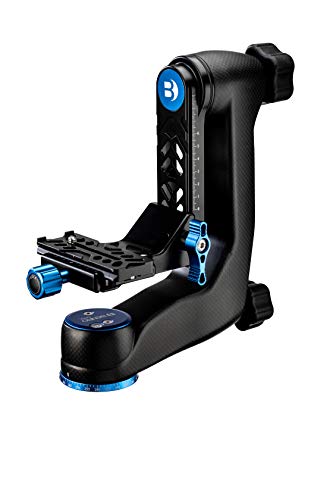
Wimberley MH-100 Wimberley MonoGimbal Head - Made in USA




Key features
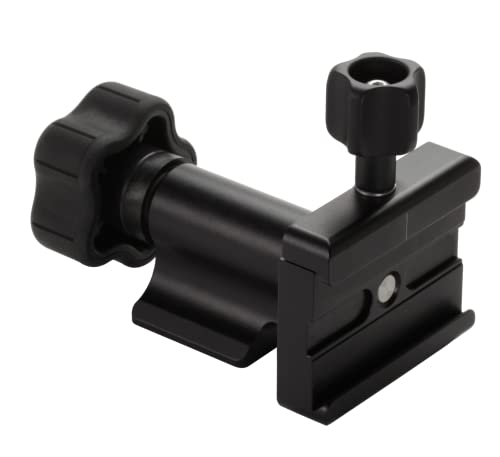
- •Gimbal-type design allows you to rotate your lens around its center of gravity and thus easily manipulate very large lenses
- •Rugged design offers stiffness, capacity and smooth tilt movement in a compact and lightweight package (349 grams)
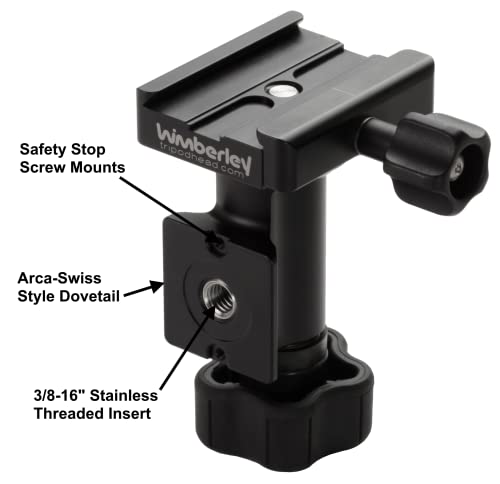
- •Arca Swiss style clamp supports a variety of medium and telephoto lenses. Improves lens carrying comfort
- •Integrated Arca-swiss dovetails on base with optional safety stop screws for use with QC-clamps
- •Anodized 6061 Aluminum Clamp and Body, Stainless Steel Fasteners, Made in USA. Assembled in Charlottesville, Virginia
Wimberley MH-100 Wimberley MonoGimbal Head - Made in USA
List Price: $260.45$234.41DEALYou Save: $26.04 (10%)
Free shippingFree Returns – 30 daysFree Order CancellationSecure Payment2–3 Days DeliveryGet It October 26, 2026In Stock (1)No marketing spamNo account requiredFulfilment by FedEx / Amazon / UPS / ShipwirePayPal / Card Buyer Protection
Customer Reviews
Reviews sourced from verified Amazon purchasers4.7
out of 5
Based on 10 reviews
5★
90%
4★
10%
3★
0%
2★
0%
1★
0%
One of my rare 5-star reviews. Light, supremely strong and secure, and simplistic in design and use.
L C C✓ Verified Purchase•February 14, 2024
This monopod gimble is superbly engineered and built and it is simplistic in use.
The Wimberly MonoGimble is so much better than using a typical bulky tripod designed large offset gimble on a monopod. I am a bird, wildlife, and nature photographer. I have been using this Wimberly MonoGimble on a Manfrotto MPMXPROA4 monopod shooting either a Nikon D7200 or a Nikon D850 mounted with a Nikon 800mm f/5.6E.
This lens, and either camera frame, are a very heavy combination and I trust the Wimberly MonoGimble, Manfroto monopod combination completely. The side-mounted design offers an easy comfortable way to carry a heavy rig for much longer distances than a tripod and gimble combination.
It is worth googling YouTube videos for this monopod gimble, particularly the one from Steve Perry.
This gimble is a little pricey for its size unless you compare it to a large tripod gimble of comparable quality.
I do not think you can go wrong with the Wimberly MonoGimble. I didn't.
The Wimberly MonoGimble is so much better than using a typical bulky tripod designed large offset gimble on a monopod. I am a bird, wildlife, and nature photographer. I have been using this Wimberly MonoGimble on a Manfrotto MPMXPROA4 monopod shooting either a Nikon D7200 or a Nikon D850 mounted with a Nikon 800mm f/5.6E.
This lens, and either camera frame, are a very heavy combination and I trust the Wimberly MonoGimble, Manfroto monopod combination completely. The side-mounted design offers an easy comfortable way to carry a heavy rig for much longer distances than a tripod and gimble combination.
It is worth googling YouTube videos for this monopod gimble, particularly the one from Steve Perry.
This gimble is a little pricey for its size unless you compare it to a large tripod gimble of comparable quality.
I do not think you can go wrong with the Wimberly MonoGimble. I didn't.
Wimberly Monogimbal: A game-changer!
Pat Downs✓ Verified Purchase•February 3, 2024
I've used monopods for over 40 years, especially when I photographed professional sports as a photojournalist, using long lenses like 600mm. Monopods are essential, but this Wimberly Monogimbal is a GAME CHANGER. It allows you to balance the lens in horizontal position, but it is free rotating so that you can easily aim the lens up or down without having to tilt the monopod. The other day I was photographing a bald eagle high overhead in a tree, and with my tall monopod fully extended and using the Monogimbal, I was able to almost point the camera straight up, which you can't do without a head like this. But the beauty is, unlike other monopod heads, when you let go of the camera (holding on to the monopod) it doesn't flop forward or backward. The lens just returns to a neutral, horizontal position if it's balanced properly, or stays at any position without being held there. You can tighten the knob and lock it into any position though. I cannot say enough good things about this Wimberly monopod head. It's small, it's beautifully made, it's as smooth as silk, and it's perfect. I also have the Wimberley Sidekick gimbal head adapter for my tripod, but I don't use it as much as this Monogimbal.
The answer for heavy telephoto lenses on a monopod!
SteamLoco76✓ Verified Purchase•February 2, 2024
A gimbal head on a sturdy tripod is the ultimate setup for photography with large, heavy super-telephoto lenses. Unfortunately, hauling a multiple pound gimbal head with a multiple pound tripod along with your camera and lens can be too much in many instances. Monopod to the rescue-sort of. A lens mounted directly to a monopod can only rotate via its mount collar, tilting means leaning the monopod. Most users resort to a ball head or a single axis tilt head on a monopod. Okay, now you can tilt the lens/camera up and down. You still have to loosen and retighten the head every single time. If the head isn't tightened enough, the lens and camera can violently slam against the monopod. What to do?
Enter the Wimberley MH-100. Yes at $179 it seems expensive for such a compact piece of kit, once you have it setup and in use, the price will be forgotten. My Pentax DFA 150-450mm f4.5~5.6 lens and K3 body is incredibly unbalanced when mounted to a monopod by the lens tripod foot. The foot is nowhere near the center of gravity and adding a KP or K3 body makes it worse. The MH-100 cures the problem when used with a 3.5 or 4 inch long Acra Swiss type mounting plate. I used the Wimberley P-400 but any GOOD brand will work (remember, you are counting on the plate to hold thousands of dollars worth of equipment!). I mounted the MH-100 to my heavy duty Manfrotto monopod then the lens plate to the foot on the 150-450. Add the camera body and its time to start trial and error for the correct position of the lens plate. Once you find the balance point, lighten the plate screws. After that, you can compensate for balance shifts by sliding the plate in the MH-100 clamp. Property adjusted, the camera and lens stay where you have it pointed even with the tilt knob unlocked. I can move the lens/ camera with the tip of a finger. The gimbal bearing is long and smooth, the lock knob large, sturdy and easy to use. The MH-100 only adds a couple of inches to the height and width of a monopod, so it should fit in most monopod cases too.
The setup looks odd and ungainly. The monopod is off to the left with the camera/lens hanging beside it to the right. Trust me, the rig is very easy to use once you get past the looks. I had been hand-holding my big lens because it was not ergonomic to use on a monopod with any head I tried. With the MH-100, the camera and lens are a pure joy to use on the monopod.
Enter the Wimberley MH-100. Yes at $179 it seems expensive for such a compact piece of kit, once you have it setup and in use, the price will be forgotten. My Pentax DFA 150-450mm f4.5~5.6 lens and K3 body is incredibly unbalanced when mounted to a monopod by the lens tripod foot. The foot is nowhere near the center of gravity and adding a KP or K3 body makes it worse. The MH-100 cures the problem when used with a 3.5 or 4 inch long Acra Swiss type mounting plate. I used the Wimberley P-400 but any GOOD brand will work (remember, you are counting on the plate to hold thousands of dollars worth of equipment!). I mounted the MH-100 to my heavy duty Manfrotto monopod then the lens plate to the foot on the 150-450. Add the camera body and its time to start trial and error for the correct position of the lens plate. Once you find the balance point, lighten the plate screws. After that, you can compensate for balance shifts by sliding the plate in the MH-100 clamp. Property adjusted, the camera and lens stay where you have it pointed even with the tilt knob unlocked. I can move the lens/ camera with the tip of a finger. The gimbal bearing is long and smooth, the lock knob large, sturdy and easy to use. The MH-100 only adds a couple of inches to the height and width of a monopod, so it should fit in most monopod cases too.
The setup looks odd and ungainly. The monopod is off to the left with the camera/lens hanging beside it to the right. Trust me, the rig is very easy to use once you get past the looks. I had been hand-holding my big lens because it was not ergonomic to use on a monopod with any head I tried. With the MH-100, the camera and lens are a pure joy to use on the monopod.
I was skeptical, but now I’m a believer…
FloridaGeek✓ Verified Purchase•January 18, 2024
As a wildlife photographer who primarily shoots big lenses (800mm f/5.6 and 600mm f/4) I didn't think this offset head would work. I was wrong. It not only works, but it works really well. I'm used to using a Wimberley full gimbal head on my tripods with the big lenses. This little monopod head lets me bring the full gimbal performance to the monopod. It's so good I'm not using my tripods much anymore. I also have the RRS monopod head, but this is better for big lens work off the monopod.
Amazing product
Mr & Mrs Spud✓ Verified Purchase•January 9, 2024
I have bought two of these now a d they are absolutely amazing for agile and mobile use of big lenses! It uses a turn knob Arca-Swiss mount with dual safety channels. It can also be mounted on top of a quick release Arca-Swiss head if you're so inclined.
I use one primarily with a 150-600mm Tamron lens on a gripped Nikon D750 and it doesn't struggle at all with the weight. Plenty of room, solid and fluid motion, and it makes me feel very secure.
I primarily use the second for shooting sports where I'm using a big telephoto lens, or I'm shooting from a static position ad a way to take weight off my arms (such as for wrestling when I sit on the floor next to the mat).
If you do sports or wildlife photography and are looking for something agile and light weight, this is the ticket! If you're newer to field I'd highly recommend getting an aluminum monopod as they're the best bet for the buck as large and rigid carbon fiber monopods tend to be $200+ whereas you can get something like a Manfrotto XPRO monopod for under $120 all day. I find the weight difference negligible but the sturdiness is a requisite as mounting this Wimberley head on a bouncy monopod will ruin your shots!
I use one primarily with a 150-600mm Tamron lens on a gripped Nikon D750 and it doesn't struggle at all with the weight. Plenty of room, solid and fluid motion, and it makes me feel very secure.
I primarily use the second for shooting sports where I'm using a big telephoto lens, or I'm shooting from a static position ad a way to take weight off my arms (such as for wrestling when I sit on the floor next to the mat).
If you do sports or wildlife photography and are looking for something agile and light weight, this is the ticket! If you're newer to field I'd highly recommend getting an aluminum monopod as they're the best bet for the buck as large and rigid carbon fiber monopods tend to be $200+ whereas you can get something like a Manfrotto XPRO monopod for under $120 all day. I find the weight difference negligible but the sturdiness is a requisite as mounting this Wimberley head on a bouncy monopod will ruin your shots!
Page 1 of 2