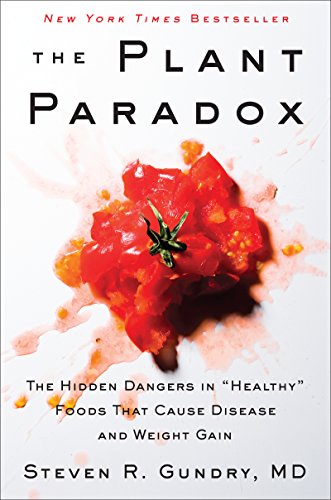
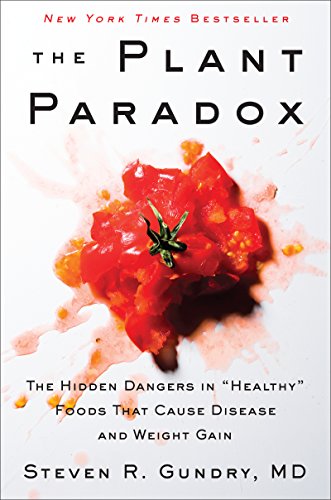
The Plant Paradox: The Hidden Dangers in "Healthy" Foods That Cause Disease and Weight Gain

Key features
- •T
- •h
- •e
- •P
- •l
- •Peel your veggies. Most of the lectins are contained in the skin and seeds of plants; simply peeling and de-seeding vegetables (like tomatoes and peppers) reduces their lectin content.
- •Shop for fruit in season. Fruit contain fewer lectins when ripe, so eating apples, berries, and other lectin-containing fruits at the peak of ripeness helps minimize your lectin consumption.
- •Swap your brown rice for white. Whole grains and seeds with hard outer coatings are designed by nature to cause digestive distress—and are full of lectins.
BrandHarper Wave
CategoryWeight Loss
The Plant Paradox: The Hidden Dangers in "Healthy" Foods That Cause Disease and Weight Gain
List Price: $11.78$10.60DEALYou Save: $1.18 (10%)
Free shippingFree Returns – 30 daysFree Order CancellationSecure Payment2–3 Days DeliveryGet It June 25, 2026In Stock (98)No marketing spamNo account requiredFulfilment by FedEx / Amazon / UPS / ShipwirePayPal / Card Buyer Protection
Customer Reviews
Reviews sourced from verified Amazon purchasers4.6
out of 5
Based on 10 reviews
5★
50%
4★
0%
3★
0%
2★
10%
1★
40%
†The proliferation of fabricated “facts†and ignored truths are a great menace to our society
Camron•September 10, 2017
It's hard to turn on the TV these days without hearing about "fake news." The proliferation of fabricated "facts" and ignored truths are a great menace to our society. As others have pointed out before, we've been living with fake news in consumer-level nutrition messaging for years. It doesn't matter how many PhDs a person may have "“ standing in front of the nutrition bookshelf at the bookstore is a sure path to an overwhelming sense of confusion and uncertainty.
Recently a new book has captured public attention, The Plant Paradox, by Steven Gundry, MD, focused on the surprising claim that lectins are the source of most, perhaps all human disease. It's too time consuming to swat away every bit of nonsense that hits the popular media in nutrition, but we've been getting a lot of questions about this book and its premise, that lectins are the true culprit of our ills.
Dr. Gundry writes on his website, "I believe I've discovered some unconventional truths about human nutrition." Unconventional? Yes. Truths? Not so fast. The Plant Paradox is written by an author who reminds us of his distinguished career in medicine, including his experience in research. Dr. Gundry says, "with all modesty" that he has "found there is a common cause for most health problems" and further that "it is based on ample research, including [his] own papers, published in peer-reviewed medical journals, but that no one has put it all together before." He goes on to say that so-called "health "˜experts' have pointed to our laziness, our addiction to fast food" etc., but according to him, "sadly, they are wrong "¦ [and that] "¦ the real cause is so well hidden that you would never have noticed it."
This sounds like we've come across quite the amazing secret, just now uncovered by Dr. Gundry. So, he wants to educate us"”but about what? The first hint comes from the book's title, "The Plant Paradox." A reader might think, "Aha, perhaps something is wrong with all that whole grain, vegetable nonsense after all! I like this. I knew that there was a reason why I never liked veggies and why I should, instead, be eating grass-fed meat! This book is for me!"
So, what, specifically, is wrong with plants? According to this book, it's not only about that awful gluten that we have heard so much about but about a whole class of "highly toxic, plant-based proteins called lectins" of which gluten is a member. He says that "lectins are found not only in grains like wheat but also in the "˜gluten-free' foods like "¦ many fruits, vegetables, nuts, beans and conventional dairy products," which "many of us regard as healthy." After consumption, they "incite a kind of chemical warfare in our bodies, causing inflammatory reactions that can lead to weight gain and serious health conditions."
On pages 68-70, Dr. Gundry offers an enormous list of ailments that have resolved in patients following his lectin-avoidance protocol, including a huge variety of autoimmune diseases, cancer, heart disease and some of its risk factors, weight problems, slow infant growth, mental health problems, and some neurological conditions like Parkinson's, dementia, and "cramps, tingling, and numbness." These would be earth-shattering findings, if true.
It's particularly alarming because these findings lie in opposition to well established observations about diet and health. For one, populations who have transitioned to rich, Western diets generally adopt a diet lower in lectins. A transition to a Western diet is characterized by more meat, more added fats and sugars, and fewer beans and whole grains[1]. One of the commonalities of the blue zones, areas of long-lived populations, is that they consume legumes[2] (and Americans, by and large, don't). Consumption of beans has been shown to be beneficial for a wide range of diseases, including diabetes[3], heart disease[4], cancer[5], and in weight management[6][7] (Dr. Gundry allows vegetarians and vegans to eat beans, but only those that have gone through a pressure cooker, and yet research demonstrating the huge array of benefits of consuming beans does not require pressure cookers). Increased whole grain consumption, compared to low whole grain consumption, has been shown to be beneficial for a wide range of chronic disease as well, including early death and death from cardiovascular disease[8].
Earth shattering findings demand extraordinary scientific evidence. It would be nice to see some peer-reviewed science that supports his astounding claims, so we took a peek through the early part of the book to see what kind of references he offers.
His first big claim (pg xv) is that his findings are published in peer-reviewed medical journals. His "peer-reviewed" medical publication cited is an abstract published in the journal supplement for a poster presentation. Making a poster to display at a conference is nice, but this is a world apart from publishing actual clinical trial results in a peer reviewed journal. In other words, there is no detailed publication of his methods, his subjects, his results, or his intervention as would be commonly expected in a normal publication. His glowing description of this abstract is misleading, to put it mildly.
It gets worse from there.
Many of his references do not offer any support for the statements he makes in the text or are misrepresented.
Pg 4 "“ a reference to support a statement about egg yolks and shellfish "dramatically" reducing cholesterol shows that some types of shellfish led to lower cholesterol levels compared to consuming other animal proteins. There's nothing about egg yolks in the study.
Pg 21 "“ The longer you've been eating lectins, the longer you've been producing gut bacteria to inactivate them, so he says. This seems like a reasonable statement, and quite possibly true, but his supporting citation points a study that shows that a gluten free diet leads to less beneficial bacteria and more harmful bacteria. This supports a general contention that food determines gut bacteria, but nothing about lectins specifically. It's also an odd choice to reference an article that shows that avoiding wheat, barley, and rye leads to more harmful bacteria for a book that is about to recommend that these grains be avoided.
Pg 24 "“ "Some lectins disrupt transmissions between your cells"¦" He references a lengthy paper that offers a review of the workings of a large, complex part of the immune system. Interestingly, the body of the paper does not contain the word "lectin."
Pg 38 "“ "Lectin avoidance"¦ as reported in the scientific literature has been found to cure autoimmune diseases" The reference is for another abstract from a conference, with no possibility of even getting the abstract online. This is "scientific literature"?!
Pg 43 "“ Perhaps the most humorous of all the random references comes at the end of a long laundry list of seemingly definitive, alarming claims about what wheat germ agglutinin (WGA) does. There are no references for any claims until the end of this list, where he claims WGA "Contributes to the development of nephritis, or kidney inflammation." There is a citation for a paper where researchers simply were documenting how some lectins stain kidney tissue. It has absolutely nothing to do with lectins causing nephritis or kidney inflammation. It's as if the author did a search for the words "lectin" and "kidney" and just randomly picked a paper that popped up.
Pg 73 "“ A claim about germ-free mice being shorter and smaller and living shorter lives points to a reference that shows that low-fiber (and presumably lower lectin) diets deplete the diversity of the microbiome over several generations. Not only is the reference not at all supportive of his claim, it actually suggests that if people follow his diet, they may do harm to themselves.
And this is just a few example from the first couple chapters. What makes this particularly insulting is that this author is a highly credentialed biomedical professional. Surely, therefore, he knows what a reference should be, and what counts as robust "scientific literature." How then can he reference his claims so poorly? This has got to be either willful negligence or astonishing incompetence.
Even more egregious are the wild claims he makes with no referencing at all, which is most of the text. There are some rather random inaccuracies. Sometimes it almost seems like this author is just making things up that sound good.
Pg 12 "“ "Nightshades are highly inflammatory." Really? That kind of statement should have some evidence to back it up, because there is plenty of research that suggests, for example, that tomatoes are highly anti-inflammatory[9].
Pg 28 "“ "Up until 10,000 years ago, the average human stood about 6 feet tall." Really? This appears to be patently false[10], with the average human (both men and women) probably being around 5'6".
Pg 31 "“ There's a claim that Egyptian mummies died overweight, with clogged arteries and diabetes. And the author insinuates this to be from grains. Really? Is it possible that these mummified rulers lived like all the other kings and queens through all of time, eating not like the peasant commoner but the wealthy elite, mostly gorging on animal foods and available processed foods (added fats, added sugars) that were available at the time?
Pg 33 "“ The author writes that 500 years ago explorers brought back from the "New World" foods that Europeans, Asians, or Africans had never seen, including grains and beans. What? This is just a bizarre claim. Do you know what Roman gladiators of 1800 years ago were called? "Barley Men" "“ because they were known to eat wheat, barley, and beans[11].
Pg 55 "“ Most of his stage 3 and stage 4 cancer patients got better. Wow. And not a single publication, or case study?
The claims come fast and furious in this book, stated with a degree of certainty, without nuance, that undoubtedly appeals to many readers. But the referencing is so lacking and sloppy that Dr. Gundry should be embarrassed. The references that are cited in this book do a poor job of trying to justify its claims. And the bulk of the author's wild claims lack references at all, with several examples of easily verifiable falsehoods. Because his claims are quite profound and novel, referencing of the findings of others and his own results are especially important. This is especially troubling for an author who touts his own research experience.
Another method to determine the veracity of a popular nutrition book is to assess how well the author understands and discusses the success of the whole food, plant-based diets as documented in the (real, peer-reviewed) literature, given that this approach is, still today, the only diet ever shown to reverse atherosclerosis. On page 154 he mentions Drs. Ornish, Esselstyn and myself (T. Colin Campbell), saying that he's seen our patients and though they lost weight, they failed to halt the progression of their coronary artery disease.
Yet there are several papers in excellent journals demonstrating the success of Dr. Ornish and Esselstyn in halting and even reversing coronary artery disease. These are actual, full papers, by the way, not conference poster abstracts published in journal supplements. He says that the reason patients had weight loss success on these plans is because the physicians emphasize organic food (even though this is false and none of the protocols required people to consume organic foods) and eliminate certain fats (though he is soon going to be encouraging the reader to eat certain other fats). He makes note that this type of dietary approach is intolerable and that 50% of the patients in Esselstyn's original study dropped out. This is another easily verifiable falsehood, indeed a dramatic falsehood. Of the 22 original cases in Esselstyn's cohort, 5 dropped out in the first two years[12]. Did Dr. Gundry even read these papers? Or did he intentionally distort the results and suggest a false outcome from eating this type of nutrition for his own purpose?
In a later follow-up publication (the kind that Dr. Gundry has never done with his lectin protocol) Esselstyn demonstrated virtual elimination of the recurrence of heart disease among 177 patients who had complied with his advice for the next 2-7 years"”only one individual experienced a recurrence (
Dr. Gundry falsely claimed that we (and others) "once demonized all fat" but now have come to recognize that "all fat is not the same." This is a very careless comment"”I (T. Colin Campbell) never advocated a no-fat diet; nor am I a physician as he claims. I am an experimental researcher who investigated nutrition at its most fundamental level, namely, its biochemical and cellular underpinnings. That evidence and the principles derived therefrom were combined with human observational and intervention studies that helped to explain the more comprehensive relationship of diet and nutrition with disease occurrence.
And finally, Dr. Gundry offers a very detailed list of "yes" and "no" foods based on whether they contain lectins, and several stages of dieting that a person must progress through. Grains, beans, and potatoes are to be avoided. Many vegetables (or fruits, botanically speaking) are to be avoided, including peppers and tomatoes and squashes.
It is no wonder that this lectin theory is now a darling of the paleo, low carb, "primal" communities. Although Dr. Gundry makes some passing statements about the benefits of a plant-based diet, where are his patients getting their calories from? Can you get 1500 calories from Jerusalem artichokes and bok choy? We dare you to try. The approved foods list is a loaded list of hard to find, specialty kinds of food products, including only pasture-raised poultry and grass fed and grass finished beef, and specialty non-grain noodles, energy bars, etc"¦. His patients are either consuming lots of animals, dairy, and added fats or they are starving.
To put it generously, it is fair to say that Dr. Gundry has not made a convincing argument that lectins as a class are hazardous. First, there are a very large number of lectins, second, they exhibit a variety of functions"”some beneficial and some not and, third, these functions constantly vary, depending on nutritional conditions and bodily needs. There is even evidence that some may protect against cancer![14] It is extremely naïve to assume that one or a few lectins among this complex class reflect the activities of the entire class. Obviously, if there is any muster to Dr. Gundry's claims, it should be put to the test, with well-controlled intervention studies, with their findings published in professional peer-reviewed journals.
In conclusion, there are many people who desire good health and deserve good information and we resent that they must suffer such poor quality and confusing information under the assumption that it is good science. Is it possible that Dr. Gundry is just out to make a quick buck? He admits that his patients give up to a dozen vials of blood for testing every couple of months at his clinic. Overtesting is common practice in supplement-driven clinics. This extensive testing, (which are another topic), is almost always used to demonstrate some type of nutritional pathology, which of course can only be corrected by taking the suggested supplements. And of course, Dr. Gundry sells supplements, including "Lectin Shield" for about $80 a month. According to his website, "This groundbreaking new formula was created to offset the discomforting effects of lectins (proteins commonly found in plants that make them harder to digest). Lectin Shield works to protect your body from a pile-up of lectins and to promote full-body comfort."
This biggest shame is the resulting confusion among people who buy this story. Many readers will assume that seeing citations in the text automatically demonstrate scientific validity. The story of lectins and some of the evidence suggestive of harm in some cases will be enough for people to think that all beans, potatoes, and grains are to be avoided. There was a recipe for veggie and tofu stuffed peppers on our website recently and a follower responded that "Almost every ingredient is med-high in lectins you might as well eat a hamburger health wise."
What a shame that this type of unscientific nonsense creates so much unnecessary confusion, with deadly consequences. One could indeed have an interesting discussion about the health-effects of lectins, both good and bad, but this book does not provide it. Further, highly replicable and reliable scientific evidence now shows that a diet of whole plant-based foods, as part of a lifestyle of appropriate hydration, physical activity and outdoor activities maintains and restores health far more profoundly than our contemporary practices. We also know that this evidence challenges our existing system which is too much about commerce and too little about public health. To say that people are confused is an understatement and it is this confusion that invites scams like this book. Also, there are many who want to hear good things about their bad habits. We can only hope that this newly invented fad, based on such unethical and self-serving behavior, will pass quickly.
Recently a new book has captured public attention, The Plant Paradox, by Steven Gundry, MD, focused on the surprising claim that lectins are the source of most, perhaps all human disease. It's too time consuming to swat away every bit of nonsense that hits the popular media in nutrition, but we've been getting a lot of questions about this book and its premise, that lectins are the true culprit of our ills.
Dr. Gundry writes on his website, "I believe I've discovered some unconventional truths about human nutrition." Unconventional? Yes. Truths? Not so fast. The Plant Paradox is written by an author who reminds us of his distinguished career in medicine, including his experience in research. Dr. Gundry says, "with all modesty" that he has "found there is a common cause for most health problems" and further that "it is based on ample research, including [his] own papers, published in peer-reviewed medical journals, but that no one has put it all together before." He goes on to say that so-called "health "˜experts' have pointed to our laziness, our addiction to fast food" etc., but according to him, "sadly, they are wrong "¦ [and that] "¦ the real cause is so well hidden that you would never have noticed it."
This sounds like we've come across quite the amazing secret, just now uncovered by Dr. Gundry. So, he wants to educate us"”but about what? The first hint comes from the book's title, "The Plant Paradox." A reader might think, "Aha, perhaps something is wrong with all that whole grain, vegetable nonsense after all! I like this. I knew that there was a reason why I never liked veggies and why I should, instead, be eating grass-fed meat! This book is for me!"
So, what, specifically, is wrong with plants? According to this book, it's not only about that awful gluten that we have heard so much about but about a whole class of "highly toxic, plant-based proteins called lectins" of which gluten is a member. He says that "lectins are found not only in grains like wheat but also in the "˜gluten-free' foods like "¦ many fruits, vegetables, nuts, beans and conventional dairy products," which "many of us regard as healthy." After consumption, they "incite a kind of chemical warfare in our bodies, causing inflammatory reactions that can lead to weight gain and serious health conditions."
On pages 68-70, Dr. Gundry offers an enormous list of ailments that have resolved in patients following his lectin-avoidance protocol, including a huge variety of autoimmune diseases, cancer, heart disease and some of its risk factors, weight problems, slow infant growth, mental health problems, and some neurological conditions like Parkinson's, dementia, and "cramps, tingling, and numbness." These would be earth-shattering findings, if true.
It's particularly alarming because these findings lie in opposition to well established observations about diet and health. For one, populations who have transitioned to rich, Western diets generally adopt a diet lower in lectins. A transition to a Western diet is characterized by more meat, more added fats and sugars, and fewer beans and whole grains[1]. One of the commonalities of the blue zones, areas of long-lived populations, is that they consume legumes[2] (and Americans, by and large, don't). Consumption of beans has been shown to be beneficial for a wide range of diseases, including diabetes[3], heart disease[4], cancer[5], and in weight management[6][7] (Dr. Gundry allows vegetarians and vegans to eat beans, but only those that have gone through a pressure cooker, and yet research demonstrating the huge array of benefits of consuming beans does not require pressure cookers). Increased whole grain consumption, compared to low whole grain consumption, has been shown to be beneficial for a wide range of chronic disease as well, including early death and death from cardiovascular disease[8].
Earth shattering findings demand extraordinary scientific evidence. It would be nice to see some peer-reviewed science that supports his astounding claims, so we took a peek through the early part of the book to see what kind of references he offers.
His first big claim (pg xv) is that his findings are published in peer-reviewed medical journals. His "peer-reviewed" medical publication cited is an abstract published in the journal supplement for a poster presentation. Making a poster to display at a conference is nice, but this is a world apart from publishing actual clinical trial results in a peer reviewed journal. In other words, there is no detailed publication of his methods, his subjects, his results, or his intervention as would be commonly expected in a normal publication. His glowing description of this abstract is misleading, to put it mildly.
It gets worse from there.
Many of his references do not offer any support for the statements he makes in the text or are misrepresented.
Pg 4 "“ a reference to support a statement about egg yolks and shellfish "dramatically" reducing cholesterol shows that some types of shellfish led to lower cholesterol levels compared to consuming other animal proteins. There's nothing about egg yolks in the study.
Pg 21 "“ The longer you've been eating lectins, the longer you've been producing gut bacteria to inactivate them, so he says. This seems like a reasonable statement, and quite possibly true, but his supporting citation points a study that shows that a gluten free diet leads to less beneficial bacteria and more harmful bacteria. This supports a general contention that food determines gut bacteria, but nothing about lectins specifically. It's also an odd choice to reference an article that shows that avoiding wheat, barley, and rye leads to more harmful bacteria for a book that is about to recommend that these grains be avoided.
Pg 24 "“ "Some lectins disrupt transmissions between your cells"¦" He references a lengthy paper that offers a review of the workings of a large, complex part of the immune system. Interestingly, the body of the paper does not contain the word "lectin."
Pg 38 "“ "Lectin avoidance"¦ as reported in the scientific literature has been found to cure autoimmune diseases" The reference is for another abstract from a conference, with no possibility of even getting the abstract online. This is "scientific literature"?!
Pg 43 "“ Perhaps the most humorous of all the random references comes at the end of a long laundry list of seemingly definitive, alarming claims about what wheat germ agglutinin (WGA) does. There are no references for any claims until the end of this list, where he claims WGA "Contributes to the development of nephritis, or kidney inflammation." There is a citation for a paper where researchers simply were documenting how some lectins stain kidney tissue. It has absolutely nothing to do with lectins causing nephritis or kidney inflammation. It's as if the author did a search for the words "lectin" and "kidney" and just randomly picked a paper that popped up.
Pg 73 "“ A claim about germ-free mice being shorter and smaller and living shorter lives points to a reference that shows that low-fiber (and presumably lower lectin) diets deplete the diversity of the microbiome over several generations. Not only is the reference not at all supportive of his claim, it actually suggests that if people follow his diet, they may do harm to themselves.
And this is just a few example from the first couple chapters. What makes this particularly insulting is that this author is a highly credentialed biomedical professional. Surely, therefore, he knows what a reference should be, and what counts as robust "scientific literature." How then can he reference his claims so poorly? This has got to be either willful negligence or astonishing incompetence.
Even more egregious are the wild claims he makes with no referencing at all, which is most of the text. There are some rather random inaccuracies. Sometimes it almost seems like this author is just making things up that sound good.
Pg 12 "“ "Nightshades are highly inflammatory." Really? That kind of statement should have some evidence to back it up, because there is plenty of research that suggests, for example, that tomatoes are highly anti-inflammatory[9].
Pg 28 "“ "Up until 10,000 years ago, the average human stood about 6 feet tall." Really? This appears to be patently false[10], with the average human (both men and women) probably being around 5'6".
Pg 31 "“ There's a claim that Egyptian mummies died overweight, with clogged arteries and diabetes. And the author insinuates this to be from grains. Really? Is it possible that these mummified rulers lived like all the other kings and queens through all of time, eating not like the peasant commoner but the wealthy elite, mostly gorging on animal foods and available processed foods (added fats, added sugars) that were available at the time?
Pg 33 "“ The author writes that 500 years ago explorers brought back from the "New World" foods that Europeans, Asians, or Africans had never seen, including grains and beans. What? This is just a bizarre claim. Do you know what Roman gladiators of 1800 years ago were called? "Barley Men" "“ because they were known to eat wheat, barley, and beans[11].
Pg 55 "“ Most of his stage 3 and stage 4 cancer patients got better. Wow. And not a single publication, or case study?
The claims come fast and furious in this book, stated with a degree of certainty, without nuance, that undoubtedly appeals to many readers. But the referencing is so lacking and sloppy that Dr. Gundry should be embarrassed. The references that are cited in this book do a poor job of trying to justify its claims. And the bulk of the author's wild claims lack references at all, with several examples of easily verifiable falsehoods. Because his claims are quite profound and novel, referencing of the findings of others and his own results are especially important. This is especially troubling for an author who touts his own research experience.
Another method to determine the veracity of a popular nutrition book is to assess how well the author understands and discusses the success of the whole food, plant-based diets as documented in the (real, peer-reviewed) literature, given that this approach is, still today, the only diet ever shown to reverse atherosclerosis. On page 154 he mentions Drs. Ornish, Esselstyn and myself (T. Colin Campbell), saying that he's seen our patients and though they lost weight, they failed to halt the progression of their coronary artery disease.
Yet there are several papers in excellent journals demonstrating the success of Dr. Ornish and Esselstyn in halting and even reversing coronary artery disease. These are actual, full papers, by the way, not conference poster abstracts published in journal supplements. He says that the reason patients had weight loss success on these plans is because the physicians emphasize organic food (even though this is false and none of the protocols required people to consume organic foods) and eliminate certain fats (though he is soon going to be encouraging the reader to eat certain other fats). He makes note that this type of dietary approach is intolerable and that 50% of the patients in Esselstyn's original study dropped out. This is another easily verifiable falsehood, indeed a dramatic falsehood. Of the 22 original cases in Esselstyn's cohort, 5 dropped out in the first two years[12]. Did Dr. Gundry even read these papers? Or did he intentionally distort the results and suggest a false outcome from eating this type of nutrition for his own purpose?
In a later follow-up publication (the kind that Dr. Gundry has never done with his lectin protocol) Esselstyn demonstrated virtual elimination of the recurrence of heart disease among 177 patients who had complied with his advice for the next 2-7 years"”only one individual experienced a recurrence (
Dr. Gundry falsely claimed that we (and others) "once demonized all fat" but now have come to recognize that "all fat is not the same." This is a very careless comment"”I (T. Colin Campbell) never advocated a no-fat diet; nor am I a physician as he claims. I am an experimental researcher who investigated nutrition at its most fundamental level, namely, its biochemical and cellular underpinnings. That evidence and the principles derived therefrom were combined with human observational and intervention studies that helped to explain the more comprehensive relationship of diet and nutrition with disease occurrence.
And finally, Dr. Gundry offers a very detailed list of "yes" and "no" foods based on whether they contain lectins, and several stages of dieting that a person must progress through. Grains, beans, and potatoes are to be avoided. Many vegetables (or fruits, botanically speaking) are to be avoided, including peppers and tomatoes and squashes.
It is no wonder that this lectin theory is now a darling of the paleo, low carb, "primal" communities. Although Dr. Gundry makes some passing statements about the benefits of a plant-based diet, where are his patients getting their calories from? Can you get 1500 calories from Jerusalem artichokes and bok choy? We dare you to try. The approved foods list is a loaded list of hard to find, specialty kinds of food products, including only pasture-raised poultry and grass fed and grass finished beef, and specialty non-grain noodles, energy bars, etc"¦. His patients are either consuming lots of animals, dairy, and added fats or they are starving.
To put it generously, it is fair to say that Dr. Gundry has not made a convincing argument that lectins as a class are hazardous. First, there are a very large number of lectins, second, they exhibit a variety of functions"”some beneficial and some not and, third, these functions constantly vary, depending on nutritional conditions and bodily needs. There is even evidence that some may protect against cancer![14] It is extremely naïve to assume that one or a few lectins among this complex class reflect the activities of the entire class. Obviously, if there is any muster to Dr. Gundry's claims, it should be put to the test, with well-controlled intervention studies, with their findings published in professional peer-reviewed journals.
In conclusion, there are many people who desire good health and deserve good information and we resent that they must suffer such poor quality and confusing information under the assumption that it is good science. Is it possible that Dr. Gundry is just out to make a quick buck? He admits that his patients give up to a dozen vials of blood for testing every couple of months at his clinic. Overtesting is common practice in supplement-driven clinics. This extensive testing, (which are another topic), is almost always used to demonstrate some type of nutritional pathology, which of course can only be corrected by taking the suggested supplements. And of course, Dr. Gundry sells supplements, including "Lectin Shield" for about $80 a month. According to his website, "This groundbreaking new formula was created to offset the discomforting effects of lectins (proteins commonly found in plants that make them harder to digest). Lectin Shield works to protect your body from a pile-up of lectins and to promote full-body comfort."
This biggest shame is the resulting confusion among people who buy this story. Many readers will assume that seeing citations in the text automatically demonstrate scientific validity. The story of lectins and some of the evidence suggestive of harm in some cases will be enough for people to think that all beans, potatoes, and grains are to be avoided. There was a recipe for veggie and tofu stuffed peppers on our website recently and a follower responded that "Almost every ingredient is med-high in lectins you might as well eat a hamburger health wise."
What a shame that this type of unscientific nonsense creates so much unnecessary confusion, with deadly consequences. One could indeed have an interesting discussion about the health-effects of lectins, both good and bad, but this book does not provide it. Further, highly replicable and reliable scientific evidence now shows that a diet of whole plant-based foods, as part of a lifestyle of appropriate hydration, physical activity and outdoor activities maintains and restores health far more profoundly than our contemporary practices. We also know that this evidence challenges our existing system which is too much about commerce and too little about public health. To say that people are confused is an understatement and it is this confusion that invites scams like this book. Also, there are many who want to hear good things about their bad habits. We can only hope that this newly invented fad, based on such unethical and self-serving behavior, will pass quickly.
Did anyone look at footnotes?
Kristine B.✓ Verified Purchase•September 1, 2017
I read this book to understand more about the things that could be harmful in my diet. I did not like his grandiose, congratulatory stories he told us. Even worse, I was shocked at some of the inaccuracy of his research and how he supports his theories with errors.
Page 31: Queen Nefertiti's mummy showed diabetes. Her mummified remains have not been found to date.
Following that, he refers to a 1932 study in Britain regarding a cereal free diet and adding more Vitamin D would heal Children's cavities, see Footnote 4. This study has been disproved, see Snopes. And it had nothing to do with the cereal (GRAIN PROCESSED IN 1932!!), it was about the Vitamin D!
Further: Page 99: "Monsanto makes Arsenic" I am not a Monsanto fan, but arsenic is a naturally occurring element found on the periodic table
(apple seeds, etc). They make products that contain arsenic, but this is just more of his scare tactics to support his work instead of good science.
Page 207 "Eating canned beans can also raise your blood pressure thanks to both the BPA lining in the can..." #1 how about the salt???? #2 Footnote 3, he refers to a study that only references drinking beverages from BPA cans.
When people start beating their way to his door to have their ALS progression slowed, (as he says he has done), I may take another look.
Page 31: Queen Nefertiti's mummy showed diabetes. Her mummified remains have not been found to date.
Following that, he refers to a 1932 study in Britain regarding a cereal free diet and adding more Vitamin D would heal Children's cavities, see Footnote 4. This study has been disproved, see Snopes. And it had nothing to do with the cereal (GRAIN PROCESSED IN 1932!!), it was about the Vitamin D!
Further: Page 99: "Monsanto makes Arsenic" I am not a Monsanto fan, but arsenic is a naturally occurring element found on the periodic table
(apple seeds, etc). They make products that contain arsenic, but this is just more of his scare tactics to support his work instead of good science.
Page 207 "Eating canned beans can also raise your blood pressure thanks to both the BPA lining in the can..." #1 how about the salt???? #2 Footnote 3, he refers to a study that only references drinking beverages from BPA cans.
When people start beating their way to his door to have their ALS progression slowed, (as he says he has done), I may take another look.
Supplement salesman disgused as a medicine
Amazon Customer✓ Verified Purchase•July 31, 2017
The first part of the book is actually well written and inspirational. However as I begin to check many of the doctors citations. He fills the book with anecdotal examples of success on his diet however there is very little science to support many of his claims including that fruit causes high cholesterol. Additionally upon checking many of his resources the studies were often miss represented. For example if I say that eating shrimp is not going to raise cholesterol and leave it at that and then give a citation to a study about shrimp compared to eating a standard American diet with full fat beef yes shrimp is a better option to beef however there are much better options to eating shrimp and Seafood to lower one's cholesterol. I do like that much of what he proposes is moving people toward a plant-based diet however it seems as though he's written this book simply as a way to sell his own line of supplements. I'm sure many people would lose weight on this diet it's better than the standard American diet however there are much better options available. It is not a sustainable way of life.
Gutsy read, but hold the guacamole!
Amazon Customer✓ Verified Purchase•July 18, 2017
"The Plant Paradox" presents an unconventional view of Leaky Gut Syndrome (LGS). The conventional view is that LGS is caused by fungus. There is good science supporting the fungus theory "“ search leaky gut fungus to find many excellent analyses. Dr. Gundry leaves fungus out of the picture and substitutes plant protein as the culprit. Intestinal irritants, like Gundry's plant protein lectins, may create weaknesses that opportunistic organisms, like fungus, take advantage of (gluten is a lectin plant protein widely recognized as an intestinal irritant). Which is to say that lectin plant proteins could be contributing factors in some cases of LGS.
Most therapies and diets for LGS have been developed by Candida researchers and patients over the last several decades. Search Candida diet leaky gut for details. The Gundry diet seems quite close to Candida protocols as they have evolved over time. With differences "“ he is against whole grains, preferring what he calls resistant starches like sweet potato. Dr. Gundry may have found some valid tweaks to the Candida diet "“ it is certainly open source and a work in progress.
Microbiology began with the invention of the microscope and has evolved through countless contributions from biochemistry, biophysics, genetics, and other sciences. We are now on the verge of reconceptualizing the body as part of an electromagnetic continuum. This will dramatically change how we look at processes within the intestine and adjacent tissues, including the lymphatic system. We can see active exchange of electrons and information at the cellular level. The next stage in LGS healing will include biophysics and related information science.
Dr. Gundry has made a heartfelt and generous presentation of conclusions based on his distinguished career. Still, I find little in his book that is both verifiably correct and at the same time innovative. I wish he had not encouraged people to make muffins in microwave ovens, or mentioned that his successful patients no longer use toilet paper. I wish that he had even a little science to back his core conclusions. And I would have hoped for a chapter on supplements not dedicated to promoting GundryMD brand products. I bought the book looking for a serious and pioneering scientific presentation. For me, "The Plant Paradox" is deeply disappointing and I cannot recommend it. Better works on LGS are free online.
Most therapies and diets for LGS have been developed by Candida researchers and patients over the last several decades. Search Candida diet leaky gut for details. The Gundry diet seems quite close to Candida protocols as they have evolved over time. With differences "“ he is against whole grains, preferring what he calls resistant starches like sweet potato. Dr. Gundry may have found some valid tweaks to the Candida diet "“ it is certainly open source and a work in progress.
Microbiology began with the invention of the microscope and has evolved through countless contributions from biochemistry, biophysics, genetics, and other sciences. We are now on the verge of reconceptualizing the body as part of an electromagnetic continuum. This will dramatically change how we look at processes within the intestine and adjacent tissues, including the lymphatic system. We can see active exchange of electrons and information at the cellular level. The next stage in LGS healing will include biophysics and related information science.
Dr. Gundry has made a heartfelt and generous presentation of conclusions based on his distinguished career. Still, I find little in his book that is both verifiably correct and at the same time innovative. I wish he had not encouraged people to make muffins in microwave ovens, or mentioned that his successful patients no longer use toilet paper. I wish that he had even a little science to back his core conclusions. And I would have hoped for a chapter on supplements not dedicated to promoting GundryMD brand products. I bought the book looking for a serious and pioneering scientific presentation. For me, "The Plant Paradox" is deeply disappointing and I cannot recommend it. Better works on LGS are free online.
Amazing nutritional program for disease reversal and prevention!
Lawrence J. Bookbinder, Ph.D.✓ Verified Purchase•May 23, 2017
Steven R. Gundry, MD, a distinguished heart disease physician, researcher, and inventor, has successfully treated tens of thousands of patients with the Plant Paradox Program (PPP) or Keto Plant Paradox Intensive Care Program"”nutritional treatments he created. He has also helped patients suffering from diseases other than heart disease, such as rheumatoid arthritis, cancer, multiple sclerosis, dementia, type 1 diabetes, kidney failure, obesity, Crohn's disease, Lou Gehrig's disease. One of his patients was only 13 years old and another was an ancient 95.
Some people could benefit from Dr. Gundry's diet without having to consult with him or a physician who uses his approach. I'm an example. I began transitioning into his diet three months ago. I now have more energy and more restful sleep. The pain in my knees almost disappeared and the pain in my left hip is greatly improved. I look forward to more improvements in my 86-year-old body. I love the PPP!
After about 30 days, I suffered from bouts of burping and farting for about ten days"”symptoms caused by withdrawing from my unhealthy diet and starting a healthy one. I'm OK now.
I was surprised by some facts from the book. Vegetables that are bad for human health: peas, sugar snap peas, green beans, chickpeas, all lentils, all beans (including sprouts). Grains that are also bad: wheat, white rice, brown rice, wild rice, barley, corn, spelt, oats, rye, kamut, etc. There are grain-fed cows and grass-fed cows, and the grain-fed ones yield beef that is much worse for peoples' health. There is a list of healthy foods and one for unhealthy foods. The book is saturated with potentially life-changing nutritional and health facts.
One way to view this book is as Dr. Gundry's prescription for people interested in being as healthy as possible. However, his remedy has "side effects," which I believe are important for potential followers of PPP to know. Here's one I encountered. I prefer to buy frozen meals and freshly-prepared delicatessen items than to prepare them. Unfortunately, almost all of these items contain one or more bad ingredients. For example, I checked all of the salad dressings in two health food stores and couldn't find an acceptable one. I then experimented with ordering a bottle of salad dressing from an online store. It was delicious but cost twice as much as best-selling dressings. Adding to the high price of the dressing was a shipping fee of $8.95.
Other side effects: Food grown without pesticides costs more than food grown with them. Pastured chickens cost more than conventionally-raised ones. Cows that are grass-fed and grass-finished yield beef that costs more than standard beef. Some of his recommended foods are only available from specialty grocers, which would be too far away for some people. Others would be uncomfortable about buying groceries online. Unfortunately, some interested people are unlikely to start or continue the PPP because of the cost and inconvenience.
Good news: Patricia suggests ways to economize (from her Comment on her 04/27/2017 review). Examples: "No need to buy salad dressings, since you can just use olive oil or avocado oil and balsamic vinegar, and add, say, garlic powder, paprika, dried basil and chives." "Buying a pressure cooker to make them [legumes] safe to eat would pay for itself; beans are so inexpensive, and can replace more of the expensive pastured, grass-fed, and wild-caught animal proteins." "Make omega-3 eggs a large percentage of the animal protein you get - fortunately these are more and more available at supermarkets for about $5 a dozen, sometimes even less." A cola beverage "can be simulated pretty well by putting just enough liquid stevia drops into a good sparking mineral water or seltzer water."
More bad news: Avoid sugar, agave, Splenda, NutraSweet, Sweet 'n Low, cows' milk, diet drinks, maltodextrin. Don't eat cucumbers, zucchini, pumpkins, squashes, melons, eggplant, tomatoes, bell peppers, chili peppers, goji berries. Avoid pumpkin seeds, sunflower seeds, chia seeds, peanuts, cashews. Don't use these oils: soy, grape seed, sunflower, safflower, canola, etc.
More good news: His list of healthy foods is longer than his list of unhealthy ones. Some excerpts: grass-fed and grass-finished beef and lamb; humanely raised pork; wild game; pastured chicken, turkey, duck; pastured or omega-3 eggs; wild-caught Alaskan salmon, Alaskan halibut, freshwater bass, shrimp, crab; red wine (6 oz./day); goat cheese; coconut yogurt; broccoli; brussels sprouts; cauliflower; kale; napa cabbage; spinach; red and green leaf lettuce; romaine; limited amounts of blueberries, raspberries, apples, cherries, peaches, crispy pears, etc.; generous amounts of avocado; walnuts; pecans; pistachios; olive oil; coconut oil; stevia, etc.
Even more good news: Fruit in season is healthier than fruit out of season. Peeling and deseeding a tomato turns it into a healthy food. Cooking beans in a pressure cooker turns them into a healthy food. By scrutinizing the good- and bad-foods lists, one can try a partial-PPP. Examples: Eat more broccoli and less zucchini. More yams and less potatoes. More celery and less cucumber. More raw carrots and beets and less cooked ones. More stevia than Splenda or Sweet 'n Low. More water and less Diet Pepsi.
The value of this book is enhanced by its meal plans for the PPP's three phases, an abundance of recipes, a comprehensive index, and a flowing writing style. Dr. Gundry has made a once-in-a-generation, groundbreaking contribution to our knowledge of diet's role in reversing and preventing both minor and major diseases.
UPDATE August 11, 2017: About a month ago, the pain in my knees improved from "almost disappeared' to completely disappeared. Also, the pain in my left hip changed from "greatly improved" to completely disappeared.
Lawrence J. Bookbinder, PhD; retired psychologist; author
Some people could benefit from Dr. Gundry's diet without having to consult with him or a physician who uses his approach. I'm an example. I began transitioning into his diet three months ago. I now have more energy and more restful sleep. The pain in my knees almost disappeared and the pain in my left hip is greatly improved. I look forward to more improvements in my 86-year-old body. I love the PPP!
After about 30 days, I suffered from bouts of burping and farting for about ten days"”symptoms caused by withdrawing from my unhealthy diet and starting a healthy one. I'm OK now.
I was surprised by some facts from the book. Vegetables that are bad for human health: peas, sugar snap peas, green beans, chickpeas, all lentils, all beans (including sprouts). Grains that are also bad: wheat, white rice, brown rice, wild rice, barley, corn, spelt, oats, rye, kamut, etc. There are grain-fed cows and grass-fed cows, and the grain-fed ones yield beef that is much worse for peoples' health. There is a list of healthy foods and one for unhealthy foods. The book is saturated with potentially life-changing nutritional and health facts.
One way to view this book is as Dr. Gundry's prescription for people interested in being as healthy as possible. However, his remedy has "side effects," which I believe are important for potential followers of PPP to know. Here's one I encountered. I prefer to buy frozen meals and freshly-prepared delicatessen items than to prepare them. Unfortunately, almost all of these items contain one or more bad ingredients. For example, I checked all of the salad dressings in two health food stores and couldn't find an acceptable one. I then experimented with ordering a bottle of salad dressing from an online store. It was delicious but cost twice as much as best-selling dressings. Adding to the high price of the dressing was a shipping fee of $8.95.
Other side effects: Food grown without pesticides costs more than food grown with them. Pastured chickens cost more than conventionally-raised ones. Cows that are grass-fed and grass-finished yield beef that costs more than standard beef. Some of his recommended foods are only available from specialty grocers, which would be too far away for some people. Others would be uncomfortable about buying groceries online. Unfortunately, some interested people are unlikely to start or continue the PPP because of the cost and inconvenience.
Good news: Patricia suggests ways to economize (from her Comment on her 04/27/2017 review). Examples: "No need to buy salad dressings, since you can just use olive oil or avocado oil and balsamic vinegar, and add, say, garlic powder, paprika, dried basil and chives." "Buying a pressure cooker to make them [legumes] safe to eat would pay for itself; beans are so inexpensive, and can replace more of the expensive pastured, grass-fed, and wild-caught animal proteins." "Make omega-3 eggs a large percentage of the animal protein you get - fortunately these are more and more available at supermarkets for about $5 a dozen, sometimes even less." A cola beverage "can be simulated pretty well by putting just enough liquid stevia drops into a good sparking mineral water or seltzer water."
More bad news: Avoid sugar, agave, Splenda, NutraSweet, Sweet 'n Low, cows' milk, diet drinks, maltodextrin. Don't eat cucumbers, zucchini, pumpkins, squashes, melons, eggplant, tomatoes, bell peppers, chili peppers, goji berries. Avoid pumpkin seeds, sunflower seeds, chia seeds, peanuts, cashews. Don't use these oils: soy, grape seed, sunflower, safflower, canola, etc.
More good news: His list of healthy foods is longer than his list of unhealthy ones. Some excerpts: grass-fed and grass-finished beef and lamb; humanely raised pork; wild game; pastured chicken, turkey, duck; pastured or omega-3 eggs; wild-caught Alaskan salmon, Alaskan halibut, freshwater bass, shrimp, crab; red wine (6 oz./day); goat cheese; coconut yogurt; broccoli; brussels sprouts; cauliflower; kale; napa cabbage; spinach; red and green leaf lettuce; romaine; limited amounts of blueberries, raspberries, apples, cherries, peaches, crispy pears, etc.; generous amounts of avocado; walnuts; pecans; pistachios; olive oil; coconut oil; stevia, etc.
Even more good news: Fruit in season is healthier than fruit out of season. Peeling and deseeding a tomato turns it into a healthy food. Cooking beans in a pressure cooker turns them into a healthy food. By scrutinizing the good- and bad-foods lists, one can try a partial-PPP. Examples: Eat more broccoli and less zucchini. More yams and less potatoes. More celery and less cucumber. More raw carrots and beets and less cooked ones. More stevia than Splenda or Sweet 'n Low. More water and less Diet Pepsi.
The value of this book is enhanced by its meal plans for the PPP's three phases, an abundance of recipes, a comprehensive index, and a flowing writing style. Dr. Gundry has made a once-in-a-generation, groundbreaking contribution to our knowledge of diet's role in reversing and preventing both minor and major diseases.
UPDATE August 11, 2017: About a month ago, the pain in my knees improved from "almost disappeared' to completely disappeared. Also, the pain in my left hip changed from "greatly improved" to completely disappeared.
Lawrence J. Bookbinder, PhD; retired psychologist; author
Page 1 of 2
Related products


Lies My Doctor Told Me Second Edition: Medical Myths That Can Harm Your Health
List: $19.38$17.44DEAL


