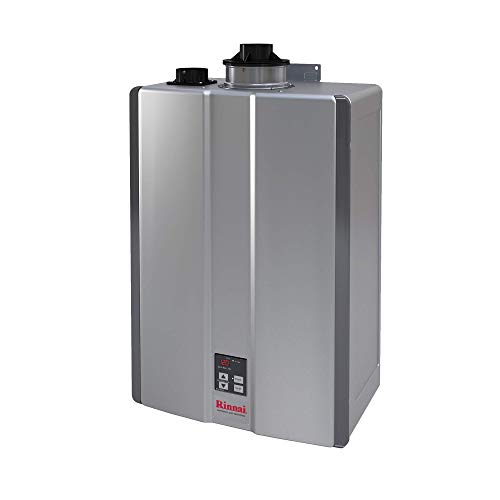
Rinnai RL75IN Tankless Hot Water Heater, 7.5 GPM, Natural Gas, Indoor Installation





Key features
- •Endless hot water for your entire home
- •RL75iN HE+ High Efficiency Tankless Hot Water Heater - Natural Gas: Indoor Installation Only
- •Up to 7.5 GPM hot water flow rate (varies by groundwater temp)
- •Circ-Logic technology allows you to set recirculation patterns that coincide with your typical habits. Hot water is available when you need it!
- •Residential Factory Warranty - 120 months (heat exchanger), 12 months (labor), 60 months (parts)
Rinnai RL75IN Tankless Hot Water Heater, 7.5 GPM, Natural Gas, Indoor Installation
List Price: $1326.81$1194.13DEALYou Save: $132.68 (10%)
Free shippingFree Returns – 30 daysFree Order CancellationSecure Payment2–3 Days DeliveryGet It October 25, 2026In Stock (4)No marketing spamNo account requiredFulfilment by FedEx / Amazon / UPS / ShipwirePayPal / Card Buyer Protection
Customer Reviews
Reviews sourced from verified Amazon purchasers4.2
out of 5
Based on 10 reviews
5★
50%
4★
30%
3★
10%
2★
10%
1★
0%
due to this corrosion/welding I had to buy all 6 pieces again (I used something like WD-40 to bust apart the corrosion seams
JTM•January 4, 2018
The Rinnai R85 that came w my house started leaking at 12yrs old so I bought the RL75iN. My goal was to buy the closest model to the older model so I could use the existing exhaust pipe, water connections, and gas connection, as I'm not the handy type.
It all went fairly smooth since the exhaust, water, and gas connections are in the same spot on the new model. Just a WARNING if you attempt this the inner metal layer of the exhaust pipe corroded/welded about 6 pieces together, in the process of pulling out the old R85 a couple of the black seals broke (brittle from age) that seal the outer plastic exhaust pipe together, due to this corrosion/welding I had to buy all 6 pieces again (I used something like WD-40 to bust apart the corrosion seams, DON'T do this!!! the pieces remained welded together plus the WD-40 warps all of the seals), which ment 4 more days without hot water and expedited shipping costs for these parts. Don't make my mistake, if you're doing a retro-fit make sure your existing exhaust pipe isn't damaged and if it is get those pieces ordered when you order the RL75iN.
I read a lot of reviews before doing this, I used white ptfe tape on the water, and yellow ptfe on the gas threads. Best hint I came across was from old timer plumber and also used Rectorseal #5 on top of the taped threads. Worked great, piece of mind was worth the few bucks for the #5. Good luck! Also it is really handy to have a buddy hold up the unit while you bolt it to the wall.
It all went fairly smooth since the exhaust, water, and gas connections are in the same spot on the new model. Just a WARNING if you attempt this the inner metal layer of the exhaust pipe corroded/welded about 6 pieces together, in the process of pulling out the old R85 a couple of the black seals broke (brittle from age) that seal the outer plastic exhaust pipe together, due to this corrosion/welding I had to buy all 6 pieces again (I used something like WD-40 to bust apart the corrosion seams, DON'T do this!!! the pieces remained welded together plus the WD-40 warps all of the seals), which ment 4 more days without hot water and expedited shipping costs for these parts. Don't make my mistake, if you're doing a retro-fit make sure your existing exhaust pipe isn't damaged and if it is get those pieces ordered when you order the RL75iN.
I read a lot of reviews before doing this, I used white ptfe tape on the water, and yellow ptfe on the gas threads. Best hint I came across was from old timer plumber and also used Rectorseal #5 on top of the taped threads. Worked great, piece of mind was worth the few bucks for the #5. Good luck! Also it is really handy to have a buddy hold up the unit while you bolt it to the wall.
Owner Install
Core•May 7, 2017
So, here's the deal, if your going to tackle this project yourself.. Your going to need quite a few tools.
2 Adjustable wrenches, Teflon tape, measuring tape, a whole lot of patience. And some experience with plumbing. And more tools.
And if you have to install a new gas line.. yeah good luck with that, you may need a plumber/ a whole lot of digging! and it will cost you a pretty penny, so I hope you saved up?
For me my water heater went out. My second water heater to go out. When this second one went out, the inner liner around the relief valve went bad. And so this pin hole leak grew.. and grew, and since I thought things were just fine.. well my utility room ended up getting pissed on by my old water heater. So I had heard of tankless water heaters and of Rinnai in particular, and its Japanese quality, and decided this time around I was going to try something different.
One of the big things you may forget about is the venting with this install, both the amount you need and the tools for the job.. One, depending on where you live and your buying this unit, you might get screwed vent wise. If your here on Amazon thinking about buying one, it means your probably slightly educated about new plumbing tech, and you don't have any local dealers.
The closest Rinnai dealers/service guys were like 50 miles away for me. So I decided to install this badgirl myself. Or try to. Or fail trying! I think failing while your running is the best.. because that momentum you build up before you fall face forward into failure.. thrilling and impactful!
Two mistakes I made when ordering this were:
1.I didn't think of a GREAT way to cut the venting material. (I was like I have a hacksaw, should be no problem, WRONG! it was tedious at best) you really need good solid clean cuts with the venting material, because of the airtight seals the gaskets form in the material.. Like if you don't have good clean cuts, the joining of the material will go from really annoying.. to use your imagination. )
Here's a solution! Also you can use this to cut drain pipe later on when you need to. Also it looks like there's a long lead up time to getting the actual product for some unknown reason so if your planning ahead, may want to just go ahead and bite the bullet. Why else do you have that prime account?
https://www.amazon.com/dp/B001H4NUB4/ref=twister_B00N4NUEBA?_encoding=UTF8&th=1
or
https://www.amazon.com/Ridgid-31662-4-Inch-8-Inch-Acting/dp/B001P3091Q/ref=pd_sim_469_15?_encoding=UTF8&pd_rd_i=B001P3091Q&pd_rd_r=GP12BP3ZE2BREP7SECBD&pd_rd_w=bqkeZ&pd_rd_wg=Z0EMp&psc=1&refRID=GP12BP3ZE2BREP7SECBD
2.I ordered the outdoor vent termination kit right? well that's all well and good if I had an extremely short distance to go.. But I had a foot beyond that, and also needed some 45degree elbows. And vent extensions. Spoiler! (I could not buy the vent extensions locally! no one had any... so I end up ordering those off amazon as well!- - -but after I had my new tankless water heater and had installed it and so I had to cap my cold water supply line and take a cold a$$ bath because I couldn't vent my unit) FUN TIMES!
Anyways, my knee jerk reaction on this install. It's actually pretty straight forward. Rip out your old tank, plumb new lines in, make sure you got the correct adapters to hook up. make sure you don't reverse your lines, label stuff, take your time.. hook it all up and it throws a fault! So the little computer in this unit worked good. Correct that issue. And good to go!
It's quiet for the most part. 120 degrees Fahrenheit in the summer time is hot enough. I may tinker with this later. Depends. I did not install a recirculating set up, I just did a straight forward install, and so I do experience that "Sandwich effect" on the water, but I had that with my hot tank water heater, so its nothing new.
Works fairly quickly.
Also, this unit in particular came with the Rinnai Union/Drain Valves... I ended ordering a set of Union/Drain Valves .. so now I have extra, accidentally. Just a heads up.
If anything worth anything happens down the line. I'll give an update. Or if your reading this review five years down the line and want to know how this unit has held up, just send me a request. If I still live in the same house I'll try and reply. But not to technical questions.
Good luck if your doing a self install and not a plumber. I'm very grateful my unit function great right out of the box pretty much.
P.S. I wish plumbing were easier and more straightforward. Like plug and play. I have a feeling there's a whole industry here for future new housing if someone can make it happen.
2 Adjustable wrenches, Teflon tape, measuring tape, a whole lot of patience. And some experience with plumbing. And more tools.
And if you have to install a new gas line.. yeah good luck with that, you may need a plumber/ a whole lot of digging! and it will cost you a pretty penny, so I hope you saved up?
For me my water heater went out. My second water heater to go out. When this second one went out, the inner liner around the relief valve went bad. And so this pin hole leak grew.. and grew, and since I thought things were just fine.. well my utility room ended up getting pissed on by my old water heater. So I had heard of tankless water heaters and of Rinnai in particular, and its Japanese quality, and decided this time around I was going to try something different.
One of the big things you may forget about is the venting with this install, both the amount you need and the tools for the job.. One, depending on where you live and your buying this unit, you might get screwed vent wise. If your here on Amazon thinking about buying one, it means your probably slightly educated about new plumbing tech, and you don't have any local dealers.
The closest Rinnai dealers/service guys were like 50 miles away for me. So I decided to install this badgirl myself. Or try to. Or fail trying! I think failing while your running is the best.. because that momentum you build up before you fall face forward into failure.. thrilling and impactful!
Two mistakes I made when ordering this were:
1.I didn't think of a GREAT way to cut the venting material. (I was like I have a hacksaw, should be no problem, WRONG! it was tedious at best) you really need good solid clean cuts with the venting material, because of the airtight seals the gaskets form in the material.. Like if you don't have good clean cuts, the joining of the material will go from really annoying.. to use your imagination. )
Here's a solution! Also you can use this to cut drain pipe later on when you need to. Also it looks like there's a long lead up time to getting the actual product for some unknown reason so if your planning ahead, may want to just go ahead and bite the bullet. Why else do you have that prime account?
https://www.amazon.com/dp/B001H4NUB4/ref=twister_B00N4NUEBA?_encoding=UTF8&th=1
or
https://www.amazon.com/Ridgid-31662-4-Inch-8-Inch-Acting/dp/B001P3091Q/ref=pd_sim_469_15?_encoding=UTF8&pd_rd_i=B001P3091Q&pd_rd_r=GP12BP3ZE2BREP7SECBD&pd_rd_w=bqkeZ&pd_rd_wg=Z0EMp&psc=1&refRID=GP12BP3ZE2BREP7SECBD
2.I ordered the outdoor vent termination kit right? well that's all well and good if I had an extremely short distance to go.. But I had a foot beyond that, and also needed some 45degree elbows. And vent extensions. Spoiler! (I could not buy the vent extensions locally! no one had any... so I end up ordering those off amazon as well!- - -but after I had my new tankless water heater and had installed it and so I had to cap my cold water supply line and take a cold a$$ bath because I couldn't vent my unit) FUN TIMES!
Anyways, my knee jerk reaction on this install. It's actually pretty straight forward. Rip out your old tank, plumb new lines in, make sure you got the correct adapters to hook up. make sure you don't reverse your lines, label stuff, take your time.. hook it all up and it throws a fault! So the little computer in this unit worked good. Correct that issue. And good to go!
It's quiet for the most part. 120 degrees Fahrenheit in the summer time is hot enough. I may tinker with this later. Depends. I did not install a recirculating set up, I just did a straight forward install, and so I do experience that "Sandwich effect" on the water, but I had that with my hot tank water heater, so its nothing new.
Works fairly quickly.
Also, this unit in particular came with the Rinnai Union/Drain Valves... I ended ordering a set of Union/Drain Valves .. so now I have extra, accidentally. Just a heads up.
If anything worth anything happens down the line. I'll give an update. Or if your reading this review five years down the line and want to know how this unit has held up, just send me a request. If I still live in the same house I'll try and reply. But not to technical questions.
Good luck if your doing a self install and not a plumber. I'm very grateful my unit function great right out of the box pretty much.
P.S. I wish plumbing were easier and more straightforward. Like plug and play. I have a feeling there's a whole industry here for future new housing if someone can make it happen.
General tankless advice
Michael•May 14, 2016
As a general contractor and an property inspector I can offer a few thoughts on tankless water heaters based on observations of hundreds of units and customer comments. First don't even consider the electric model, the power requirements to heat water continuously can only be adequately supplied by gas. Second, the hot water temperature tankless provides is not uniform- it's is flow dependent. I've measured the temperature with a laser thermometer many times, and it fluctuates quite a bit, and is NEVER the temperature the unit is set for. It's common for tenants/owners to set the unit to 140F to get water that approaches 120F at the faucet- this is a potentially dangerous scalding hazard if the unit actually reaches set point. Set to 120F, the common water temp is 105-110 at the faucet.
Consider tankless if your house is large and you need hot water at one end of the house and want to avoid a long wait. If your house is average size, and you have a central HW heater location consider a 'smart water heater'- they produce ~50 gals of water that's at the set point-all of it- and they are energy efficient. If your family is large and you routinely run out of hot water, consider installing larger water heater. They are also very trouble-free. In my opinion tankless is not as trouble free, nor do they perform the simple task of providing 120F hot water as well.
Consider tankless if your house is large and you need hot water at one end of the house and want to avoid a long wait. If your house is average size, and you have a central HW heater location consider a 'smart water heater'- they produce ~50 gals of water that's at the set point-all of it- and they are energy efficient. If your family is large and you routinely run out of hot water, consider installing larger water heater. They are also very trouble-free. In my opinion tankless is not as trouble free, nor do they perform the simple task of providing 120F hot water as well.
Excellent water heater works like a charm and not expensive ...
Lydia Lorenzo•May 9, 2015
Excellent water heater works like a charm and not expensive to run. Price is best through Amazon saved $200. Quiet and provides hot water as needed. Strongly recommend!
BUYER BEWARE
Emily Barbaro•January 14, 2015
We installed our first tankless water heater in 2006. It was the Rinnai 2532. It failed on 12/16/2014 with a leaking heat exchanger. In 2006, the written warranty said we had a10-year warranty on the heat exchanger. Rinnai informed us when we called in our claim that the warranty did not mean what it said. We really had a 5-year warranty, because we bought a "commercial" model. The warranty had made no such distinction.
We had already replaced the 2006 Rinnai with the Rinnai RL94i on 12/17. I was assured by Rinnai that we now have a 12-year warranty.
The consumer must realize from our experience that green is expensive. It costs twice to buy tankless instead of tank type, and it costs twice as much to have it installed. The Tankless heater should be flushed with white vinegar about once a year. It the heater is installed properly, flushing is easy.
The energy savings on the tankless units are relatively small. It will require the tankless unit to last 25 to 30 years to recover the cost of the unit.
Because of the complexity of the tankless heater, the warranties are inadequate. For instance, the heat exchanger in the Rinnai is located at the top of the unit. So any leaking heat exchanger will probably result in water running down onto other parts of the unit. The heat exchanger is the only substantially warranty-covered part of the heater.
Green is expensive, and the Rinnai water heaters are no exception. If you're willing to trade cost for unlimited hot water that you can drink right out of the faucet, as well as compact size, then go for it.
If those two advantages aren't worth the cost to you, then I would recommend investing in a quality tank-type heater.
As for Rinnai, when there's a problem, they DO NOT live up to all the dazzling self-praise plastered all over their website!
BUYER BEWARE!
We had already replaced the 2006 Rinnai with the Rinnai RL94i on 12/17. I was assured by Rinnai that we now have a 12-year warranty.
The consumer must realize from our experience that green is expensive. It costs twice to buy tankless instead of tank type, and it costs twice as much to have it installed. The Tankless heater should be flushed with white vinegar about once a year. It the heater is installed properly, flushing is easy.
The energy savings on the tankless units are relatively small. It will require the tankless unit to last 25 to 30 years to recover the cost of the unit.
Because of the complexity of the tankless heater, the warranties are inadequate. For instance, the heat exchanger in the Rinnai is located at the top of the unit. So any leaking heat exchanger will probably result in water running down onto other parts of the unit. The heat exchanger is the only substantially warranty-covered part of the heater.
Green is expensive, and the Rinnai water heaters are no exception. If you're willing to trade cost for unlimited hot water that you can drink right out of the faucet, as well as compact size, then go for it.
If those two advantages aren't worth the cost to you, then I would recommend investing in a quality tank-type heater.
As for Rinnai, when there's a problem, they DO NOT live up to all the dazzling self-praise plastered all over their website!
BUYER BEWARE!
Page 1 of 2