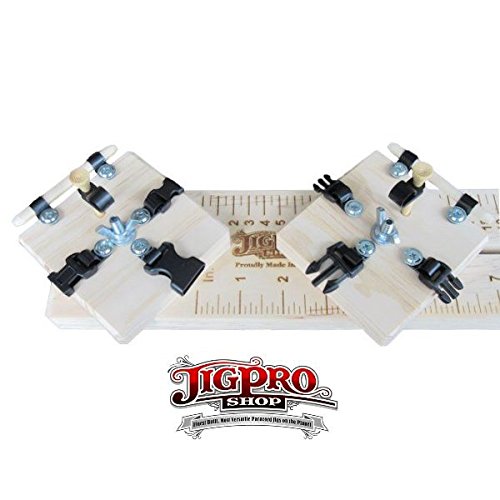
Jig Pro Shop 30" Professional Paracord Jig



Key features
- •Make paracord projects up to the size of the jig (10" jig makes items up to 10" in length)
- •Sturdy professional quality jig constructed to provide a lifetime of service
- •Comes pre-assembled and ready to start your first project right out of the box
- •Free Shipping! All items in stock and ship within 1 business day to ensure fast delivery
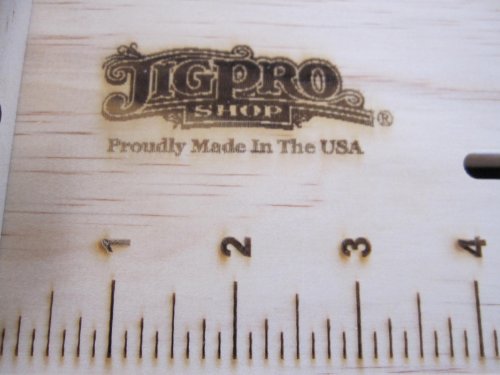
- •Proudly Made in the USA
Jig Pro Shop 30" Professional Paracord Jig
List Price: $121.04$108.94DEALYou Save: $12.10 (10%)
Free shippingFree Returns – 30 daysFree Order CancellationSecure Payment2–3 Days DeliveryGet It October 27, 2026In Stock (1)No marketing spamNo account requiredFulfilment by FedEx / Amazon / UPS / ShipwirePayPal / Card Buyer Protection
Customer Reviews
Reviews sourced from verified Amazon purchasers3.4
out of 5
Based on 10 reviews
5★
60%
4★
20%
3★
10%
2★
0%
1★
10%
Not a good product, screws did not hold it in place ...
Dru✓ Verified Purchase•January 1, 2015
Not a good product, screws did not hold it in place so bracelets were off and there are other jigs better suited for projects.
Great jig, and we use it almost daily
Ronnie Glasscock✓ Verified Purchase•July 31, 2014
Great jig, and we use it almost daily. Our leather shop uses a lot of kangaroo lace, and the jig allows us to watch TV while braiding during the evening hours. We subsequently purchased a 10" jig for shorter projects. Although these jigs are supposedly for paracord, they work very well for lap top leather work. The manufacturer should be advertising to people involved in leather braiding!
Not A Professional Grade Tool
Digital Jedi✓ Verified Purchase•June 8, 2014
I sell paracord gear online and at local swap meets. After doing hundreds of them the hard way, I finally broke down and purchased this jig. If you have not purchase a jig for making your paracord bracelets, then you're definitely doing it the hard way. A jig makes it much easier to get those exact measurements and helps to hold your work while you stitch. They really are invaluable tools for the paracordist. I was excited about using the JigPro, but I quickly found out there were elements of it's design that needed improving after my first use and it was not a professional grade tool like it's description stated.
First off, the screws that attach the buckles are not meant for wood, but metal. Because of this, they do not have the biting threads needed to hold into the wood tightly, like a traditional wood screw would have. Some of my paracord designs need to have very tight stitches, requiring a little extra tug on the cords and the screws could not hold up to it. Slowly but surely they all started to gradually work themselves loose, which required frequent tightening. Some even pulled completely out, stripping the holes and rendering them useless. I finally gave in and took both adjustment blocks off, drilled holes in the bottoms for countersinking, inserted bolts and secured them with nylock nuts on the bottom. This cost me a whopping $1.75 at the local hardware store and solved the problem permanently. Why JigPro didn't do this to begin with is beyond me.
The next problem were the useless buckles that came attached. ***Be aware that if you're using any buckle larger than 5/8, or want to use speciality buckles, you will have to install them yourself to use this jig.*** All of my paracord bracelets, even the ones made for children, all utilize 5/8" buckles. The others are just simply too small to use with 550 paracord, so they were removed and replaced with plastic and metal 5/8 buckles, an adjustable shackle and a larger 1" buckle. Of course, in order to keep the built in ruler accurate with a different buckle, close attention must be paid to where they are attached. I had to use wood putty on a few of the factory holes and drill new ones to make sure the newer hardware and the built in ruler were accurate. Also be careful, not all buckles are alike! While they may be the same size, some are designed differently and will not interchange with one another. Seems to me that JigPro could have just made the adjustment blocks octagon shaped instead of square as to accommodate all the different styles and sizes of buckles on the market. Of course, if you have a few power tools in your possession, you can always make separate adjustment blocks yourself, fitted with all your different buckles and just swap the blocks out when needed.
Another issue are the wing nuts used to secure the adjustment blocks. They are too big, too low to the surface of the wood and get in the way of larger buckles. I replaced them with threaded knobs I purchased online for .30 cents each, and stacked thicker washers to bring them up a little higher. Now, they provide better leverage, a smaller footprint and don't kill your fingers to tighten them. Be careful though, the wood construction is not bulletproof...which brings me to my final complaint.
The wood the JigPro is made from is perhaps the biggest annoyance, it should have been made from harder woods like oak or walnut. Pine is just way too soft and shows every little ding you put on it...you can put dents in this jig with a fingernail! Not only does the softer wood show dents and dings, but it wears out. The lower length adjustment block, which travels up and down the length of the jig, is guided by a routed channel, utilizing a bolt that feeds up through the bottom with a square neck. The bolt's square neck is designed to sit in the routed channel and allow tightening of the adjustment block with the supplied wingnut. This design fails because when you tighten the wingnut firmly, sometimes the bolt below will turn with it and the square head will dig into the sides of the channel. Over time, this results in the channel becoming rounded out, which in turn keeps the adjustment block from staying in place when doing really tight stitches. If harder wood would have been used this would not be an issue, and it's the jig's biggest design flaw IMO...very disappointing. Eventually I will just remove the bolt and replace it with another setup. JigPro now makes a large sized jig that has an aluminum center channel, but I have yet to hear any reviews on it.
Overall, the jig works, but lacks serious thought into it's longevity. So, be prepared to attach other buckles and replace those redundant metal screws for ones that actually bite or use bolts. Even with its pesky design flaws, it's still a good tool for the occasional paracordist. However, for the professional paracordist, who will be making hundreds of bracelets per year, it will not stand up to the heavy use...it's just not a professional grade tool.
First off, the screws that attach the buckles are not meant for wood, but metal. Because of this, they do not have the biting threads needed to hold into the wood tightly, like a traditional wood screw would have. Some of my paracord designs need to have very tight stitches, requiring a little extra tug on the cords and the screws could not hold up to it. Slowly but surely they all started to gradually work themselves loose, which required frequent tightening. Some even pulled completely out, stripping the holes and rendering them useless. I finally gave in and took both adjustment blocks off, drilled holes in the bottoms for countersinking, inserted bolts and secured them with nylock nuts on the bottom. This cost me a whopping $1.75 at the local hardware store and solved the problem permanently. Why JigPro didn't do this to begin with is beyond me.
The next problem were the useless buckles that came attached. ***Be aware that if you're using any buckle larger than 5/8, or want to use speciality buckles, you will have to install them yourself to use this jig.*** All of my paracord bracelets, even the ones made for children, all utilize 5/8" buckles. The others are just simply too small to use with 550 paracord, so they were removed and replaced with plastic and metal 5/8 buckles, an adjustable shackle and a larger 1" buckle. Of course, in order to keep the built in ruler accurate with a different buckle, close attention must be paid to where they are attached. I had to use wood putty on a few of the factory holes and drill new ones to make sure the newer hardware and the built in ruler were accurate. Also be careful, not all buckles are alike! While they may be the same size, some are designed differently and will not interchange with one another. Seems to me that JigPro could have just made the adjustment blocks octagon shaped instead of square as to accommodate all the different styles and sizes of buckles on the market. Of course, if you have a few power tools in your possession, you can always make separate adjustment blocks yourself, fitted with all your different buckles and just swap the blocks out when needed.
Another issue are the wing nuts used to secure the adjustment blocks. They are too big, too low to the surface of the wood and get in the way of larger buckles. I replaced them with threaded knobs I purchased online for .30 cents each, and stacked thicker washers to bring them up a little higher. Now, they provide better leverage, a smaller footprint and don't kill your fingers to tighten them. Be careful though, the wood construction is not bulletproof...which brings me to my final complaint.
The wood the JigPro is made from is perhaps the biggest annoyance, it should have been made from harder woods like oak or walnut. Pine is just way too soft and shows every little ding you put on it...you can put dents in this jig with a fingernail! Not only does the softer wood show dents and dings, but it wears out. The lower length adjustment block, which travels up and down the length of the jig, is guided by a routed channel, utilizing a bolt that feeds up through the bottom with a square neck. The bolt's square neck is designed to sit in the routed channel and allow tightening of the adjustment block with the supplied wingnut. This design fails because when you tighten the wingnut firmly, sometimes the bolt below will turn with it and the square head will dig into the sides of the channel. Over time, this results in the channel becoming rounded out, which in turn keeps the adjustment block from staying in place when doing really tight stitches. If harder wood would have been used this would not be an issue, and it's the jig's biggest design flaw IMO...very disappointing. Eventually I will just remove the bolt and replace it with another setup. JigPro now makes a large sized jig that has an aluminum center channel, but I have yet to hear any reviews on it.
Overall, the jig works, but lacks serious thought into it's longevity. So, be prepared to attach other buckles and replace those redundant metal screws for ones that actually bite or use bolts. Even with its pesky design flaws, it's still a good tool for the occasional paracordist. However, for the professional paracordist, who will be making hundreds of bracelets per year, it will not stand up to the heavy use...it's just not a professional grade tool.
Good jig.
Yadda Yadda✓ Verified Purchase•April 25, 2014
Had a few problems with clips staying clipped in and had to change them. No big deal. Allows me to get a much tighter weave on my bracelets.
Great Jig
Kip Morris✓ Verified Purchase•February 16, 2014
This Jig is very easy to use, if your a vender this will increase your productivity. Good Jig and a good pricw.
Page 1 of 2