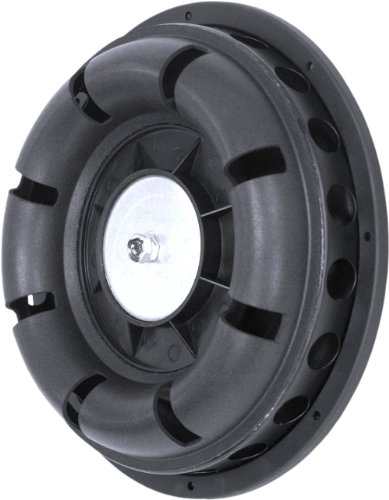
Earthquake Sound SLAPS-M8 10-inch Passive Radiator for Home and Mobile Audio Subwoofer Enclosures



Key features
- •10-inch, tunable passive radiator
- •Eliminate voice coil offset
- •Remove voice leakage
- •Terminate wind noise
- •Easy tuning for quick adjustments
Earthquake Sound SLAPS-M8 10-inch Passive Radiator for Home and Mobile Audio Subwoofer Enclosures
List Price: $134.57$121.11DEALYou Save: $13.46 (10%)
Free shippingFree Returns – 30 daysFree Order CancellationSecure Payment2–3 Days DeliveryGet It October 26, 2026In Stock (2)No marketing spamNo account requiredFulfilment by FedEx / Amazon / UPS / ShipwirePayPal / Card Buyer Protection
Customer Reviews
Reviews sourced from verified Amazon purchasers4.1
out of 5
Based on 10 reviews
5★
60%
4★
20%
3★
10%
2★
10%
1★
0%
.
Greg✓ Verified Purchase•March 15, 2018
Perfect
Two Stars
lu✓ Verified Purchase•March 13, 2018
There's no difference
For huge bass in tiny enclosures
Iloveshoes✓ Verified Purchase•March 11, 2018
Tl;dr - Throw these and some weight in a small box with a beefy high excursion subwoofer running lots of power, and you'll get a super-clean sub that plays as low and loud as a very large ported enclosure. It's basically the best of both worlds: clean bass like a sealed box with the extended output of a port.
I'm running two of these in my car with a JL Audio 10TW3-d8 on 750 Watts in a small 0.55 cubic ft enclosure, and it gets down! Adding some weight compensated for the small box so I'm getting even inaudible ruble between 25hz and 20hz that visibly shakes my headliner on tones I barely hear. It's crazy for a single 10in driver, but it's because these help so much. They don't do anything for higher bass notes, such as 50hz. The woofer will be on it's own for that, but that's fine because higher bass notes don't need to move nearly as much air as low bass. For the lower bass notes, however, these things kick in to effectively act as three 10 in drivers (viz. one driver plus these two 10in passives).
Keep in mind that you'll want to find a high excursion sub to make these happy. They work when the driver moves. So, when the driver moves in, it creates air pressure in the box that pushes these out - like a balloon. And when the driver moves out, the air pressure sucks these in - like a vaccume. Sub drivers moves in and out the most on low bass notes, not on high bass notes, which is why these help most on the lower notes. I'm planning on pairing these next with a really beefy 10 in Sundown NS v.4 on a Rockford 2,500 w amp (T2500-bdcp), just to get as much excursion as possible for these radiators.
Note that if you add a lot of weight to tune down a smaller box, you'll naturally lose some efficiency. The extra weight will simply require more energy to flop around heavier radiators. My setup is like that, so I just threw extra power at it. Having extra power (i.e. amp headroom) is advisable anyway.
The last thing I'll mention is to model your box before building it, using software like WinISD or something. The lower rolloff of passive radiators is generally very steep, more so than sealed or ported boxes. That means your lowest tuning point will essentially be the lowest note you'll get out of the box. Sealed and ported boxes are a little more forgiving in that they'll still be able to play some notes below your lowest tuning point, and you'll still be able to hear the note. The workaround for this, however, is easy. Just set your lowest tuning point as close to 20hz as possible. You can't hear that low anyway, so the steep roll off becomes irrelevant. In other words, setting your lowest tuning point near or below 20hz makes the steep roll off purely theoretical: Basic physics allows no way to build a box that will cause you to hear things that your ears simply can't detect. If your lowest tuning point is set near or below 20hz, you'll be very hard pressed to find a better box type than a passive radiators setup (esp with these passives).
I'm running two of these in my car with a JL Audio 10TW3-d8 on 750 Watts in a small 0.55 cubic ft enclosure, and it gets down! Adding some weight compensated for the small box so I'm getting even inaudible ruble between 25hz and 20hz that visibly shakes my headliner on tones I barely hear. It's crazy for a single 10in driver, but it's because these help so much. They don't do anything for higher bass notes, such as 50hz. The woofer will be on it's own for that, but that's fine because higher bass notes don't need to move nearly as much air as low bass. For the lower bass notes, however, these things kick in to effectively act as three 10 in drivers (viz. one driver plus these two 10in passives).
Keep in mind that you'll want to find a high excursion sub to make these happy. They work when the driver moves. So, when the driver moves in, it creates air pressure in the box that pushes these out - like a balloon. And when the driver moves out, the air pressure sucks these in - like a vaccume. Sub drivers moves in and out the most on low bass notes, not on high bass notes, which is why these help most on the lower notes. I'm planning on pairing these next with a really beefy 10 in Sundown NS v.4 on a Rockford 2,500 w amp (T2500-bdcp), just to get as much excursion as possible for these radiators.
Note that if you add a lot of weight to tune down a smaller box, you'll naturally lose some efficiency. The extra weight will simply require more energy to flop around heavier radiators. My setup is like that, so I just threw extra power at it. Having extra power (i.e. amp headroom) is advisable anyway.
The last thing I'll mention is to model your box before building it, using software like WinISD or something. The lower rolloff of passive radiators is generally very steep, more so than sealed or ported boxes. That means your lowest tuning point will essentially be the lowest note you'll get out of the box. Sealed and ported boxes are a little more forgiving in that they'll still be able to play some notes below your lowest tuning point, and you'll still be able to hear the note. The workaround for this, however, is easy. Just set your lowest tuning point as close to 20hz as possible. You can't hear that low anyway, so the steep roll off becomes irrelevant. In other words, setting your lowest tuning point near or below 20hz makes the steep roll off purely theoretical: Basic physics allows no way to build a box that will cause you to hear things that your ears simply can't detect. If your lowest tuning point is set near or below 20hz, you'll be very hard pressed to find a better box type than a passive radiators setup (esp with these passives).
Passive radiators for the win
chris Adams✓ Verified Purchase•November 15, 2017
These are a very cost effective way to increase your bottom end. A shop made a 2x10 sub for me divided into 2 chambers. The subs are Mmats but the box didn't produce much energy below 40hz. I bought 2 of these, used the stock weight. I cut the holes on the opposite side of the box and now run it in stereo. Now sounds down to 20 hz are audible and there is a lot of punch from 30-80hz using half the power per speaker. I can cross the box over at 63hz and get powerful low bass where before it hardly made sound unless I crossed it over at 80hz and above.
Dont waste money!!
Lonya•February 2, 2017
Just not worth it, you can get equal or better results using a ported box.. just make sure you tune the port to a low frequency... 28 or 30 htz.
I own two of these radiators and two jl audio w6v3 subs..
I own two of these radiators and two jl audio w6v3 subs..
Page 1 of 2