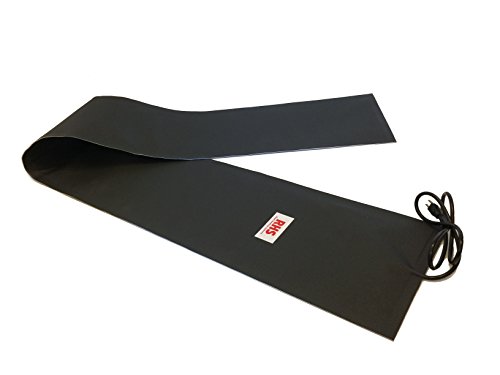
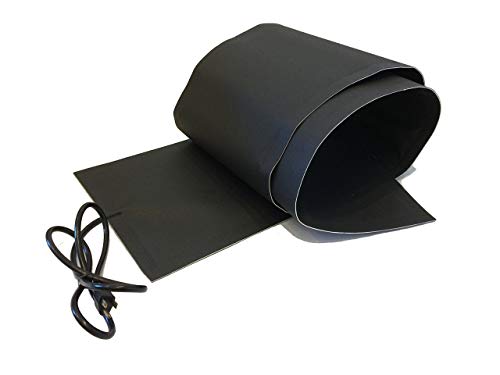
RHS Snow Melting System - Roof and Valley Heater - Snow and Ice Melting Mats - Ice Dam Prevention - Color Black - American Made - Melts 2 Inches of Snow per Hour (10' ft. x 13" in.)


Key features
- •RHS Valley Heater roof snow and ice elimination systems are good looking and cost effective. They ensure that the house owner will not have the frustration, property damage, and costs associated with water damage caused by the inability of roofs to drain water during winter months.
- •Melts 2 inches of snow per hour, UL listed components are made to sustain the most harsh environments. RHS Valley heaters have a complete waterproof system which serves for the most demanding environments including hazardous and non-hazardous areas, as well as areas where corrosives may be of concern. The valley heaters provides 40 watts per foot at 120 volt.
- •Easy installation, valley heaters are 10 feet length (can be made in 8', 15', and any other size up to 50' ft. for custom orders) roofing grommet screws included with the system are 100% waterproof and easy to insert on the valley heaters.
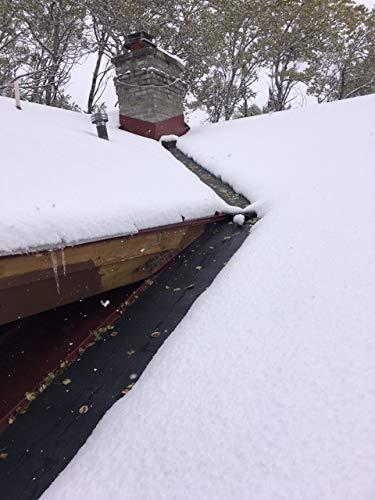
- •No more clinbing on a ladder to shovel your roof, RHS Valley Heaters go right over the problem areas on the valley, 6.5" inches to one side and 6.5" inches to the other side to completely melt the snow from the valley, just attach the grommet screws at the labeled locations to secure in place and relax, and watch RHS Valley Heaters get the job done.
- •RHS Valley Heater System provides with the most proficient, highly scalable and eco-friendly snow melting solution. Our roof systems are offered for all types of applications, including new construction, remodeling, and existing roofs. Installing RHS Valley Heater Systems can increase the life of your roof in addition it will enhance the value of your home or commercial property.
RHS Snow Melting System - Roof and Valley Heater - Snow and Ice Melting Mats - Ice Dam Prevention - Color Black - American Made - Melts 2 Inches of Snow per Hour (10' ft. x 13" in.)
List Price: $421.94$379.75DEALYou Save: $42.19 (10%)
Free shippingFree Returns – 30 daysFree Order CancellationSecure Payment2–3 Days DeliveryGet It June 26, 2026In Stock (1)No marketing spamNo account requiredFulfilment by FedEx / Amazon / UPS / ShipwirePayPal / Card Buyer Protection
Customer Reviews
Reviews sourced from verified Amazon purchasers4.1
out of 5
Based on 10 reviews
5★
80%
4★
20%
3★
0%
2★
0%
1★
0%
Keeps snow and ice from mounting up
Catherine Tanner✓ Verified Purchase•August 18, 2023
Love the fact it melts snow In area where we had problems with ice dam...seems to.be working well which pleases me.
Less worry!!!!
Less worry!!!!
This thing saved our ceilings
tim✓ Verified Purchase•August 3, 2023
It is not cheap. But it did work, really well. We had tons of ice build up on our roof this year (MN winter) and could not keep it clear even with raking etc. So we ended up with ice dams. Also a huge ice pile under the eaves on our back patio. When we first got this pad, I thought it was not working, so I left it on the ground overnight on the huge ice pile, more by accident than anything because I wanted to see if it would flatten out. In the morning, it had Marleen down through like 6 inches of solid ice. Back on the roof it went, no stakes, I just set it on the ice dam. It melted completely down through that in the next 24 hours. So I moved it a bit and it ended up making a huge melt path on the roof, no more issue with the ice dam. I would love to get another one but they are so dang expensive. I'll try moving this one around again next year. It did the job. Bought one for my mother as well, she has a harder time raking the roof and this helped with the ice dams at her place as well. No water in the house. I'm a happy camper.
These mats will get the job done!
Snowdog✓ Verified Purchase•July 26, 2023
These mats are much more effective in melting snow than cables. Keep in mind this will required more electricity so make sure you don't overload the ratings for your home
Helpful tool
Lake Walker✓ Verified Purchase•July 18, 2023
We had terrible ice dams on our roof this year. We used the wrap to warm up the downspout so that water could drain off the roof. Hard to know how sturdy it is after only one season of use but it was definitely helpful when combined with hired roof shovelers
Solar panel snow melting assistance
Tom Bee✓ Verified Purchase•June 28, 2023
I am using the RHS Snow Melting System I purchased from amazon, which is attached to my roof under the lower edge of my solar panels to start the melting of snow anytime the sun is shining and there is an accumulation of snow on the panels, but only for my southern exposure panels, since only they produce much energy during the winter months. I incorporated this snow melting system with my solar panels, since I can't stand to have a ZERO solar power day, after having payed good money to have the panels produce power.
The heater sections through amazon are available in five and ten foot lengths. My southern panel array requires 20 feet of heater in three segments, which uses one kilowatt of power if run for an hour, but is quickly regenerated when the panels are exposed to the sun. This method of heating the solar panels does not void their warranty, since the panels are attached to the roof and do not physically touch the solar panels.
The heat from the RHS Snow Melting System rises under the panels and slowly warms them at the bottom, but I only activate the heater when the sun is breaking through the clouds. This heating works in tandem with the sun, which starts the snow melting process at the top of the panels. The heater is run for 30 minutes to an hour, depending on snow thickness and melting progress, which melts the bottom snow accumulation and removes the snow backup resistance from the accumulation above, which allows the snow to completely slide off much sooner than waiting for the sun to get the melt going at the bottom.
I live in Utah and before I started using the heater, it took most of the first day of bright sun to remove about 80 percent of the snow, but that pesky bottom snow just usually hangs on until the second day of sun finally melts it off.
I haven't been able to find a countdown timer that will run during the day, since they are generally designed to come on at sundown and run for a specified time for lighting, so what I do is switch the heater on using the Dewenwls ODT12B Outdoor Light Sensor Timer with its remote control, which is from amazon and then set a manual kitchen timer to remind me to look at the panels and turn off the heater as soon as the snow has melted. There is no set time to power up the heater, so programmable timers are not useful, either. If the sun breaks through at 12 noon, that's when I activate the heater to work along with the sun's energy.
How you design your heater system for power control has to be what will work for you, so take time to consider the options that fit your needs. A WiFi controlled power switch is another option if you want to have control remotely from work or other locations. A camera setup to view the solar panels where the heater is installed would be good to monitor the melting progress to know when to turn off the heater.
If your panels are exposed to a lot of wind, it works well to wedge foam rubber strips in just at the top of the heater segments under the panels to encapsulate the rising heat, which increases the effectiveness of the heater and prevents the wind from blowing the heat away. After the snow season is done, the foam should be removed, since the panels require air flow for cooling in hot weather.
The heater sections through amazon are available in five and ten foot lengths. My southern panel array requires 20 feet of heater in three segments, which uses one kilowatt of power if run for an hour, but is quickly regenerated when the panels are exposed to the sun. This method of heating the solar panels does not void their warranty, since the panels are attached to the roof and do not physically touch the solar panels.
The heat from the RHS Snow Melting System rises under the panels and slowly warms them at the bottom, but I only activate the heater when the sun is breaking through the clouds. This heating works in tandem with the sun, which starts the snow melting process at the top of the panels. The heater is run for 30 minutes to an hour, depending on snow thickness and melting progress, which melts the bottom snow accumulation and removes the snow backup resistance from the accumulation above, which allows the snow to completely slide off much sooner than waiting for the sun to get the melt going at the bottom.
I live in Utah and before I started using the heater, it took most of the first day of bright sun to remove about 80 percent of the snow, but that pesky bottom snow just usually hangs on until the second day of sun finally melts it off.
I haven't been able to find a countdown timer that will run during the day, since they are generally designed to come on at sundown and run for a specified time for lighting, so what I do is switch the heater on using the Dewenwls ODT12B Outdoor Light Sensor Timer with its remote control, which is from amazon and then set a manual kitchen timer to remind me to look at the panels and turn off the heater as soon as the snow has melted. There is no set time to power up the heater, so programmable timers are not useful, either. If the sun breaks through at 12 noon, that's when I activate the heater to work along with the sun's energy.
How you design your heater system for power control has to be what will work for you, so take time to consider the options that fit your needs. A WiFi controlled power switch is another option if you want to have control remotely from work or other locations. A camera setup to view the solar panels where the heater is installed would be good to monitor the melting progress to know when to turn off the heater.
If your panels are exposed to a lot of wind, it works well to wedge foam rubber strips in just at the top of the heater segments under the panels to encapsulate the rising heat, which increases the effectiveness of the heater and prevents the wind from blowing the heat away. After the snow season is done, the foam should be removed, since the panels require air flow for cooling in hot weather.
Page 1 of 2