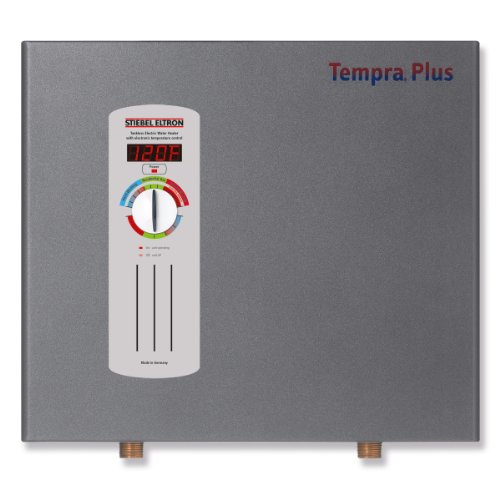
Stiebel Eltron 224199 240V, 1 Phase, 50/60 Hz, 24 kW Tempra 24 Plus Whole House Tankless Electric Water Heater, Advanced Flow Control



Key features
- •Digital temperature control. Voltage : 240 Volt or 208 Volt
- •Proven reliability
- •No venting required
- •Sleek design fits anywhere
- •Save at least 15-20% on the hot water portion of your electric bill
Stiebel Eltron 224199 240V, 1 Phase, 50/60 Hz, 24 kW Tempra 24 Plus Whole House Tankless Electric Water Heater, Advanced Flow Control
List Price: $1015.59$914.03DEALYou Save: $101.56 (10%)
Free shippingFree Returns – 30 daysFree Order CancellationSecure Payment2–3 Days DeliveryGet It October 27, 2026In Stock (2)No marketing spamNo account requiredFulfilment by FedEx / Amazon / UPS / ShipwirePayPal / Card Buyer Protection
Customer Reviews
Reviews sourced from verified Amazon purchasers4.4
out of 5
Based on 20 reviews
5★
60%
4★
40%
3★
0%
2★
0%
1★
0%
Very happy with my purchase. Added a photo showing our savings now compared to others with similar homes.
John R✓ Verified Purchase•August 15, 2023
Purchased the unit in April for our new to us home which had been stripped bare by vandals prior to our getting it. When deciding between a tank or the on demand, we went with the Stiebel.
Installation was simple once we were able to get the line to the box from the breaker panel - it literally was a screwdriver only installation at that point.
So far the unit has worked flawlessly (though if we max things out by running a lot of hot water at once) there is a bit of a pressure drop as the unit throttles down to compensate. We run a well (50psi max pressure) so I'm happy enough.
Despite having its own dedicated line, I do notice an overall power dip when the hot water engages. Not enough to be a concern, but enough to notice. We run LED lights - it would be more noticeable with incandescent.
I'm hoping for long term savings with this unit - my basement is damp, so a tank would tend to last about 5 years max where with care the Stiebel should last decades.
*********************
So its been over a year now, and I have some observations about how to maximize the savings with this beast.
First, if you have a faucet that mixes your hot and cold water (as opposed to two separate knobs) you're going to want to swap them out. Since the Stiebel doesn't care if you're running a small amount of hot water as opposed to opening it wide open, if you aren't careful to ALWAYS run just the cold water, you'll wind up engaging the hot even when it's not needed whenever you go to wash your hands or rinse something in the sink. Yea, it may only be for 30 seconds, but multiply that over the course of a day then by the course of your electric bill cycle, and it adds up. We probably paid for the new faucets over the course of savings in just a few months.
Second, compare your water bill rate to your electric bill rate. Odds are running an extra couple gallons of water will be far, far less than the electric rate running your heater. With that in mind, de-aerate your taps. The aerator is designed with a conventional hot water heater in mind, so by reducing water flow it conserves water that otherwise would be wasted. With an on demand system, you want to minimize the time needed to fill your sinks. Removing the aerator means that your flow is maximized, which reduces the time you're burning electricity.
Just by using these two simple steps, we cut our overall electric use by about a third compared to this time last year when we had the aerators on and the single faucet systems in place.
One other observation - the instructions say 'do not freeze' - we had heating issues a few times over the winter up here in Maine and froze our unit up solid a couple times. It seems to have come out of the deep freeze without any noticeable problems. I wouldn't recommend freezing your pipes, of course, but the system seems able to handle it.
Installation was simple once we were able to get the line to the box from the breaker panel - it literally was a screwdriver only installation at that point.
So far the unit has worked flawlessly (though if we max things out by running a lot of hot water at once) there is a bit of a pressure drop as the unit throttles down to compensate. We run a well (50psi max pressure) so I'm happy enough.
Despite having its own dedicated line, I do notice an overall power dip when the hot water engages. Not enough to be a concern, but enough to notice. We run LED lights - it would be more noticeable with incandescent.
I'm hoping for long term savings with this unit - my basement is damp, so a tank would tend to last about 5 years max where with care the Stiebel should last decades.
*********************
So its been over a year now, and I have some observations about how to maximize the savings with this beast.
First, if you have a faucet that mixes your hot and cold water (as opposed to two separate knobs) you're going to want to swap them out. Since the Stiebel doesn't care if you're running a small amount of hot water as opposed to opening it wide open, if you aren't careful to ALWAYS run just the cold water, you'll wind up engaging the hot even when it's not needed whenever you go to wash your hands or rinse something in the sink. Yea, it may only be for 30 seconds, but multiply that over the course of a day then by the course of your electric bill cycle, and it adds up. We probably paid for the new faucets over the course of savings in just a few months.
Second, compare your water bill rate to your electric bill rate. Odds are running an extra couple gallons of water will be far, far less than the electric rate running your heater. With that in mind, de-aerate your taps. The aerator is designed with a conventional hot water heater in mind, so by reducing water flow it conserves water that otherwise would be wasted. With an on demand system, you want to minimize the time needed to fill your sinks. Removing the aerator means that your flow is maximized, which reduces the time you're burning electricity.
Just by using these two simple steps, we cut our overall electric use by about a third compared to this time last year when we had the aerators on and the single faucet systems in place.
One other observation - the instructions say 'do not freeze' - we had heating issues a few times over the winter up here in Maine and froze our unit up solid a couple times. It seems to have come out of the deep freeze without any noticeable problems. I wouldn't recommend freezing your pipes, of course, but the system seems able to handle it.
Great Tankless, Replaced a Tankless.
J. Leonard✓ Verified Purchase•August 13, 2023
We've had this running for just over a month or so now and it's been great. We replaced another tankless with this one so we are used to having tankless and had the wiring and box in place already so it was just some adjustments in the piping and building a new mount for it. We replaced an old SETS unit that was at least 10 years old. The SETS unit may have never been what we should have had to begin with because it caused a large enough draw to flicker our lights when it was in use, would cut in and out of hot and cold when it wasn't happy and had to be used at a very reduced flow in order to fill the tub (shower was okay due to a flow reducing head). It may have been to early in the development of using these for residential use too. We were planning on replacing it or getting some point of use units because the cost has come down so much over the years for those too. It started to throw the breakers so we opened it up and saw there was a small leak inside and it was effecting the electronics. We did our research and ordered this one. It was Christmas time so we paid extra for the next day delivery ($14 something with Prime), it took a few extra days to come but we were refunded the extra shipping without even asking for it, so that was fine. We did reduce the main water flow coming into the house after installing this unit (we have great pressure) and probably would have done the SETS unit some good if we had done that before this. We don't even notice the difference after several weeks and hopefully it'll save some water too. We have the unit set for 130F, which seems high but the hot water is comfortable at all taps at this setting. I have not tested what the actual temperature at any tap actually is yet. No one is melting. We have over the past couple years replaced almost all of our lighting to LEDs so we didn't experience as much flicker as we used to anyway but there is no flicker or noticed draw on anything else when the unit is running. We did replace the breakers, my husband may have changed the loading on them too....I can check if anyone needs that info. The SETs unit had a lifetime warranty but they were bought out by another company and they did not honor any warranties so we did not feel the need to continue to give them our business. The Stiebels have great reviews all around. So far I am very happy with the purchase and recommend it.
AWSOME UNITS. BUT BEWARE of a FEW SIMPLE THINGS to CONSIDER before buying
Allen✓ Verified Purchase•August 12, 2023
Obviously the waive of the future is tank less water heaters. GAS or ELECTRIC. They both seem to be very energy efficient. But not economically efficient. This is due to their initial expense. Important to realize, after the initial install, when it comes time to replace the old unit the next time won't be as bad as everything is already in place that you will need. For starters, since this unit is electric, I can just about guarantee even if your old unit was an electric 240 or 208 volt tank, that you do not have the wiring in place for one of these. This particular unit requires TWO, 240 volt (or 208 volt if you're 3 phase) two pole 60 amp circuits with a minimum of 6 AWG wire. When operating at full power at 120 degrees Fahrenheit, I measured up to 44 amperes with my Fluke clamp meter on each line. That's a total of 88 amperes at the panel or over 21,000 watts (Yes that's OVER TWENTY-ONE THOUSAND WATTS). This thing requires a minimum of a 200 amp load center to be installed at the property. The largest unit from this manufacturer's line-up requires THREE of these same circuits and a 300 amp load center. So as you can see, if you're not an electrician or at the very least well versed in the electrical field, the average home do it yourselfer is not going to be able to install one of these on his own. Therefore the cost, as I said before is not economical. The gas ones have similar issues in that they may require larger gas lines for volume than the average home is built with. Again, just things to consider. Lastly, don't take the writing on the box for how many simultaneous showers this thing will be able to deliver as gospel. That greatly depends upon water flow and ground temperatures. It actually does say that on the box in small print. During the summer in warmer southern climates, you'll find the water where you normally set your shower is way too hot. During the winter you may find that you have to turn the handle all the way up just to keep the water warm. (Notice I didn't say HOT) Now, add another simultaneous shower, and it may not be able to keep up. Again, just things to consider. My recommendation, buy bigger than you think you're going to need. No need to go overboard, just figure what you think you're going to need, and go one size up. Once your service is upgraded to support one of these, the actual installation of a tank less water heater is a breeze. Very easy. Last thing, for those of you doing the math, yes this things sucks electricity like you wouldn't believe. Go out and look at you're meter when it's on. Your AC won't make your meter spin like that. In lieu of all of this you must come to realize that this thing is only doing that when you're using maximum hot water. In other words, if you're just running the hot water faucet at the kitchen sink, its not running at maximum power. If every hot water faucet is on in the house or multiple showers are running (especially if the ground temperature is low) then you probably are running maximum power, or close to it. However, if you're not running any hot water at all, it's idle. There is no tank to keep hot, it doesn't cycle on and off throughout the day when no one's home. It only runs when a hot water faucet is opened. For that reason, if you have kids in the house, be sure they shut that water off at the sink; or you'll be unpleasantly surprised on bill day. This unit in particular is a very good and dependable unit. It has stood the test of time for me and I have already bought and installed another one at an alternate location. Have fun.......
Great Water Heater - Different Functionality/Limitations.
Alex✓ Verified Purchase•August 2, 2023
I am very happy with my decision to switch to an on-demand style water heater. This unit, SE Tempra 29 Plus, has performed very well during the first week of use. It is capable of running at 3.3 GPM with incoming water at 49 degrees F and output at 122F. This will fill my garden tub and run a shower at the same time, or run two showers and a faucet with the flow slightly reduced.
Different functionality/Limitations- Please remember when you switch to a on-demand style heater that the flow (or max number of points of use) will be limited by the power rating of the unit; however, you will not be limited by the amount of time you can use the heater. I found this ideal for the garden tub as a tank style heater can fill the tub, but is then out of commission for about an hour. The same goes for showers. Two showers and a washing machines could be ran with the tank, but after doing this the tank was down for an hour. This does not happen with the on-demand style and it will continue to put out hot water as long as you want to run it.
Minor temperature fluctuations with well water - I do notice small temperature fluctuations while using the unit. I believe these are associated with the pressure tank and cycling of the well pump. When the tank is charging (well pump is running), the water drops a couple of degrees (just noticeable enough to feel, not enough to adjust the water temp). I believe this is due to the water bypassing the pressure tank and coming directly to the heater. This incoming water is slightly colder than the water that has warmed up inside the pressure tank in the crawl space. This water then makes its way through the heater and reduces the output on the hot line side (because of the constant temperature control of the plus unit). The cold line side rises in pressure due to the pump pressurizing the tank and mixes slightly more cold water. I believe this could be eliminated by adding a buffer tank (5-20gal) between the pressure tank and house inlet that would allow the water to mix and acclimate, but this would only be added if someone was extremely sensitive to temperature variations.
Some other positives:
Easy installation. If you know plumbing and electricity this can be installed in an afternoon if your lucky with the placement of everything. It took me a weekend by myself to install. Most of the time was spent routing the power cables and mounting boxes.
Saves space, No Footprint! This unit was ideal for my house. I had a 50gal tank in my half-bath and it was an eyesore and a space hog. The SE 29 was wall mounted on the garage side of the wall without taking any floor space and minimal wall space that wasn't being utilized.
Others: Unlimited hot water, Better looking than a tank heater, and easily adjustable temp.
Different functionality/Limitations- Please remember when you switch to a on-demand style heater that the flow (or max number of points of use) will be limited by the power rating of the unit; however, you will not be limited by the amount of time you can use the heater. I found this ideal for the garden tub as a tank style heater can fill the tub, but is then out of commission for about an hour. The same goes for showers. Two showers and a washing machines could be ran with the tank, but after doing this the tank was down for an hour. This does not happen with the on-demand style and it will continue to put out hot water as long as you want to run it.
Minor temperature fluctuations with well water - I do notice small temperature fluctuations while using the unit. I believe these are associated with the pressure tank and cycling of the well pump. When the tank is charging (well pump is running), the water drops a couple of degrees (just noticeable enough to feel, not enough to adjust the water temp). I believe this is due to the water bypassing the pressure tank and coming directly to the heater. This incoming water is slightly colder than the water that has warmed up inside the pressure tank in the crawl space. This water then makes its way through the heater and reduces the output on the hot line side (because of the constant temperature control of the plus unit). The cold line side rises in pressure due to the pump pressurizing the tank and mixes slightly more cold water. I believe this could be eliminated by adding a buffer tank (5-20gal) between the pressure tank and house inlet that would allow the water to mix and acclimate, but this would only be added if someone was extremely sensitive to temperature variations.
Some other positives:
Easy installation. If you know plumbing and electricity this can be installed in an afternoon if your lucky with the placement of everything. It took me a weekend by myself to install. Most of the time was spent routing the power cables and mounting boxes.
Saves space, No Footprint! This unit was ideal for my house. I had a 50gal tank in my half-bath and it was an eyesore and a space hog. The SE 29 was wall mounted on the garage side of the wall without taking any floor space and minimal wall space that wasn't being utilized.
Others: Unlimited hot water, Better looking than a tank heater, and easily adjustable temp.
Very impressive. Replaced a 75 gallon oil fired hot water heater.
Kindle Customer✓ Verified Purchase•July 23, 2023
Having lived overseas for many years, I was familiar with tankless hot water heaters, but they were always gas. I was a little weary about an electric unit. After reading many reviews about the different ones out there, I went with the Stiebel Eltron. So far, I have been very impressed.
FWIW, I have an 1800 sf older home in eastern PA. It only has 1.5 bathrooms, HE washer, and dishwasher. I have the unit set at 105 degrees. That is more than hot enough for what I need. Perhaps in the winter, I might need to turn it up a little.
People has commented on Ytube and other places that water pressure will suffer, but I haven't found that to be the case. In fact, my water pressure actually improved. I'm not sure why. The only thing I could think of is that I installed this unit a little closer to the bathroom, eliminating about 8 foot of copper piping. Also some of the old piping or my old tank could of had some hard water build up.
People have also commented about the water temperature fluctuating. I haven't found that to be the case either. I think this only happens with the non "plus" models. The "Plus" model has the advanced flow control that seems to eliminate the problem.
Other people have commented about lights flickering. Once again, I haven't found that to be the case. I don't see why this unit would cause that. I would guess those people have some other issue going on in their panel or wiring.
I did the install entirely by myself, including the wiring. I'll go on the record that I don't consider myself an experienced handyman, but I have taken a few adult ed courses and read a few books on wiring and plumbing. I also read the Tempra manual front to back, and checked the manufacturer's website for more information.
I spent about another $300 at HD for extra tools, parts, and the NM 6-2 wire. I used Sharkbites for all the fittings. The hardest part for me was running the 6-2 wire from the unit to the panel and make it look clean. It took me a full day but I took my time. An experienced person will probably be able to do this a lot quicker.
Contrary to what many people seem to think, you DO NOT need to use the Watts tankless heater service valves with an electric unit. In fact, the manual discourages it. The cold side of the unit has a tiny filter screen that needs to be cleaned annually, and the manual says it is best to use flexible stainless steel hoses to connect to the unit.
Because I didn't use the Watts service valves, I did install the 3M Aquapure scale filter. This requires shut off valves before and after the filter, one of them with a drain plug, so keep that in mind when planning your install.
You also do NOT need to have a T/P valve on the hot water side of the unit. There is a built-in T/P valve. However, if your local inspector won't pass it without one, you might have to install one for show.
UPDATE (A Month later): Okay, it has been a month since I've installed this. So far it has been working great. However, I have an LG HE washer. I've noticed if you try to take a shower while the washer is running, there is some pretty dramatic pulsing on the water pressure. Also, because the HE washer rapidly opens and closes the hot water valve, it doesn't leave enough time for the copper piping to heat up to get hot water to the washer. This is not really a problem for me, since I mostly wash with cold water anyway, but for some, this might be a deal breaker. Running the hot water for a minute to heat up the pipes may also be a solution. A small tank with circulation pump might be another solution if you really need your wash water to be hot.
A friend who is a fire fighter also recommended that a fire alarm be installed on the ceiling directly above the unit. He has responded to several house fires where the cause were cheap quality Chinese made units. Apparently, the cheap units sometimes catch fire. A fire alarm directly above the unit would have detected when the unit starts to smolder before a full on fire occurs. The Stiebel Eltron is a high quality German made unit, however, fire alarms are inexpensive and make sense as a precaution.
FWIW, I have an 1800 sf older home in eastern PA. It only has 1.5 bathrooms, HE washer, and dishwasher. I have the unit set at 105 degrees. That is more than hot enough for what I need. Perhaps in the winter, I might need to turn it up a little.
People has commented on Ytube and other places that water pressure will suffer, but I haven't found that to be the case. In fact, my water pressure actually improved. I'm not sure why. The only thing I could think of is that I installed this unit a little closer to the bathroom, eliminating about 8 foot of copper piping. Also some of the old piping or my old tank could of had some hard water build up.
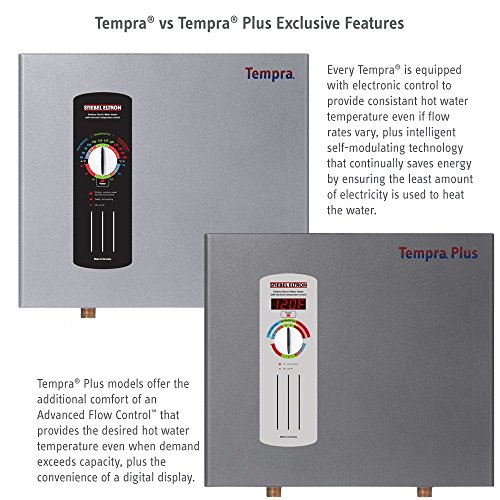
People have also commented about the water temperature fluctuating. I haven't found that to be the case either. I think this only happens with the non "plus" models. The "Plus" model has the advanced flow control that seems to eliminate the problem.
Other people have commented about lights flickering. Once again, I haven't found that to be the case. I don't see why this unit would cause that. I would guess those people have some other issue going on in their panel or wiring.
I did the install entirely by myself, including the wiring. I'll go on the record that I don't consider myself an experienced handyman, but I have taken a few adult ed courses and read a few books on wiring and plumbing. I also read the Tempra manual front to back, and checked the manufacturer's website for more information.
I spent about another $300 at HD for extra tools, parts, and the NM 6-2 wire. I used Sharkbites for all the fittings. The hardest part for me was running the 6-2 wire from the unit to the panel and make it look clean. It took me a full day but I took my time. An experienced person will probably be able to do this a lot quicker.
Contrary to what many people seem to think, you DO NOT need to use the Watts tankless heater service valves with an electric unit. In fact, the manual discourages it. The cold side of the unit has a tiny filter screen that needs to be cleaned annually, and the manual says it is best to use flexible stainless steel hoses to connect to the unit.
Because I didn't use the Watts service valves, I did install the 3M Aquapure scale filter. This requires shut off valves before and after the filter, one of them with a drain plug, so keep that in mind when planning your install.
You also do NOT need to have a T/P valve on the hot water side of the unit. There is a built-in T/P valve. However, if your local inspector won't pass it without one, you might have to install one for show.
UPDATE (A Month later): Okay, it has been a month since I've installed this. So far it has been working great. However, I have an LG HE washer. I've noticed if you try to take a shower while the washer is running, there is some pretty dramatic pulsing on the water pressure. Also, because the HE washer rapidly opens and closes the hot water valve, it doesn't leave enough time for the copper piping to heat up to get hot water to the washer. This is not really a problem for me, since I mostly wash with cold water anyway, but for some, this might be a deal breaker. Running the hot water for a minute to heat up the pipes may also be a solution. A small tank with circulation pump might be another solution if you really need your wash water to be hot.
A friend who is a fire fighter also recommended that a fire alarm be installed on the ceiling directly above the unit. He has responded to several house fires where the cause were cheap quality Chinese made units. Apparently, the cheap units sometimes catch fire. A fire alarm directly above the unit would have detected when the unit starts to smolder before a full on fire occurs. The Stiebel Eltron is a high quality German made unit, however, fire alarms are inexpensive and make sense as a precaution.
Page 1 of 4