AIMS Power PICOGLF30W12V120VR 3000 Watt and 9000 Watt Surge 12VDC Input to 120VAC Output Pure Sine Inverter Charger Backup Power




Key features
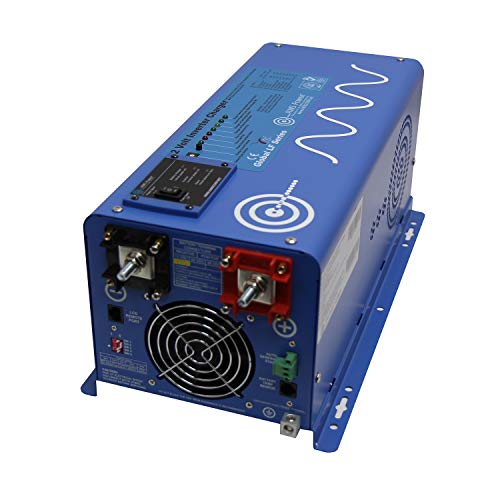
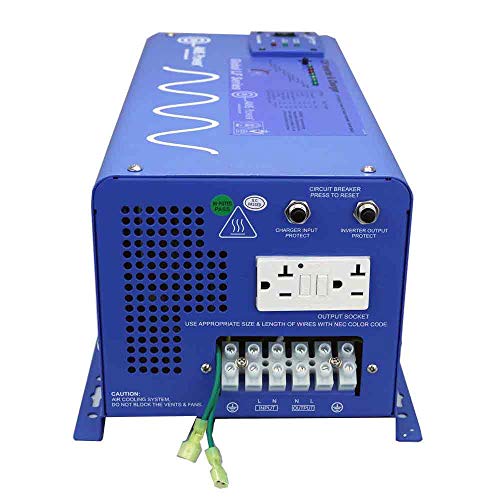
- •3000 Watt continuous pure sine power
- •9000 Watt peak power for 20 seconds and Product Dimensions - 16.48 x 8.6 x 7 inches .
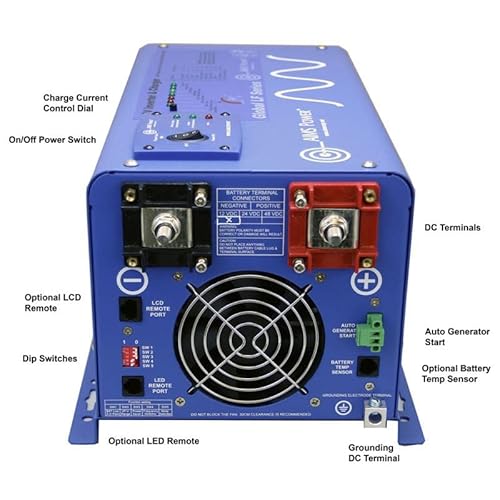
- •Built in 100A smart battery charger with 7 selectable battery type settings
- •Auto gen start feature
- •Marine and industrial grade. Check the AC voltage for proper voltage and frequency
- •Selectable 25W power save mode (hibernation)
AIMS Power PICOGLF30W12V120VR 3000 Watt and 9000 Watt Surge 12VDC Input to 120VAC Output Pure Sine Inverter Charger Backup Power
List Price: $1543.76$1389.38DEALYou Save: $154.38 (10%)
Free shippingFree Returns – 30 daysFree Order CancellationSecure Payment2–3 Days DeliveryGet It October 27, 2026In Stock (10)No marketing spamNo account requiredFulfilment by FedEx / Amazon / UPS / ShipwirePayPal / Card Buyer Protection
Customer Reviews
Reviews sourced from verified Amazon purchasers4.0
out of 5
Based on 10 reviews
5★
70%
4★
0%
3★
0%
2★
0%
1★
30%
a solid five starrs...so far
Keith Stewart✓ Verified Purchase•November 28, 2017
I received it almost instantly via Amazon Prime...VERY well packaged and it fully survived the typical UPS drop-kick delivery, where I tipped the driver anyway(gotta take care of them young guys, yaknow?, and it is Christmass time and besides, they are working their azzes off)
So ok, set it on the bench and unpacked it(very well boxed with double boxes and foam protection)
Exterior fit and finish is flawless-serious looking-industrial looking stuff.....So I carefully removed the cover to look closely inside....WOW, top quality stuff!-Well, by appearances it seems top quality stuff, and in my old age I have looked at lots of stuff....So ok, I relax a little and settle down with the great owners manual in front of the new invertor and spend a few hours with them both...And A pint of Black Jack Daniels n Coke....
I Spent 20 years on very hi tech nuclear submarines as an engineer, so I know a little about specs and how to interpret them, and mostly how to examine the equipment compared to the claimed specs....This unit appears VERY solidly built using hi quality materials-very well thought out-almost milspec stuff.
How will it perform? Who knows?...It LOOKS fully like it will perform exceptionally well, and I honestly believe it will because I know what to look for...But, today you never know, huh? Maybe be a hidden single cold solder joint impossible to find or maybe a cheap tiny resistor found it's way into the assembly, yaknow? That's all it takes to destroy a very complex assembly like this and it often does no matter where it is made.
And I also know that when you toss complex, quality equipment out there to unqualifed folks to install, confiqure and use, the results are often BAD and those folks scream loudly about their bad experience and blame the maker and/or seller...So, ok, that is just the way it is today.....
I will be totally honest...I purchased this invertor hoping to save $1+K after reading all the reviews over several years...I selected it because in my experience it appeared these are quality products with all the necessary specs and features IF the owner/installer knows what he is doing he will be very happy with it for many years....And today my internal examination of the unit reassures me this is VERY likely a quality/reliable device.
But, I shall see...And you can believe I will install and configure it properly, and operate it properly, and protect it properly, and test and evaluate it properly...Soon....Promise
Till then, it looks to me like a solid five stars.
So ok, set it on the bench and unpacked it(very well boxed with double boxes and foam protection)
Exterior fit and finish is flawless-serious looking-industrial looking stuff.....So I carefully removed the cover to look closely inside....WOW, top quality stuff!-Well, by appearances it seems top quality stuff, and in my old age I have looked at lots of stuff....So ok, I relax a little and settle down with the great owners manual in front of the new invertor and spend a few hours with them both...And A pint of Black Jack Daniels n Coke....
I Spent 20 years on very hi tech nuclear submarines as an engineer, so I know a little about specs and how to interpret them, and mostly how to examine the equipment compared to the claimed specs....This unit appears VERY solidly built using hi quality materials-very well thought out-almost milspec stuff.
How will it perform? Who knows?...It LOOKS fully like it will perform exceptionally well, and I honestly believe it will because I know what to look for...But, today you never know, huh? Maybe be a hidden single cold solder joint impossible to find or maybe a cheap tiny resistor found it's way into the assembly, yaknow? That's all it takes to destroy a very complex assembly like this and it often does no matter where it is made.
And I also know that when you toss complex, quality equipment out there to unqualifed folks to install, confiqure and use, the results are often BAD and those folks scream loudly about their bad experience and blame the maker and/or seller...So, ok, that is just the way it is today.....
I will be totally honest...I purchased this invertor hoping to save $1+K after reading all the reviews over several years...I selected it because in my experience it appeared these are quality products with all the necessary specs and features IF the owner/installer knows what he is doing he will be very happy with it for many years....And today my internal examination of the unit reassures me this is VERY likely a quality/reliable device.
But, I shall see...And you can believe I will install and configure it properly, and operate it properly, and protect it properly, and test and evaluate it properly...Soon....Promise
Till then, it looks to me like a solid five stars.
Overheats, can't source any power
Moving Pictures✓ Verified Purchase•November 22, 2017
I have had this .... doorstop ... for about two years, and I cannot in any way recommend it.
We live off-grid, in a low-footprint model. This device was intended to serve our power needs, but also charge our batteries with a generator, if the sun vanished for a few days - which, living in the sticks of the East Coast of Canada, it does.
I have developed the same issues as other AIMS models (I thought I had done my research, but alas): it overheats, and cannot generate any notable power without shutting down.
The first issue came about a year ago, when the fan simply died. Fortunately, I had access to a spare computer, and was able to install a new fan. Then in August of this year, I tried out an induction element, which draws a max of 1,200 watts. At the time, the fan came on, and stayed on all the time - which, given that we live in 500 square feet makes for a bit of noise.
Last week, the inverter overheated and shut down, while in the generator mode. The negative terminal now grows incredibly toasty at the slightest application of power, either charging or discharging.
Today, it overheated and shut down twice: it now can't even handle a 250 watt crockpot.
DO NOT BUY. I spent $800 CDN on a piece of junk that gives out about as much power now as an old 300w Morningstar. Should have gone with an Outback or Xantrex.
We live off-grid, in a low-footprint model. This device was intended to serve our power needs, but also charge our batteries with a generator, if the sun vanished for a few days - which, living in the sticks of the East Coast of Canada, it does.
I have developed the same issues as other AIMS models (I thought I had done my research, but alas): it overheats, and cannot generate any notable power without shutting down.
The first issue came about a year ago, when the fan simply died. Fortunately, I had access to a spare computer, and was able to install a new fan. Then in August of this year, I tried out an induction element, which draws a max of 1,200 watts. At the time, the fan came on, and stayed on all the time - which, given that we live in 500 square feet makes for a bit of noise.
Last week, the inverter overheated and shut down, while in the generator mode. The negative terminal now grows incredibly toasty at the slightest application of power, either charging or discharging.
Today, it overheated and shut down twice: it now can't even handle a 250 watt crockpot.
DO NOT BUY. I spent $800 CDN on a piece of junk that gives out about as much power now as an old 300w Morningstar. Should have gone with an Outback or Xantrex.
Get a separate inverter and charger
A1Decals✓ Verified Purchase•March 7, 2017
DONT BUY mine lasted 5 months.
here is another thing to consider, buy a separate charger and inverter so that if one goes dead, you only have to replace 1 item.
to be fair, i did buy another aims inverter only with a/c passthrough:
https://www.amazon.com/Power-PWRIX120012S-Inverter-Transfer-Switch/dp/B00TI1D5JK/
and a 70 watt smart charger.
https://www.amazon.com/gp/product/B0039T059U/
the overall price is less even when you buy the inverter remote
https://www.amazon.com/gp/product/B00RM3T8II/
many advantages to this, you get remote control over the inverter and charger via remote pendants, the standby current draw is less or non-existant, overall weight is less. replacement costs are about 1/4-1/3 if anything dies.
if you are new to rving and have been looking at inverter charger combos, dont do it! get separate units. plus you dont need a 2000 watt inverter if you have a generator.
the point of the batteries is to run normal items for long periods, the 1200 watt inverter can handle a microwave if you really really wanted to, but in general unless you have a huge bank of 6-8 or more batteries, you would never run high current heaters and things like that off batteries, just use the generator.
get an effecient inverter and good charger and thats Golden.
please learn from my $500+ mistake, or dont say i didnt warn you.
here is another thing to consider, buy a separate charger and inverter so that if one goes dead, you only have to replace 1 item.
to be fair, i did buy another aims inverter only with a/c passthrough:
https://www.amazon.com/Power-PWRIX120012S-Inverter-Transfer-Switch/dp/B00TI1D5JK/
and a 70 watt smart charger.
https://www.amazon.com/gp/product/B0039T059U/
the overall price is less even when you buy the inverter remote
https://www.amazon.com/gp/product/B00RM3T8II/
many advantages to this, you get remote control over the inverter and charger via remote pendants, the standby current draw is less or non-existant, overall weight is less. replacement costs are about 1/4-1/3 if anything dies.
if you are new to rving and have been looking at inverter charger combos, dont do it! get separate units. plus you dont need a 2000 watt inverter if you have a generator.
the point of the batteries is to run normal items for long periods, the 1200 watt inverter can handle a microwave if you really really wanted to, but in general unless you have a huge bank of 6-8 or more batteries, you would never run high current heaters and things like that off batteries, just use the generator.
get an effecient inverter and good charger and thats Golden.
please learn from my $500+ mistake, or dont say i didnt warn you.
3 units have failed! Find another inverter. And buy it from a place that will take a return.
fred✓ Verified Purchase•February 2, 2017
Not very happy with this unit or the warranty. My unit overcharged my batteries. Didn't overheat. Charger didn't turn off. And the fan, which is louder than my furnace, was always on while on shore power.
So I called, got return info, and shipping was gonna be 200$ each way. I am disabled, and broke. I get less than $400 each month to live on. So sending it back isn't an option.
Another friend went through 2 units before getting a unit that worked. There's a serious problem with this product.
It seemed like they couldn't care less to help me resolve this issue so my $850 unit is now junk.
So I called, got return info, and shipping was gonna be 200$ each way. I am disabled, and broke. I get less than $400 each month to live on. So sending it back isn't an option.
Another friend went through 2 units before getting a unit that worked. There's a serious problem with this product.
It seemed like they couldn't care less to help me resolve this issue so my $850 unit is now junk.
AIMS Low Frequency / Pure Sine Inverters Are the Best For the Buck.
Willy J✓ Verified Purchase•September 8, 2016
I purchased the 2,000 watt version of this low frequency pure sine inverter through Amazon this spring and installed it in my motor home and love it. This was version 2.0 of my generatorless electrification project. I was tired of starting the Onan generator every time I wanted to run the microwave or brew some coffee. I had first purchased a modified sine 3,500 watt inverter which I powered from 4 six volt golf cart batteries. The modified sine unit was good but my microwave and other electronics didn't like the square wave. Another problem is that the AC voltage declined all the way down to 85 volts as the batteries discharged. My Aims unit puts out 121-123 volts at 60 cps all the way down to low voltage cutoff.
Why do you want a low frequency inverter rather than a high frequency? These units have huge copper coils and can output 3 times their rating for up to 20 seconds. Even the 2,000 watt unit runs my air conditioner which requires nearly 5,000 watts on startup.
The battery charger on the 3,000 watt unit is rated at a maximum of 100 amps and 70 amps for the 2,000 watt unit. I pack a 2000 (1,600 continuous) watt inverter generator for emergency charging. With my solar charging, running my fridge on gas, and frugal use of the inverter, I only rarely have to use the generator. The problem is that the circuit breaker will trip on this generator at the full charging amperage of the inverter. Aims has a solution for this problem with a dial on the control panel where you can turn down the power diverted to charging. I adjust this to where the generator runs at a comfortable 75% of it's top RPM and the batteries still get charged fully within a couple of hours. Another nice feature is that the inverter doesn't switch to shore power until 15 seconds after you connect it. That will give it time to spin up and warm up a bit before taking the load if it was connected at startup.
Why do I have the 2,000 watt inverter instead of the 3,000 watt? Consider that 3,000 watts / 12 volts equal 250 amps. A continuous 250 amp draw on a twelve volt system generates tremendous amounts of heat in cabling, cable connectors, battery switches, and bus bars. It's almost scary heat in a motor home environment. I've installed marine grade bus bars and battery cutoff switches all fused and connected with 2/0 welding cable, but those connections get hot even with a sustained draw of 1,500 watts. A 12 volt system is only capable of so much. Higher output inverters are typically only offered for 24 or 48 volt DC systems for that reason. Not saying the 3,000 watt unit is not a great unit, just be aware of the battery, cabling, and electrical components required to safely provide that level of 12 volt amperage.
Edit Additional: I had originally crimped my cable lugs in my vice which, I found, is not a good practice. Bought a good hydraulic cable crimper and purchased all new copper lugs. Redid all my cable ends and, after crimping, sealed them with heat shrink. What a difference. I was losing lot's of power in those cable ends and generating heat. Now my battery charge lasts much longer and the connections are not getting hot.
One other thing: You are going to want the remote with the Aims unit. You will probably locate the unit where it's not easy to access the controls and the remote is much easier to use anyway. Since I have had this installed for 6 months, I never look at the inverter itself but just turn it on and off from the remote in the wall and check the battery voltage and AC load.
Why do you want a low frequency inverter rather than a high frequency? These units have huge copper coils and can output 3 times their rating for up to 20 seconds. Even the 2,000 watt unit runs my air conditioner which requires nearly 5,000 watts on startup.
The battery charger on the 3,000 watt unit is rated at a maximum of 100 amps and 70 amps for the 2,000 watt unit. I pack a 2000 (1,600 continuous) watt inverter generator for emergency charging. With my solar charging, running my fridge on gas, and frugal use of the inverter, I only rarely have to use the generator. The problem is that the circuit breaker will trip on this generator at the full charging amperage of the inverter. Aims has a solution for this problem with a dial on the control panel where you can turn down the power diverted to charging. I adjust this to where the generator runs at a comfortable 75% of it's top RPM and the batteries still get charged fully within a couple of hours. Another nice feature is that the inverter doesn't switch to shore power until 15 seconds after you connect it. That will give it time to spin up and warm up a bit before taking the load if it was connected at startup.
Why do I have the 2,000 watt inverter instead of the 3,000 watt? Consider that 3,000 watts / 12 volts equal 250 amps. A continuous 250 amp draw on a twelve volt system generates tremendous amounts of heat in cabling, cable connectors, battery switches, and bus bars. It's almost scary heat in a motor home environment. I've installed marine grade bus bars and battery cutoff switches all fused and connected with 2/0 welding cable, but those connections get hot even with a sustained draw of 1,500 watts. A 12 volt system is only capable of so much. Higher output inverters are typically only offered for 24 or 48 volt DC systems for that reason. Not saying the 3,000 watt unit is not a great unit, just be aware of the battery, cabling, and electrical components required to safely provide that level of 12 volt amperage.
Edit Additional: I had originally crimped my cable lugs in my vice which, I found, is not a good practice. Bought a good hydraulic cable crimper and purchased all new copper lugs. Redid all my cable ends and, after crimping, sealed them with heat shrink. What a difference. I was losing lot's of power in those cable ends and generating heat. Now my battery charge lasts much longer and the connections are not getting hot.
One other thing: You are going to want the remote with the Aims unit. You will probably locate the unit where it's not easy to access the controls and the remote is much easier to use anyway. Since I have had this installed for 6 months, I never look at the inverter itself but just turn it on and off from the remote in the wall and check the battery voltage and AC load.
Page 1 of 2